
Tell us about your project and we’ll follow up with a clear, no‑pressure quote and timeline.
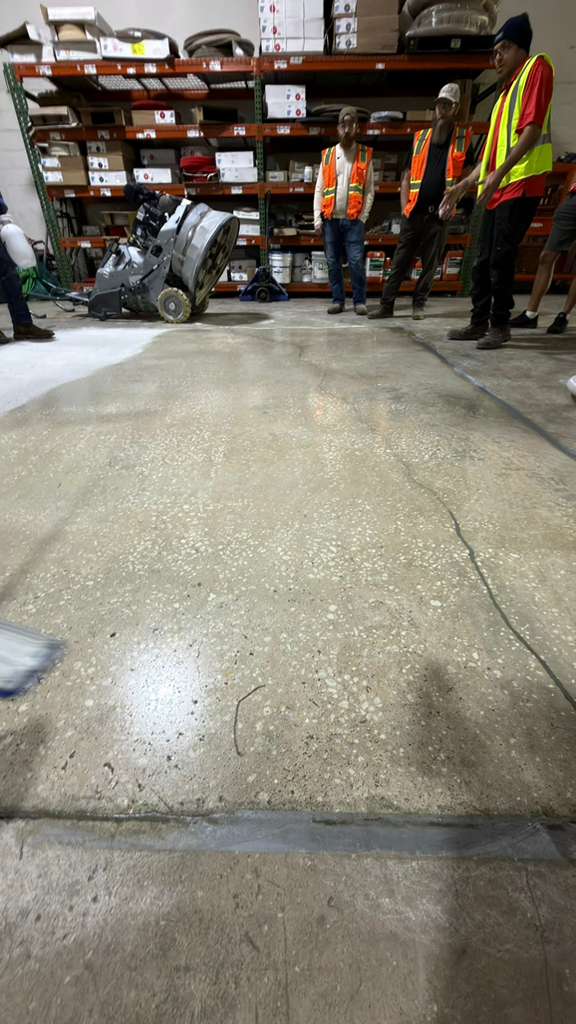
You’ve got a concrete floor that needs attention, maybe it’s a garage, a warehouse, a patio, or an interior space, and now you’re stuck trying to figure out whether polished concrete or epoxy is the right call. Both look great in photos. Both are durable. But they’re very different in how they perform, what they cost, and how long they last.
Let’s sit down and walk through it so you can make the right choice for your space. We are a South Florida surface-care company, so this guide leans on Florida conditions; see our concrete polishing and resinous flooring services for what we offer.
The short version
Polished concrete isn’t a coating, it’s the actual concrete surface, ground down and refined using diamond-tipped grinding machines until it’s smooth, dense, and reflective. Think of it like sanding wood: you’re removing the rough top layer and revealing a beautiful, hard surface underneath.
The result is a floor that looks clean and modern, requires almost no maintenance, and can last well over a decade with periodic cleaning, sealer upkeep and an occasional re-polish. It’s the same process you see in high-end retail stores, modern homes, and large commercial warehouses.
Epoxy is a coating, a mixture of resin and hardener that gets applied on top of your concrete and cures into a hard, glossy shell. It essentially seals and protects the concrete beneath it, similar to how we seal and protect outdoor pavers to lock out moisture, stains, and wear.
Epoxy is highly customizable: you can add color, metallic effects, decorative flakes, or keep it a solid gloss. It’s especially popular in garages, commercial kitchens, and industrial facilities where chemical spills and heavy machinery are part of daily life.
| Factor | Polished Concrete | Epoxy |
|---|---|---|
| Cost per sq ft (published national ranges, not our quote) | About $3 to $12 depending on gloss level and prep | About $3 to $12 depending on system and prep |
| Typical lifespan | A decade or more with sealer upkeep and periodic re-polish | Commonly 5 to 10 years before a recoat; some sources say 5 to 15+ |
| Refinish cost (published) | Periodic re-polish | Recoat about $1 to $3 per sq ft per one published guide |
| Install time | About 3 to 5 days (one published summary) | About 1 to 3 days, plus cure time (one published summary) |
| Cure before use | No coating to cure; sealer has its own dry time | 24 to 72 hours is commonly listed; longer in humid weather |
| Moisture from the slab | No film to lift; often handles a damp slab better, but test first | Vapor can push the film up as bubbles or peeling; test first |
| Sun and UV | No film to yellow | Standard epoxy can yellow; a UV-stable topcoat helps |
| Hot tires | No film to lift; oil and tire marks can stain if unsealed | Thin or poorly bonded coats can lift |
| Maintenance | Dust mop, occasional re-polish | Regular cleaning, avoid harsh scrubbing |
| Appearance | Natural, matte to high-gloss | Glossy, highly customizable colors and flakes |
| Slip resistance | Can be slippery when wet, especially at high gloss | Can be textured for grip |
| Chemical resistance | Moderate when sealed | Excellent, best for oil and chemical exposure |
| Best for | Homes, offices, retail, warehouses | Garages, workshops, kitchens, industrial spaces |
Ranges are published national figures from contractor guides, not South Florida pricing and not our quote. Small jobs usually cost more per sq ft, and minimum job charges are common. Recheck before you budget.
Choose polished concrete if you want a low-maintenance, long-lasting floor that looks sophisticated without a coating that can chip or peel. It’s ideal for open living spaces, commercial showrooms, and warehouse floors, exactly like the job shown in the photo above.
Choose epoxy if your floor takes a serious beating from chemicals, heavy equipment, or vehicles. A garage that sees oil drips and tire marks, or a commercial kitchen with daily chemical cleaning, will benefit more from epoxy’s tough, sealed surface.
And if you’re not sure which one your floor actually needs? That’s where a professional eye makes all the difference. Just like we assess your pavers before recommending a cleaning, sanding, or sealing approach, the right concrete floor solution starts with understanding how your space is actually used.
The floor that wins on paper does not always win in your building. Match the surface to what the room actually has to survive.
| Space | Better fit | Why |
|---|---|---|
| Attached garage | Epoxy or polyaspartic system | Oil, gasoline, hot tires and dropped tools favor a coating |
| Dry interior living area | Polished concrete | No coating to peel, easy to keep clean |
| Damp or below-grade room | Test first | A coating may need a moisture-mitigating primer; ask for readings |
| Home workshop | Epoxy or polyaspartic | Chemicals and impact |
| Warehouse or showroom | Polished concrete | Forklift traffic and a uniform look |
| Wet or chemical area | Resinous coating | Seamless and chemical resistant |
These matches follow what flooring contractors commonly recommend; your slab condition can change the answer. For specifics, see our concrete polishing and resinous flooring pages.
Epoxy is a film sitting on top of the slab. In humid, low-lying South Florida, moisture vapor can rise through the slab, collect under the coating and push it up as bubbles or peeling patches. Several Florida flooring contractors name moisture vapor as a leading reason coatings fail here, but those are companies that sell coatings, so treat it as a strong warning rather than a measured statistic.
Two test methods come up again and again. ASTM F2170 measures relative humidity inside the slab with probes. ASTM F1869 uses calcium chloride to measure vapor coming off a bare surface and is not meant for judging floors that already have a coating on them. The pass or fail limits come from the coating maker’s data sheet, not from a universal number, so ask which test was run and what the product allows.
A quick homeowner check is to tape a roughly 2 by 2 foot piece of clear plastic to the slab overnight and look for moisture underneath. It is a warning sign, not a replacement for a proper test. Polished concrete has no film to lift, which is one reason it often handles a damp slab more gracefully.
Garage floors fail in two predictable places: where the tires sit and where the sun reaches. After a drive, tires are hot, and a thin or poorly bonded coating can soften and lift as the tire cools and grips it. Contractors point to three causes: acid etching on a smooth troweled slab instead of grinding, low-solids DIY kits that leave a thin film, and driving on the floor before it fully cures. In humid weather, several suggest waiting longer than the box says.
The sun is the second problem. Standard epoxy can yellow or dull under UV, which is why many Florida installers finish with a UV-stable polyaspartic topcoat, either alone or over an epoxy base. That is a vendor recommendation, not independent testing, so ask for the product data sheet and a sample, and check the cure time you are quoted. Polished concrete has no film to lift or yellow, but it is porous: oil, brake fluid and tire marks can leave stains unless a good penetrating sealer is applied and kept up.
It can be, especially at a high gloss when wet. Rain tracked in, a pool-side entry or a spill on a mirror-polished floor is where the complaints come from. A common reference point is a wet DCOF of 0.42 from ANSI A137.1 and A326.3, but a flooring-safety testing firm notes that this figure is a comparison tool, not a promise that nobody will slip, and different test methods can disagree on polished surfaces.
What to do: choose a lower gloss level for wet or entry areas, ask the installer for slip-test results on the exact finish and sealer, ask about an anti-slip additive or textured finish, and keep floors clean, because dust and film make wet floors worse. We apply the same thinking to pool decks, where we never use high-gloss sealers; see pool deck sealing and our wet look vs matte guide.
A 20 by 20 foot garage is 400 square feet. Published national ranges, not our quote and not South Florida pricing, run about $3 to $10 per square foot for polished concrete and about $3 to $12 for epoxy. That puts a two-car garage at roughly $1,200 to $4,000 for polished concrete and $1,200 to $4,800 for epoxy, before moisture mitigation, crack repair or extra grinding. For 1,000 square feet the same ranges give about $3,000 to $10,000 and $3,000 to $12,000. Polyaspartic systems are often listed higher, about $5 to $12 per square foot.
Small jobs usually cost more per square foot and many installers set a minimum job charge. Look past day one: one published guide lists an epoxy recoat every 5 to 10 years at about $1 to $3 per square foot, while a polished floor mainly needs cleaning and periodic re-polishing. The cheapest quote is the one that includes moisture testing and grinding, not the one that skips them. For how we think about pricing outdoors, see what paver sealing costs in Miami and paver installation costs. When you are ready, request a free estimate.
A cleaned, ground or stained slab with a penetrating sealer is the usual budget option. It will not have the depth of a full polish, but it protects against stains and is easier to keep up than a bare slab. Surface prep matters either way; our surface cleaning and sealing work follows the same clean, repair, then protect order. Check the FAQ if you are not sure which service applies to your surface.
Whether you go with polished concrete or epoxy, the prep work is everything. A floor that isn’t properly cleaned, ground, and prepared before the process begins will fail, no matter how good the product is. Epoxy laid over poorly prepared concrete can peel early, and polished concrete turns dull when the grinding steps are rushed.
That attention to prep is the same reason we broom joint sand into every paver surface before sealing, the finish is only as good as what’s underneath it.
Send us a few photos and we’ll give you an honest opinion, no pressure, no sales pitch. Just a straight answer from a team that works with concrete and pavers every day across South Florida. Request a free estimate, and let’s get your floor looking the way it should.
Cost alone would point most homeowners toward polished concrete, but garages are a specific exception worth understanding. A garage floor deals with oil drips, gasoline, hot tire marks, and the physical impact of dropped tools, conditions polished concrete wasn’t engineered to resist as well as a proper epoxy or polyaspartic coating (polyaspartic is a fast-curing, UV-stable resin used as a topcoat or on its own). This is why even though polished concrete is often the cheaper, longer-lasting option in general, professional flooring guides consistently point toward epoxy or polyaspartic systems specifically for garages, the chemical and impact exposure there is simply a different category than a living room or retail showroom floor.
Polished concrete on an existing slab is typically finished in a few days (one published summary says about 3 to 5 days, so ask your installer for a schedule), since you’re grinding and refining material that’s already fully cured. Epoxy is different: published guides commonly list 24 to 72 hours for epoxy to cure enough for use, and some contractors suggest waiting longer before driving on it in humid weather; your product data sheet has the final word. If you only have a single-car garage and no alternative parking, that difference in downtime is worth planning around before you schedule either project.
Generally yes, polished concrete tends to cost the same or less upfront and does not need a recoat. Published guides list about $3 to $12 per square foot for both, and epoxy commonly needs a recoat every 5 to 10 years, which adds up over time. These are not our quote.
Not without proper prep. The slab should be clean, ground, free of old coatings, repaired where cracked, and tested for moisture. Concrete under about 28 days old is generally not coated. Poor prep and moisture vapor are the usual reasons epoxy peels or bubbles.
Polished concrete is simpler: a dust mop and an occasional re-polish. Epoxy is also easy to wipe clean, but avoid harsh scrubbing and abrasive tools, and plan on a recoat after several years of wear.
It can be when wet, especially at higher gloss levels. A non-slip additive or surface treatment can be applied during the polishing process to improve traction, something we always discuss based on how the space is used.
A polished floor can last a decade or more with sealer upkeep and periodic re-polish. Epoxy commonly lasts about 5 to 10 years before a recoat, and some sources say 5 to 15 or more depending on traffic, prep and sun. These are published ranges, not a guarantee.
It can be slippery when wet at high gloss, it shows slab flaws and cracks, it is porous to stains if unsealed, it feels cold underfoot, and color choices are more limited than with epoxy.
Epoxy depends heavily on prep. It can peel or bubble on damp slabs, thin coats can lift under hot tires, standard epoxy can yellow in sun without a UV-stable topcoat, and it needs a recoat in roughly 5 to 10 years. Avoid it on very new concrete, on slabs with high moisture readings and no mitigation, and over unsound or contaminated concrete.
Using published national ranges of about $3 to $12 per square foot, a 400 square foot garage lands around $1,200 to $4,800 before moisture mitigation and repairs. That is a market range, not our quote and not South Florida pricing.
A cleaned, ground or stained slab with a penetrating sealer. It protects the floor at a lower cost, with less shine and depth than a full polish.
Short, practical articles to help you keep your driveway, patio, and pool deck looking freshly sealed between professional visits.
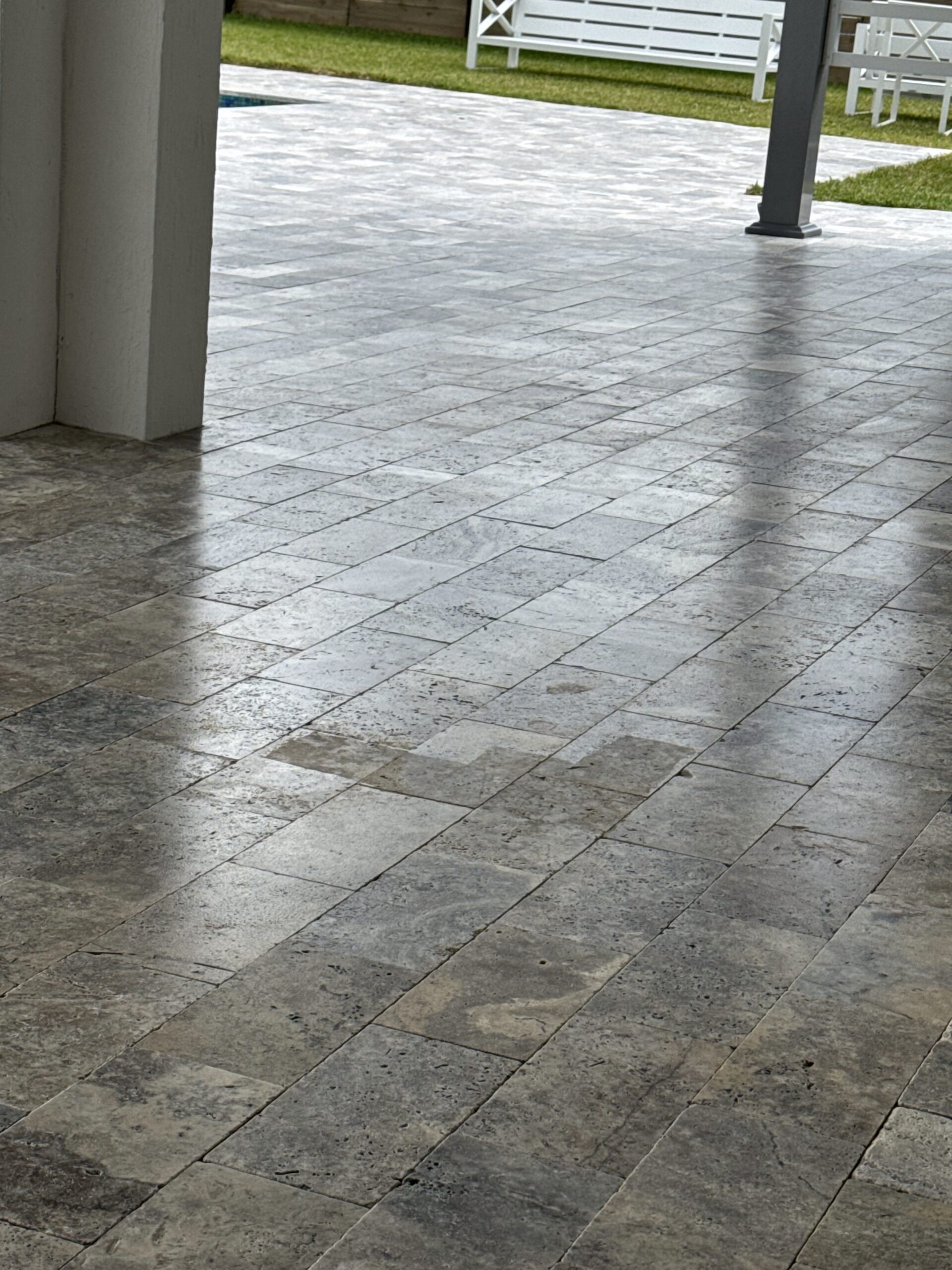
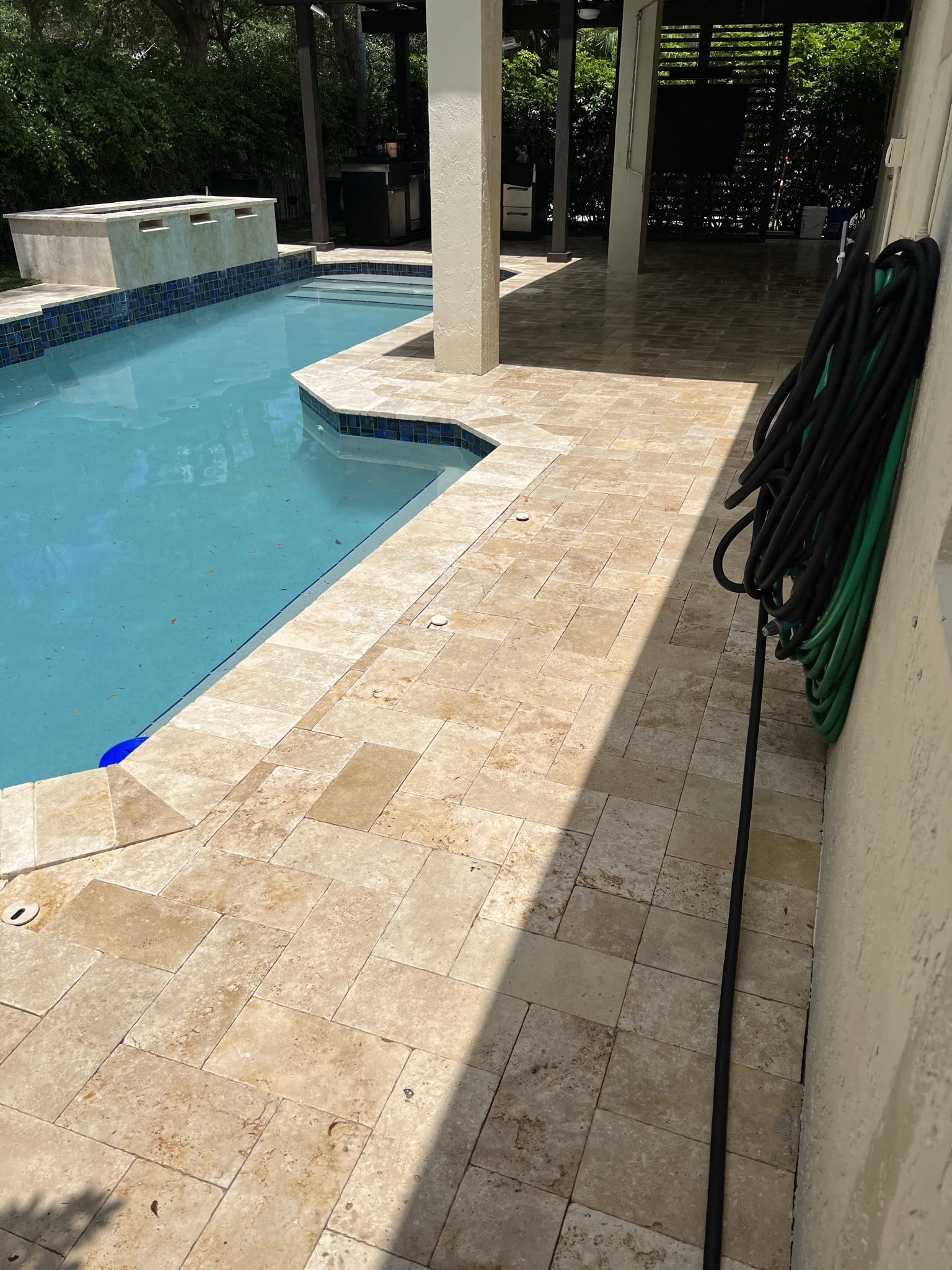
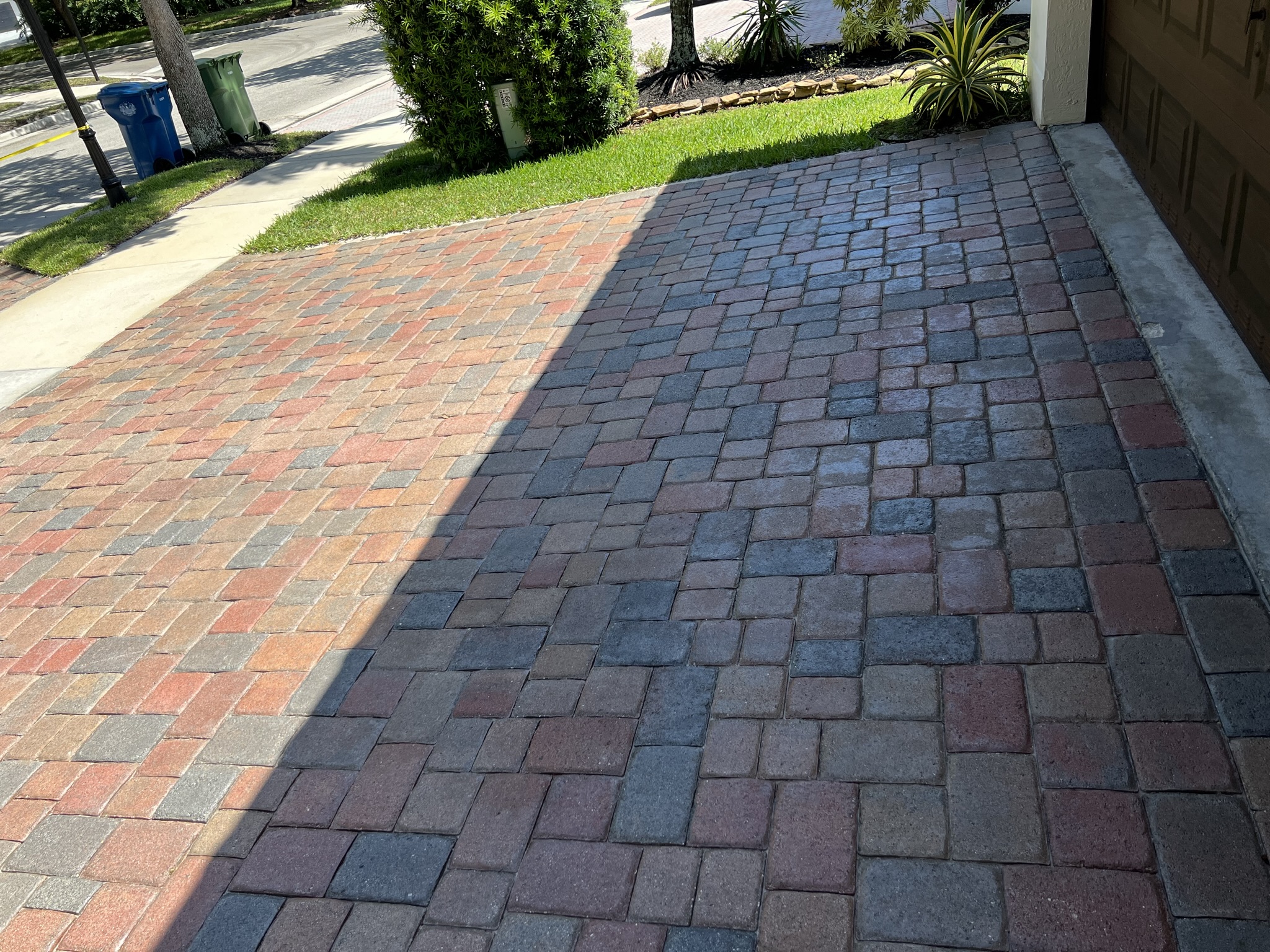
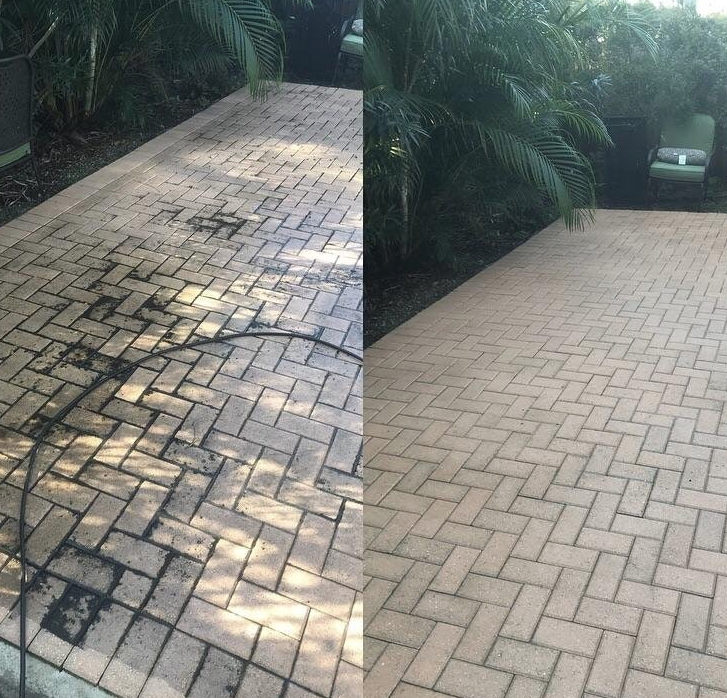
South Florida homeowners trust us to clean, sand, and seal their pavers the right way the first time, here’s what they’re saying after seeing their driveways, patios, and pool decks transformed.
Miami-Dade County, Broward County, Palm Beach County & Monroe County