
Tell us about your project and we’ll follow up with a clear, no‑pressure quote and timeline.
The short version
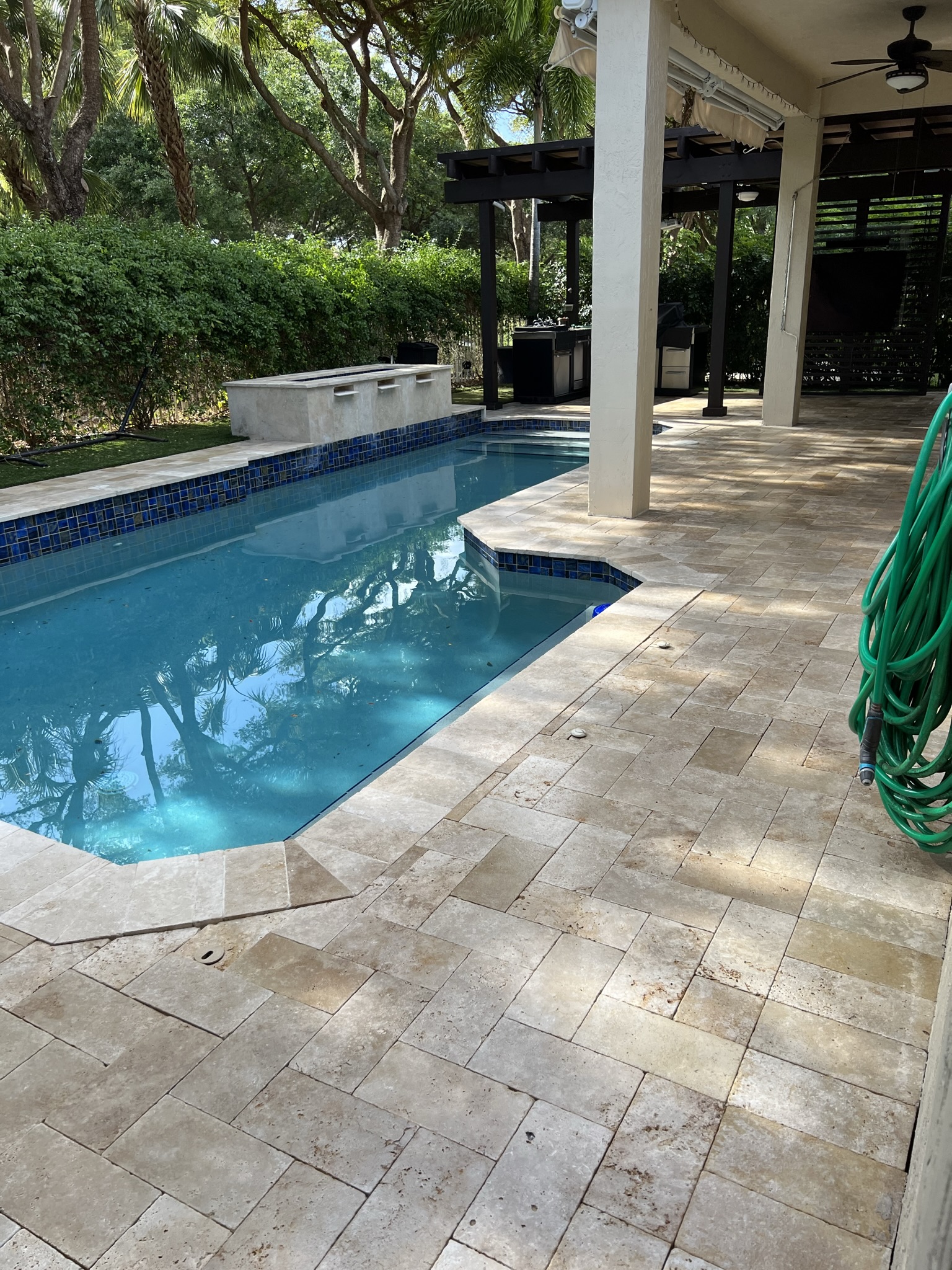
Efflorescence is the white, chalky, powdery residue that shows up on concrete pavers, and it’s not dirt or mold, it’s mineral salt. It happens when moisture moves through the paver or the base material underneath, dissolves naturally occurring salts along the way, carries them up to the surface, and leaves them behind as the water evaporates. It’s extremely common, most concrete pavers will show at least some at one point, and it’s not a sign of a defective paver.
Primary efflorescence shows up during or shortly after a new paver installation, as the concrete releases the moisture it was manufactured with. This kind is genuinely temporary in most cases and tends to fade on its own over a few weather cycles. Secondary efflorescence shows up later, often months or years after installation, and is usually driven by ongoing moisture, from irrigation hitting the pavers, poor drainage pooling water underneath, or, in South Florida, a high water table pushing moisture up through the base year-round. Secondary efflorescence tends to come back if the underlying moisture source isn’t addressed, no matter how many times you clean it off.
The instinct is to blast it with a pressure washer, but aggressive pressure washing can strip out joint sand, roughen the paver surface, and leave an uneven, patchy look, sometimes making the problem more visible, not less. Gentle cleaning, dry brushing, or a mild detergent wash, is the right first step for light efflorescence. Heavier, persistent buildup usually needs a paver-safe efflorescence cleaner formulated specifically to dissolve the mineral deposits, applied according to the product’s dilution and dwell time instructions, not a generic all-purpose cleaner.
If your pavers are newly installed and showing primary efflorescence, most manufacturers and installers recommend waiting before sealing, often 2 to 3 months and sometimes up to a year for the efflorescence to fully work its way out. Sealing over active efflorescence traps the salts under the sealer, where they can cause cloudiness or push against the sealer film from underneath. If you’re not sure whether what you’re seeing is still actively fading or has stalled out, that’s worth a professional look before committing to a sealing date.
If efflorescence keeps coming back in the same spot every few weeks despite cleaning, it’s usually a sign of a moisture source that needs to be addressed directly, not just a cleaning problem. Common culprits we find: a sprinkler head hitting the same section of pavers repeatedly, grading that channels water toward the patio instead of away from it, or, on some South Florida properties, a naturally high water table that keeps the base material damp regardless of rainfall. Sealing without fixing the moisture source just means treating the same spot again in a year.
We treat visible efflorescence with a paver-safe cleaner before any sealer goes down, not just a standard pressure wash. For properties with a known recurring moisture issue, we also choose a breathable sealer that lets vapor escape rather than a fully non-porous film, which is what actually prevents the problem from getting worse under a sealed surface.
Seeing white residue on your pavers that won’t go away? See our paver restoration page or request a free estimate and we’ll take a look at what’s actually causing it.
| Primary Efflorescence | Secondary Efflorescence | |
|---|---|---|
| When it appears | During or shortly after installation | Months or years later |
| Cause | Moisture from the concrete curing process | Ongoing moisture: irrigation, drainage, water table |
| Typical duration | 2-3 months, up to about a year | Recurs indefinitely until moisture source is fixed |
| Does cleaning permanently fix it? | Yes, once it stops naturally | No, comes back until moisture is addressed |
| Safe to seal over once resolved? | Yes, once visibly stopped | Only after fixing the moisture source |
Efflorescence can look like it’s gone after a dry stretch of weather and then reappear after the next heavy rain, this doesn’t mean the cleaning failed, it means the underlying moisture cycle is still active. A simple way to check before committing to a sealing date: after a hard rain, wait for the surface to dry completely (usually 24-48 hours) and inspect closely under bright light or in the early morning sun, which shows white residue more clearly than midday light. If it’s genuinely gone through at least one full wet-dry cycle, most experienced pros consider that a reasonable sign it’s safe to proceed. If it reappears, that’s confirmation you’re dealing with secondary, not primary, efflorescence.
The white deposit is most commonly calcium hydroxide that reacts with carbon dioxide in the air to form calcium carbonate, essentially a limestone-like mineral, which is why it’s chalky and won’t simply dissolve in plain water once fully formed. This is also why plain water rinsing rarely removes established efflorescence on its own, and why acidic, paver-safe cleaners (formulated to react with and dissolve calcium carbonate without damaging the paver’s surface) are the standard professional approach for anything beyond light, fresh residue.
Not by itself. Primary efflorescence, the kind that shows up on new installations, is a normal part of concrete curing and usually fades within a few months. It’s only a concern if it’s heavy, persistent, or keeps coming back long after installation.
It can, but aggressive pressure washing risks stripping joint sand and roughening the paver surface, sometimes making the area look worse. Gentle cleaning or a paver-safe efflorescence cleaner is the safer first approach.
Most manufacturers recommend waiting 2 to 3 months, and sometimes up to a year, for primary efflorescence to fully work its way out before sealing. Sealing over active efflorescence can trap the salts and cause cloudiness.
That’s usually a sign of an ongoing moisture source, a sprinkler head hitting that section, poor drainage, or a naturally high water table, rather than a cleaning problem. Fixing the moisture source is the only way to stop it for good.
A breathable sealer can help reduce future efflorescence by managing how moisture moves through the paver, but it can’t fix an active moisture source. For properties with recurring efflorescence, we typically address the moisture issue and use a breathable sealer, not a fully non-porous one.
Yes, always. See our paver restoration page, we treat visible efflorescence with a paver-safe cleaner before any sealer is applied.
Short, practical articles to help you keep your driveway, patio, and pool deck looking freshly sealed between professional visits.
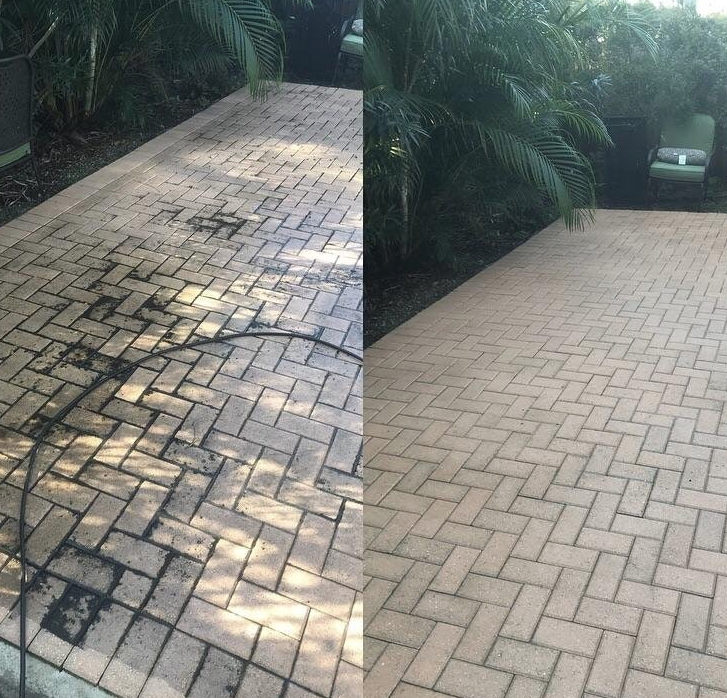
South Florida homeowners trust us to clean, sand, and seal their pavers the right way the first time, here’s what they’re saying after seeing their driveways, patios, and pool decks transformed.
Broward County, Miami-Dade County, & Monroe County