
Tell us about your project and we’ll follow up with a clear, no‑pressure quote and timeline.
The short version
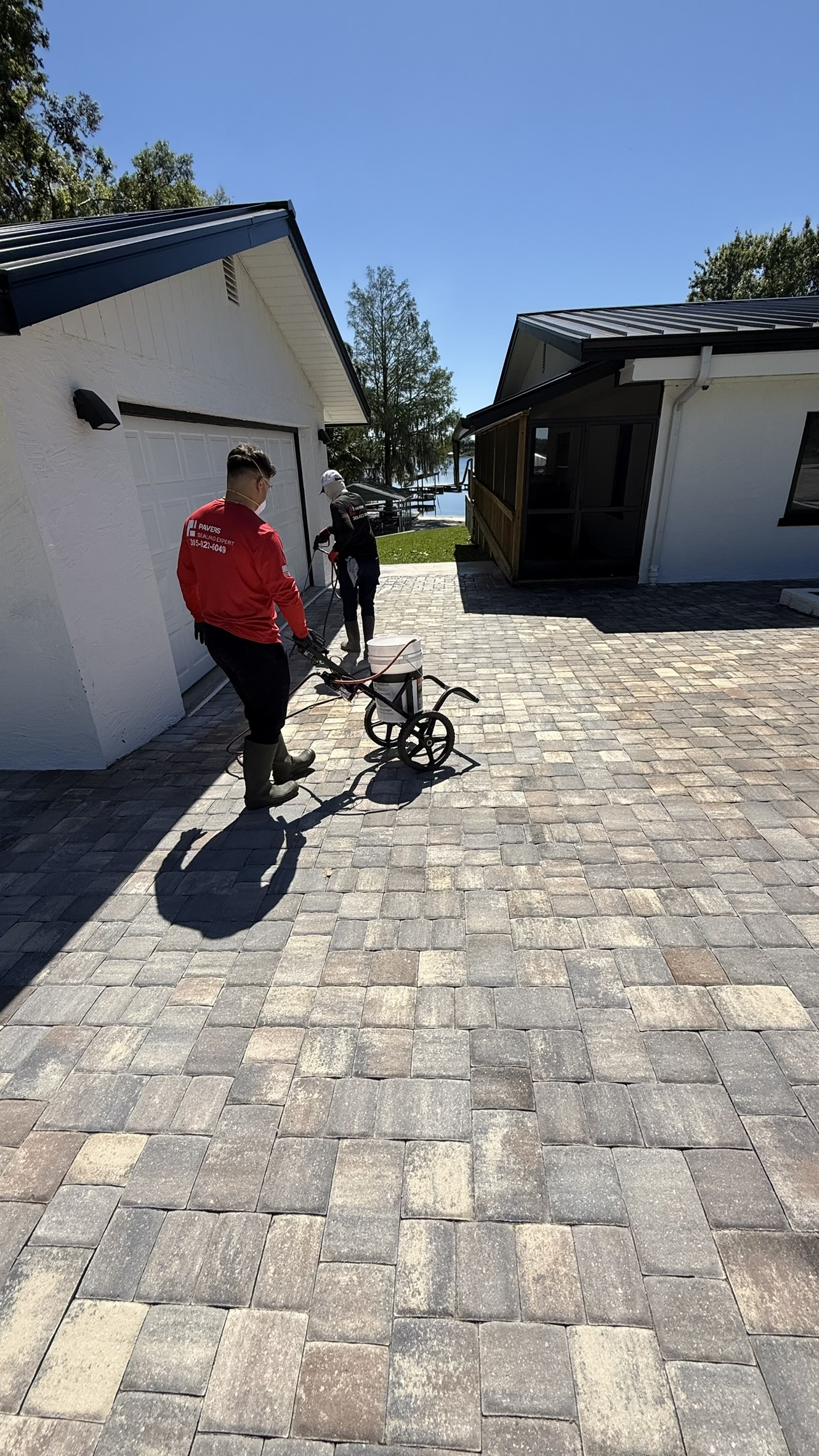
Based on published rates from paver sealing companies across Miami-Dade, Broward and the rest of Florida, a basic clean-and-seal job typically runs $1.25 to $3.50 per square foot, with premium, full-protocol service running closer to $2.50 to $4.00 per square foot. Smaller jobs, generally under 500 square feet, tend to land at the higher end of that range, often $2.20 to $3.25 per square foot, since cleaning equipment, a crew and materials all have to show up regardless of job size. Larger driveways, patios and pool decks, especially 500 to 1,000 square feet and up, usually come down to $1.50 to $2.95 per square foot. Many companies also carry a minimum job charge, commonly in the $700 to $800 range, to cover that same fixed cost of showing up.
These are general South Florida market rates gathered from published pricing across the industry, not a quote for your property. Request a free estimate and we’ll give you an exact number after seeing your pavers.
Here is the published market range ($1.25 to $3.50 per square foot for a basic clean-and-seal) applied to common South Florida jobs. These are arithmetic on market ranges, not our quote, and they assume concrete pavers in normal condition.
| Area | Typical area it covers | Low to high at $1.25-$3.50 | What to watch |
|---|---|---|---|
| 300 sq ft | Entry and walkway | $375 to $1,050 on paper | A minimum job charge (commonly $700 to $800) usually sets the floor |
| 600 sq ft | Patio plus walkway | $750 to $2,100 | Small jobs land near the top of the range |
| 1,000 sq ft | Two-car driveway | $1,250 to $3,500 | Oil stains and joint sand work move you up the range |
| 1,500 sq ft | Driveway plus pool deck | $1,875 to $5,250 | Travertine decks price higher per square foot |
| 2,500 sq ft | Large lot or small community common area | $3,125 to $8,750 | Ask whether a volume price applies |
Measure by length times width for each rectangle, add them up, then include steps and the pool-deck apron. Quotes tend to land lower in the range when the area is big and open and higher when it is broken up by planters, furniture and tight gates. Most of the cost sits in the prep, not the sealer itself, which is why a bigger paver sealing job does not scale in a straight line.
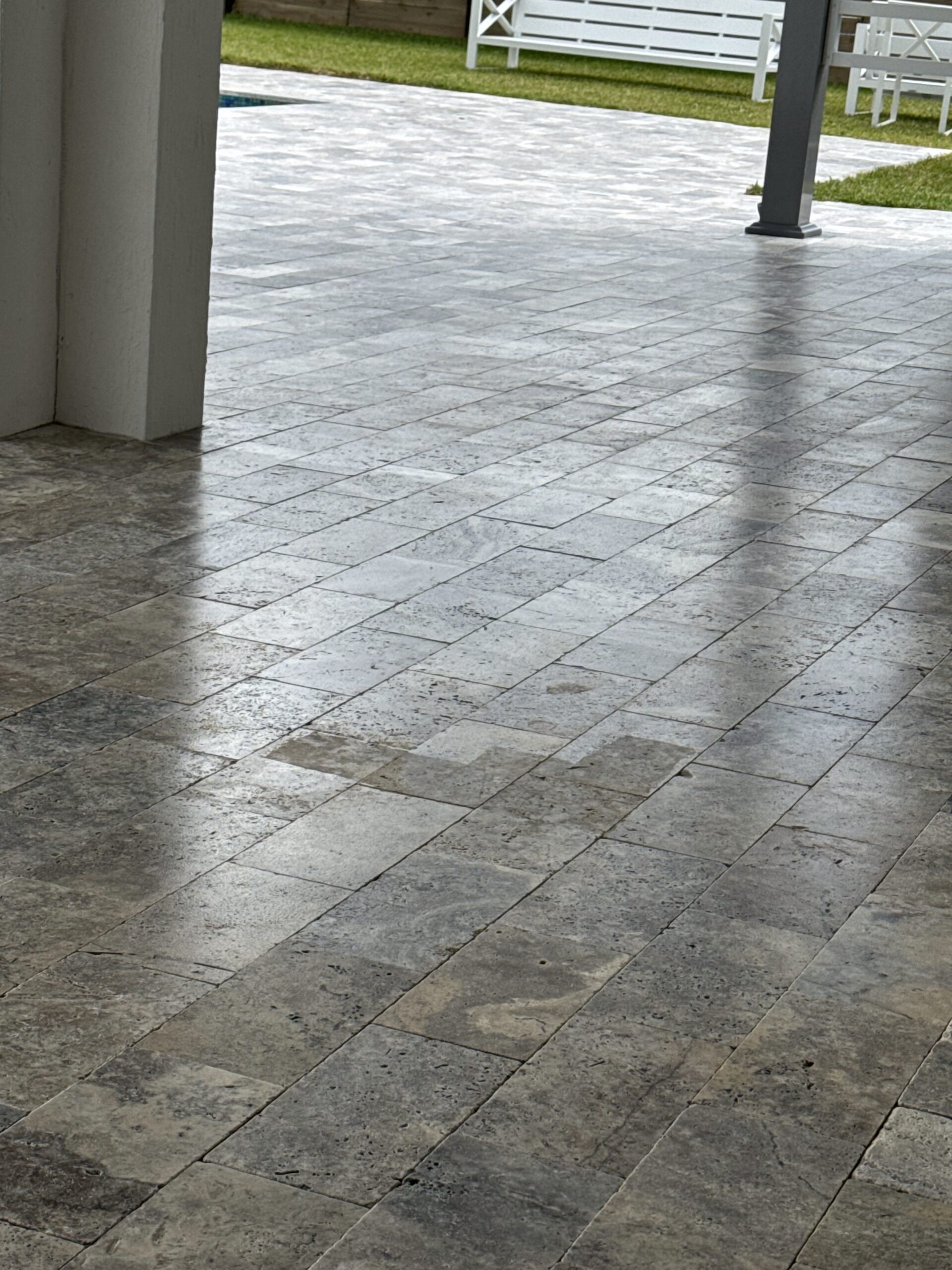
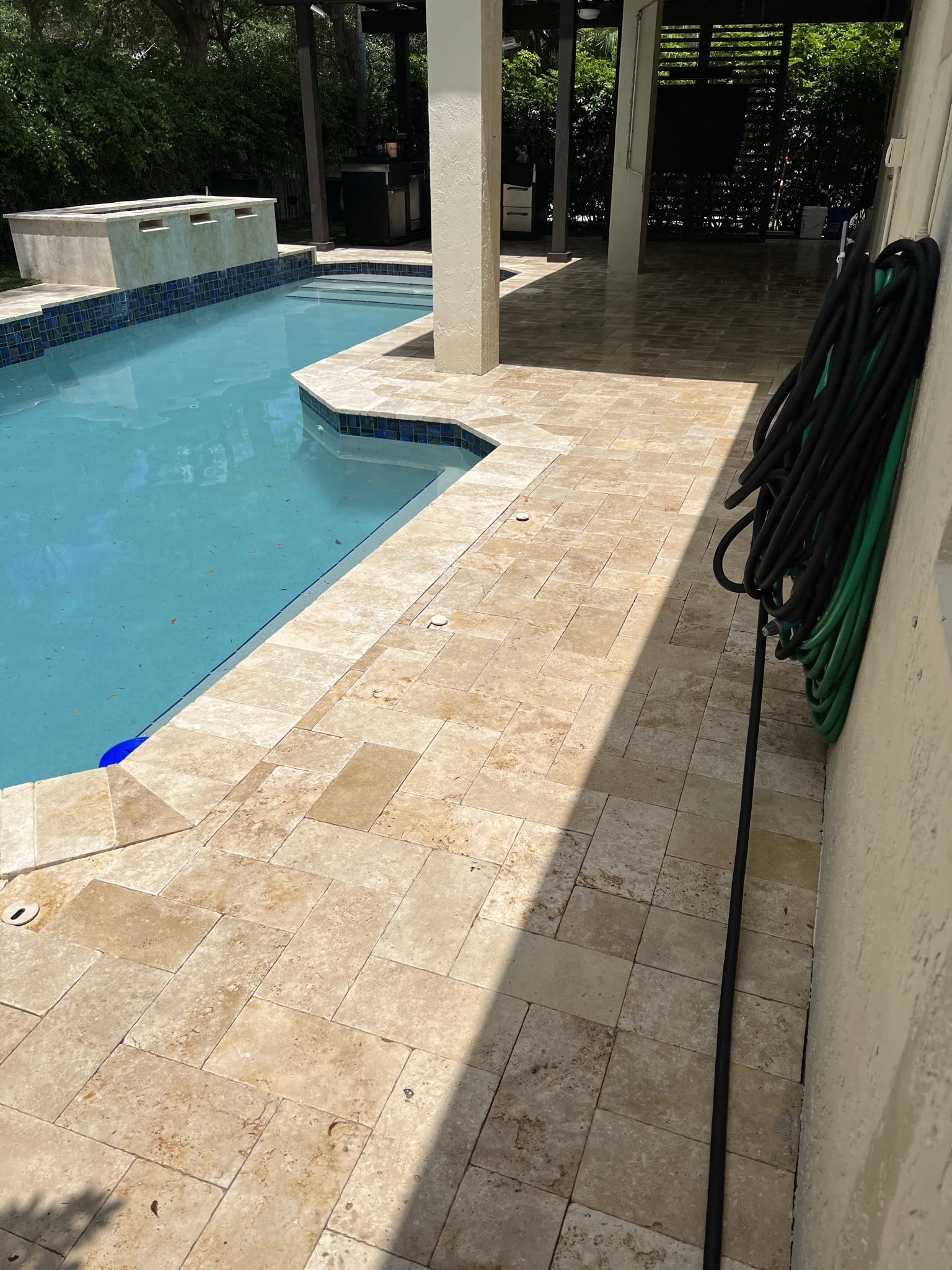
Not all pavers cost the same to seal. Concrete pavers are generally the most affordable to seal. Brick pavers usually run a bit higher, since they’re more prone to erosion and staining over time. Natural stone like travertine is typically the most expensive to seal, because it’s porous, often needs efflorescence treatment first, and requires a different, more careful cleaning and sealing process than concrete or brick.
The table shows typical per-material ranges drawn from published contractor rates. They are market ranges, not our quote, and individual jobs land inside or outside them depending on condition and access.
| Material | Typical Sealing Cost per Sq Ft | Why |
|---|---|---|
| Concrete pavers | $1.25-$2.75 | Less porous, standard cleaning process |
| Brick pavers | $1.75-$3.25 | More prone to erosion and staining |
| Travertine / natural stone | $2.50-$4.00+ | Porous, often needs efflorescence treatment first |
If your pavers have sealer that’s gone white, hazy or is peeling, it usually has to be chemically stripped before a new coat can go down properly. Published market rates put stripping at about $2.50 or more per square foot on top of the resealing cost itself, since it involves harsh chemicals and extra labor. This is one of the most common ways an initially cheap sealing job ends up costing more in the long run, if the original work wasn’t done correctly.
Sealing is usually priced together with the cleaning and joint work that comes before it, which is why the ranges above already include pressure washing and re-sanding as part of the job. If your pavers need more than sealing, cost depends on the specific work:
Contractors in public groups quote anywhere from about $1.00 to $1.75 per square foot for basic work, while others price a full-protocol job near $2.50 to $4.00. The gap is almost always scope. Published sources also put repairs of a botched job at roughly $2.50 to $3.00 per square foot, which is why scope matters more than the headline number. When you compare quotes, put these on one sheet:
A quote that cannot answer these in writing is not necessarily dishonest, but you cannot compare it to one that can. See which sealer fits your pavers for the product side.
A quote noticeably under $1.50 per square foot is worth a second look. It can mean a thinner sealer, a skipped cleaning step, or joints that don’t get properly re-sanded, all of which show up later as a hazy finish, weeds coming back fast, or a coat that fails within a year instead of the two to three years a well-done job commonly lasts. It’s worth asking any contractor what’s actually included, what sealer they use, and for their Florida license number, which you can verify, before comparing price alone.
Retail sealer on home-improvement store listings we checked in October 2026 ran about $33 to $49 per gallon for popular wet-look and natural-look products. Coverage varies by product and paver porosity, so check the label; one manufacturer states about 200 square feet per gallon for topical sealers. On an 800 square foot driveway with two coats, that is roughly 8 gallons, or about $265 to $390 in sealer alone. That is product only. Add a rental surface cleaner or pressure washer, joint sand, stripper if the old coat is failing, brushes, a sprayer, and your weekend.
The savings are real on a small, dry, well-kept patio. They shrink fast on a driveway, and they disappear if the job turns cloudy and needs stripping. Our DIY versus professional guide covers the steps that go wrong most often. Prices change, so check current shelf prices before you budget.
Not on the quote sheet, but it changes the schedule. Pavers must be dry before sealer goes on, and published manufacturer guidance commonly asks for at least 24 hours of drying after washing, longer when it is cool or after pressure washing. In a South Florida summer, afternoon storms can push a job a day or two. Late fall through spring is the easier window, and it is also when most homeowners call, so book early if you want February through May. Ask whether a rain delay costs you anything before you sign.
If your property is outside Miami, local notes are on our Miami and Fort Lauderdale pages, and we also work in Palm Beach County and the Keys.
Every property is different, so the only way to get a real number is to have us take a look. Request a free estimate and we’ll walk your property, explain exactly what it needs, and give you a clear price before any work starts. If you are also planning new pavers, our paver installation cost guide covers that side of the budget.
Quick answers to the price questions we hear most are below. Each one ties back to the sections above, and every figure is a published market range, not our quote.
Multiply your total square footage by $1.25 and by $3.50 (or use the size table above) to get a rough floor and ceiling for a standard concrete job (adjust upward for brick or travertine using the table above). If a quote lands noticeably outside that range in either direction, ask why. Below the range often means shortcuts on prep or a thinner, cheaper sealer. Above it should come with a clear explanation, heavy staining requiring extra treatment, difficult access, or a premium sealer product, not just a higher number with no reason attached.
For a local view of pricing and timing, see paver sealing in Homestead.
Based on published South Florida market rates (checked October 2026), a basic clean-and-seal job typically runs $1.25 to $3.50 per square foot, with premium service closer to $2.50 to $4.00. Your exact price depends on the size and condition of your pavers, which is why we quote after seeing the job.
Many companies carry a minimum job charge, commonly in the $700 to $800 range for a standard project. This covers the fixed cost of bringing equipment and a crew regardless of how small the area is. Ask any company you call whether it has one before you compare per-square-foot prices.
Yes, typically. Travertine is porous, often needs efflorescence treatment before sealing, and requires a more careful process than concrete or brick, which is reflected in the price.
A quote well under $1.50 per square foot often means a thinner sealer, a skipped cleaning step, or joints that don’t get properly re-sanded. It can look like a good deal until the coat fails within a year instead of the two to three years a good job commonly lasts.
Published market rates put stripping at about $2.50 or more per square foot on top of the resealing cost, since it requires chemicals and extra labor. It’s one of the most common reasons an initially cheap job ends up costing more overall.
Yes. Sealing is normally quoted as one package that includes pressure washing and joint re-sanding beforehand, which is why the per-square-foot ranges already account for that prep work.
It depends more on the material and condition than on being a pool deck specifically, though pool decks are often travertine or natural stone, which does cost more to seal than concrete.
Request a free estimate. We’ll look at your pavers in person, tell you honestly what they need, and give you a clear price before any work starts.
At the published market range of $1.25 to $3.50 per square foot, a 1,000 square foot driveway works out to about $1,250 to $3,500. Oil stains, joint sand work and old sealer to strip all push toward the top. This is arithmetic on market ranges, not our quote. See the size table above.
Usually, yes, if it is done right. A job that commonly lasts two to three years on a 1,000 square foot driveway works out to roughly $420 to $1,750 per year at market ranges, against $2,500 or more just to strip a failed coat later. Skipping prep to save money is what makes it a poor deal.
Short, practical articles to help you keep your driveway, patio, and pool deck looking freshly sealed between professional visits.
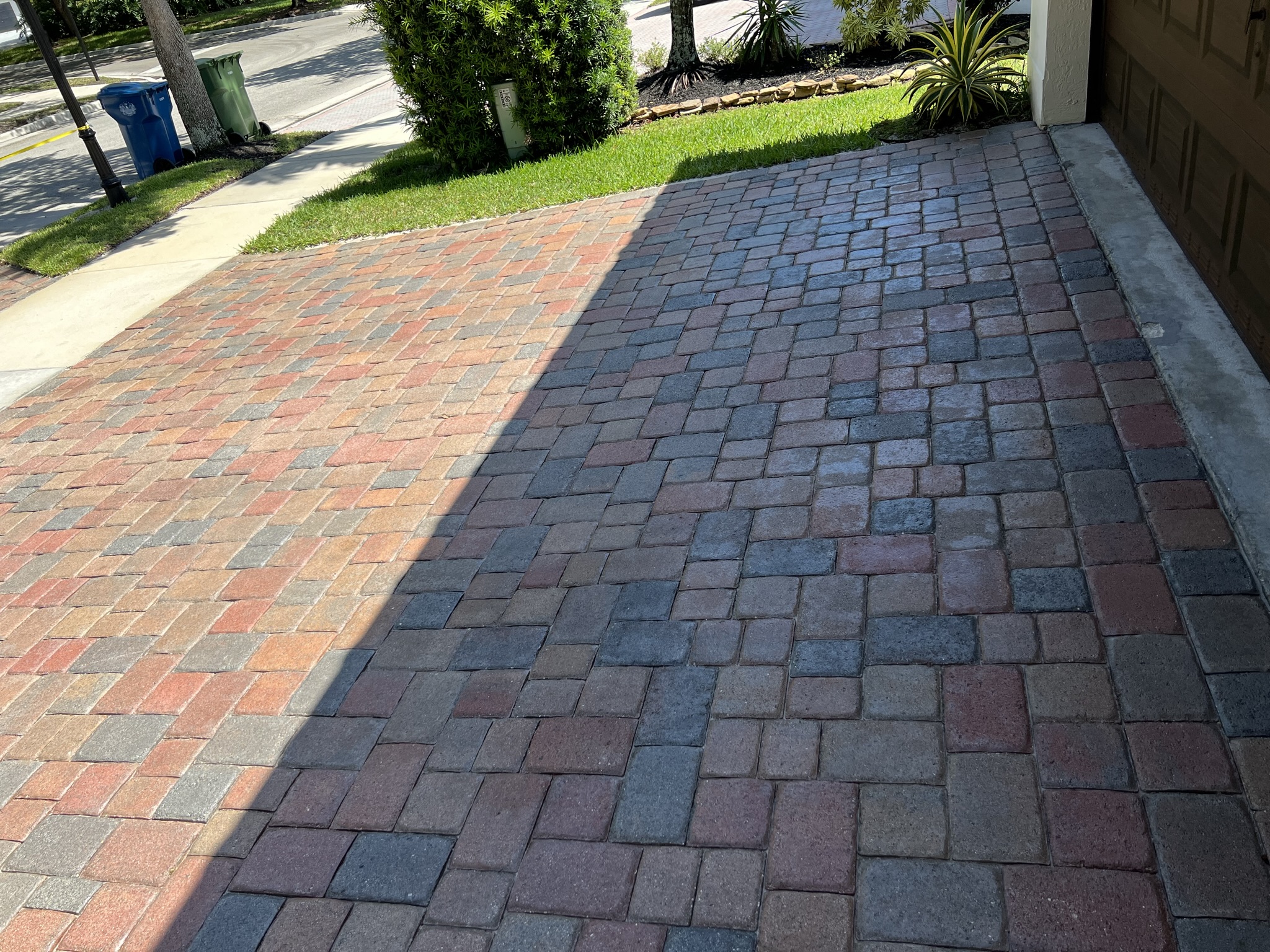
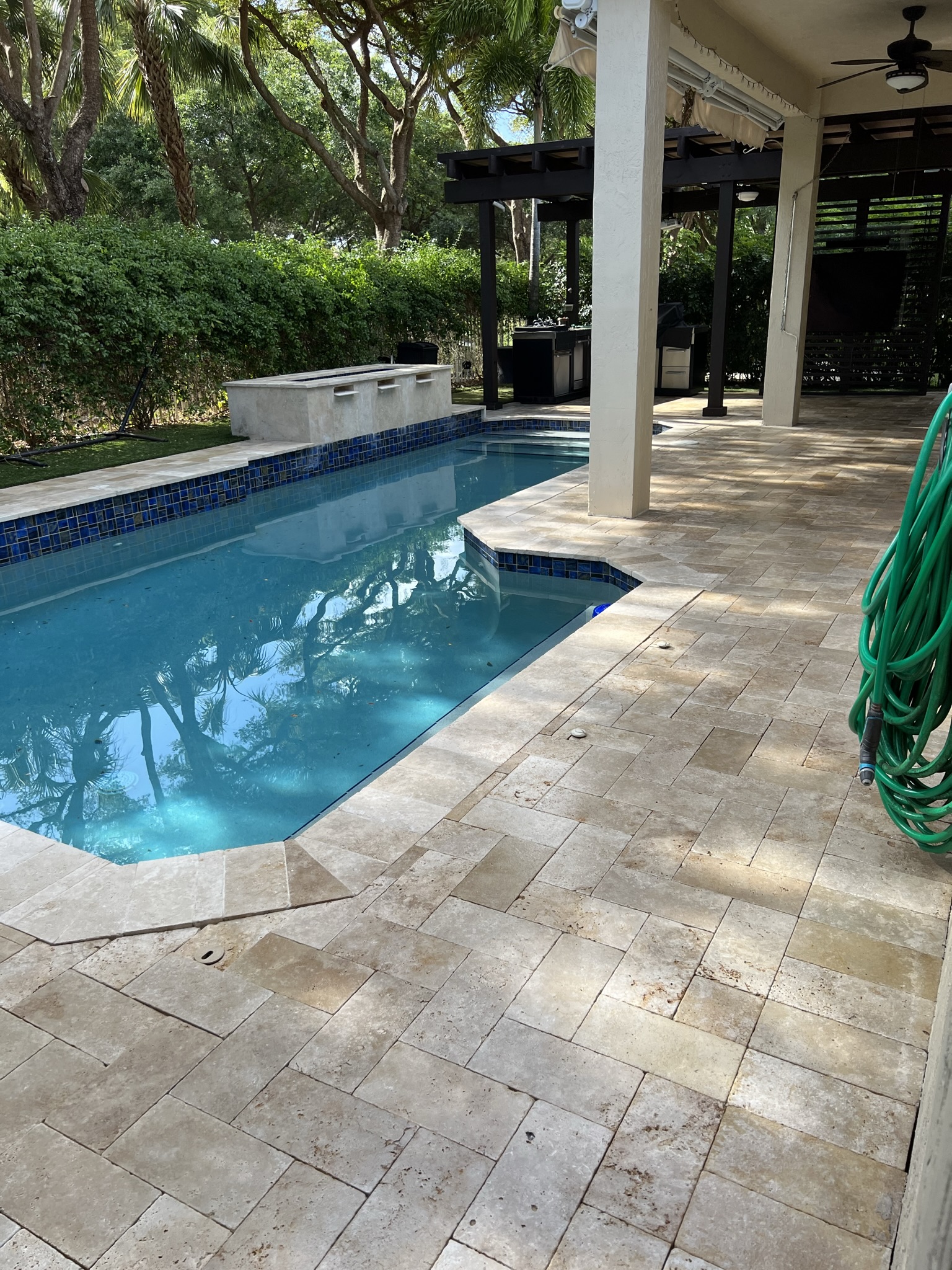
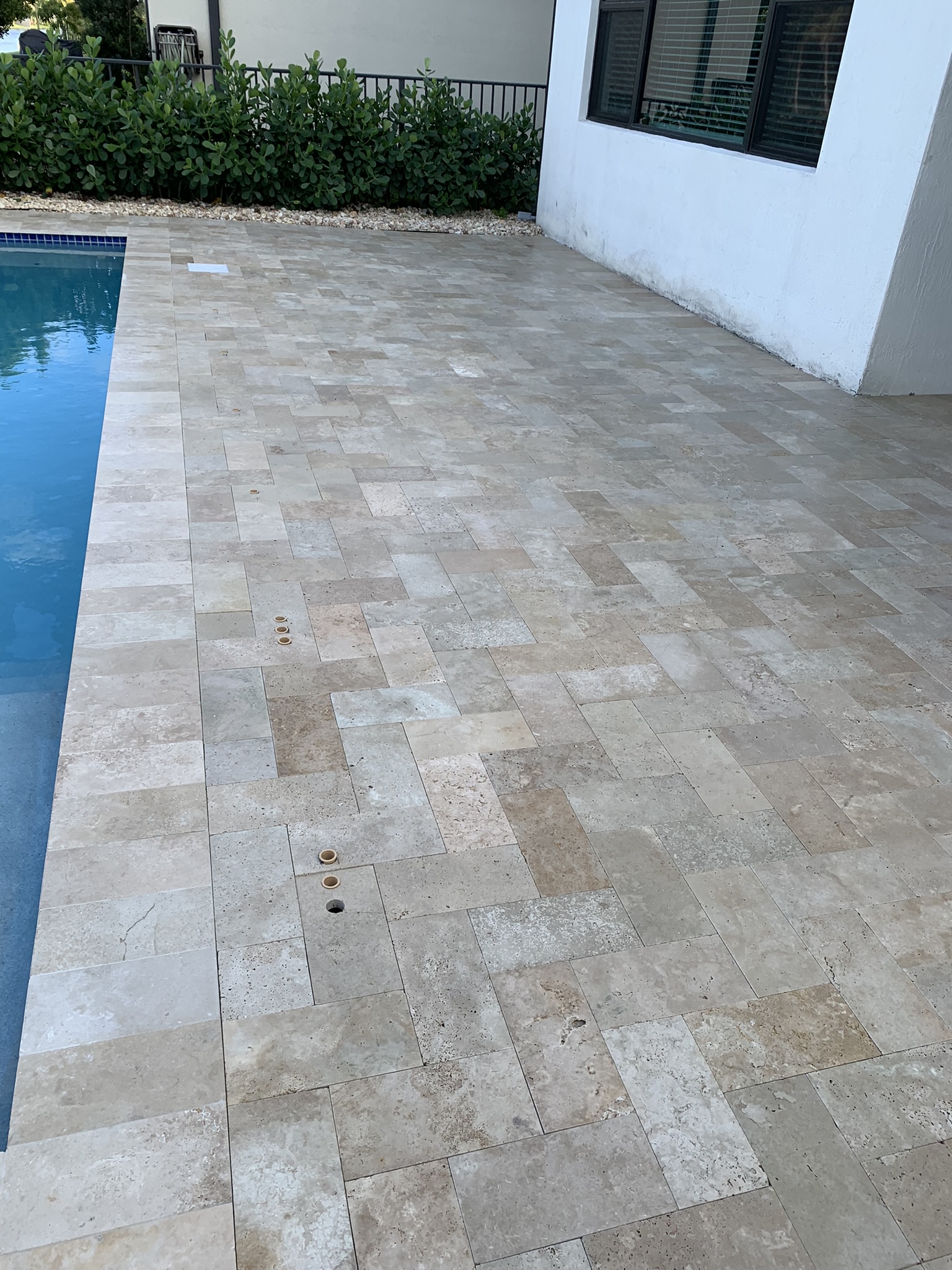
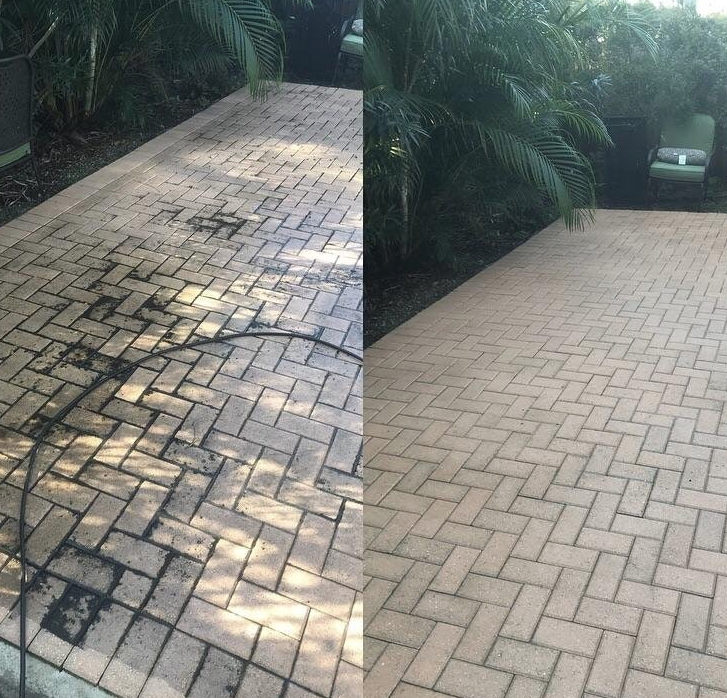
South Florida homeowners trust us to clean, sand, and seal their pavers the right way the first time, here’s what they’re saying after seeing their driveways, patios, and pool decks transformed.
Miami-Dade County, Broward County, Palm Beach County & Monroe County