
Non-slip, chemical-resistant sealing for travertine, concrete paver and coping pool decks across South Florida. Built for bare feet, splash-out, and Florida sun.
Tell us about your project and we’ll follow up with a clear, no‑pressure quote and timeline.
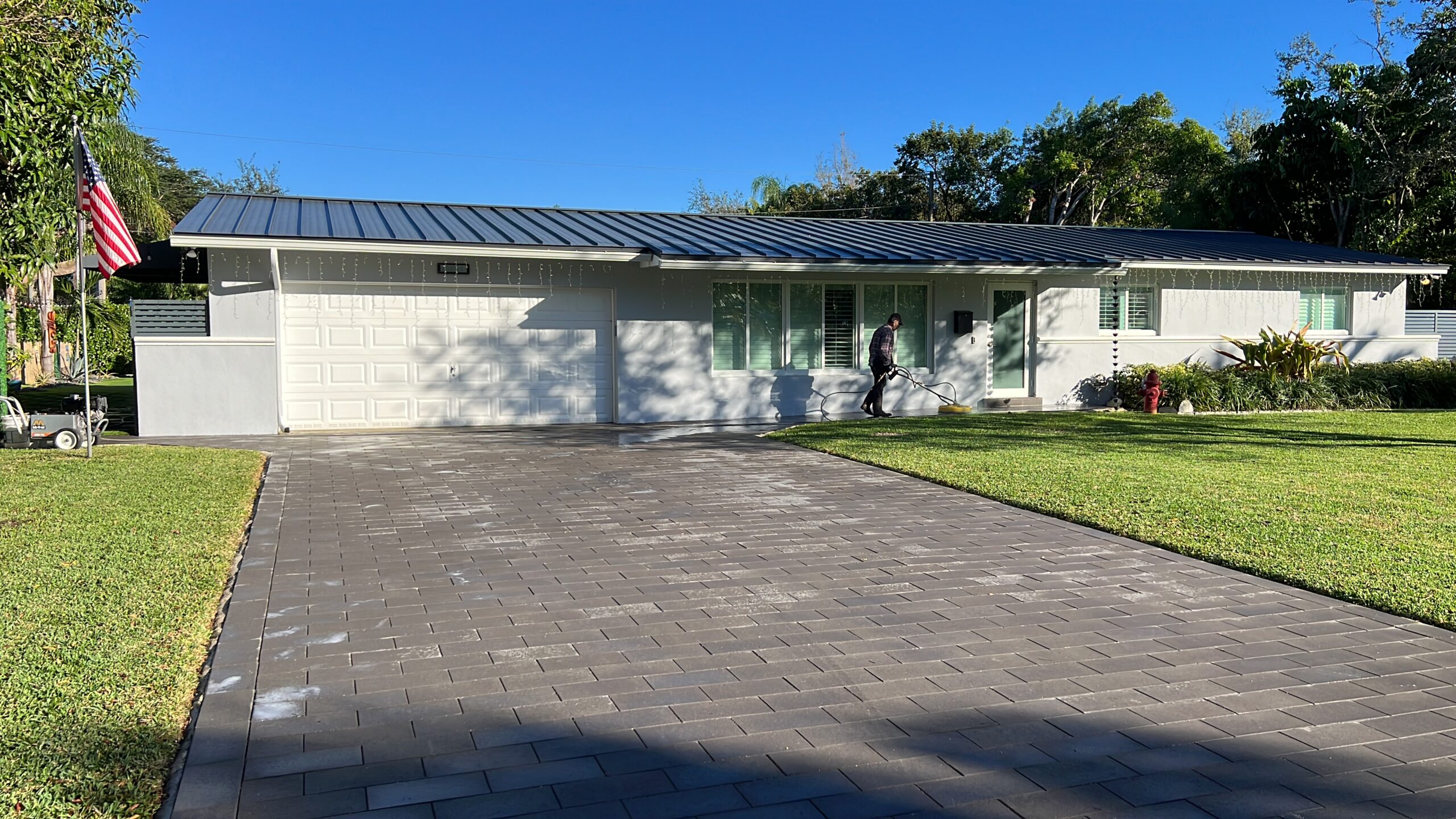
If you have ever wondered why your travertine looks worse faster than your neighbor’s concrete pavers, it comes down to the stone itself. Travertine is a natural limestone formed around hot springs, which means it comes out of the ground full of tiny holes and voids. That texture is part of what makes it look so good, but it also means it drinks in anything that lands on it: pool water, rain, sunscreen, cooking grease, and mineral deposits.
Standard concrete pavers are dense and uniform. Travertine is not. That is why the cleaning process, the sealer type, and the application method all have to be dialed in specifically for this material. Our approach to professional paver sealing is always matched to the surface we are working on, and travertine gets its own protocol from start to finish.
A pool deck isn’t just another paved surface. It’s wet constantly, walked on with bare feet, splashed with pool chemicals, and baking in direct Florida sun for most of the day. Sealing a driveway and sealing a pool deck use some of the same steps, but the priorities are different: safety underfoot comes first, then protection against chemicals and staining, and only after that, appearance. Getting the finish wrong on a pool deck isn’t just a cosmetic mistake, it’s the kind of thing that leads to a fall.
Florida’s building code requires pool decks to have a “smooth slip-resistant finish,” but the code itself doesn’t spell out a specific test or number, which leaves a lot of room for a sealer to look fine on paper and still be dangerously slick in practice. We go by the standards the concrete and pool industries actually use: a wet coefficient of friction around 0.5 to 0.6, in line with widely used ADA and industry guidance for safe walking surfaces. In practice, that means natural or matte finishes on pool decks, non-slip additives where needed, and never a high-gloss wet-look sealer around a pool, no matter how good it looks in photos.
If you have a saltwater pool, your deck is dealing with something a chlorine pool doesn’t: salt crystals. As splashed water evaporates off the deck and coping, it leaves behind jagged salt crystals that slowly abrade the surface and the sealer over time, especially right at the coping edge where splash-out is heaviest. This is one of the most overlooked reasons a pool deck sealer fails early. We factor in whether your pool is salt or chlorine when choosing the sealer, and coping usually needs the same attention as the deck itself, not an afterthought.
Pool decks are especially prone to cracking from ground movement near the pool shell, and to efflorescence, the white, chalky mineral deposits that show up when water constantly moves through porous stone. Sealing over either of these just traps the problem underneath. We treat efflorescence and address cracked or unstable coping and pavers before sealing, so the finish actually lasts. If the damage goes beyond what sealing alone can fix, our paver restoration service covers the repair work first.
Pool decks generally need resealing more often than a driveway, typically every 18 to 24 months rather than the 2 to 3 years you’d expect elsewhere. Constant moisture, pool chemicals, and daily sun exposure all wear on the sealer faster right around the water. If you’re noticing water no longer beading on the surface, or the deck feels rougher or more porous than it used to, that’s usually the sign it’s time.
Pricing depends on the size of the deck, the material (travertine and natural stone cost more than concrete pavers), how much coping is involved, and whether efflorescence treatment or repairs are needed first. We quote after seeing the deck in person. Request a free estimate and we’ll give you a clear price and timeline.
Travertine sealing is priced differently than sealing concrete or brick pavers, mainly because the prep work matters so much more. What moves the price:
We quote after seeing the surface and its condition. Request a free estimate and we’ll give you a clear number.
Not if it’s done right. We use natural or matte finishes and non-slip additives on pool decks, targeting the same wet-friction standards the pool and concrete industries use, and we never put a high-gloss wet-look sealer on a pool deck.
Yes, but the product and approach matter. Saltwater pools cause salt crystals to form on the deck and coping as splashed water evaporates, which wears down sealer faster. We factor in whether your pool is salt or chlorine when choosing the sealer.
Coping should usually be sealed along with the deck. It takes the most direct splash and salt exposure of any part of the pool area, so treating it separately or skipping it is a common reason pool decks look worn right at the edge first.
Typically every 18 to 24 months, sooner than a driveway or patio. Constant moisture, pool chemicals and full sun all wear on pool deck sealer faster than surfaces away from the water.
Yes. We use a penetrating sealer on travertine pool decks specifically because it protects without leaving a surface film, so the stone keeps its natural, non-slip texture.
Yes. Sealing over efflorescence (white mineral haze) or a cracked, unstable area traps the problem instead of fixing it. We treat and repair those issues first, or refer to our restoration process if the damage is significant.
Yes. We use products safe for normal pool-area use once fully cured, and we’ll tell you exactly how long to stay off the deck before it’s back in regular use.
It depends on the size of the deck, the material, and how much coping and repair work is involved. Natural stone like travertine typically costs more to seal than concrete pavers. Request a free estimate for an exact price.
Tell us about your pool deck and we’ll give you a clear price and a sealer recommendation that keeps it safe, protected, and non-slip.
South Florida homeowners trust us to clean, sand, and seal their pavers the right way the first time, here’s what they’re saying after seeing their driveways, patios, and pool decks transformed.
Broward County, Miami-Dade County, & Monroe County