
Tell us about your project and we’ll follow up with a clear, no‑pressure quote and timeline.
The short version
Every paver sealer falls into one of two visual categories: film-forming sealers that sit on top of the paver and create a wet-look or gloss finish, and penetrating sealers that soak into the paver and leave it looking close to its original, dry appearance. The confusion homeowners run into isn’t really about which looks better, it’s that these two finishes come with genuinely different tradeoffs beyond just appearance, and South Florida’s climate makes some of those tradeoffs bigger than they’d be elsewhere.
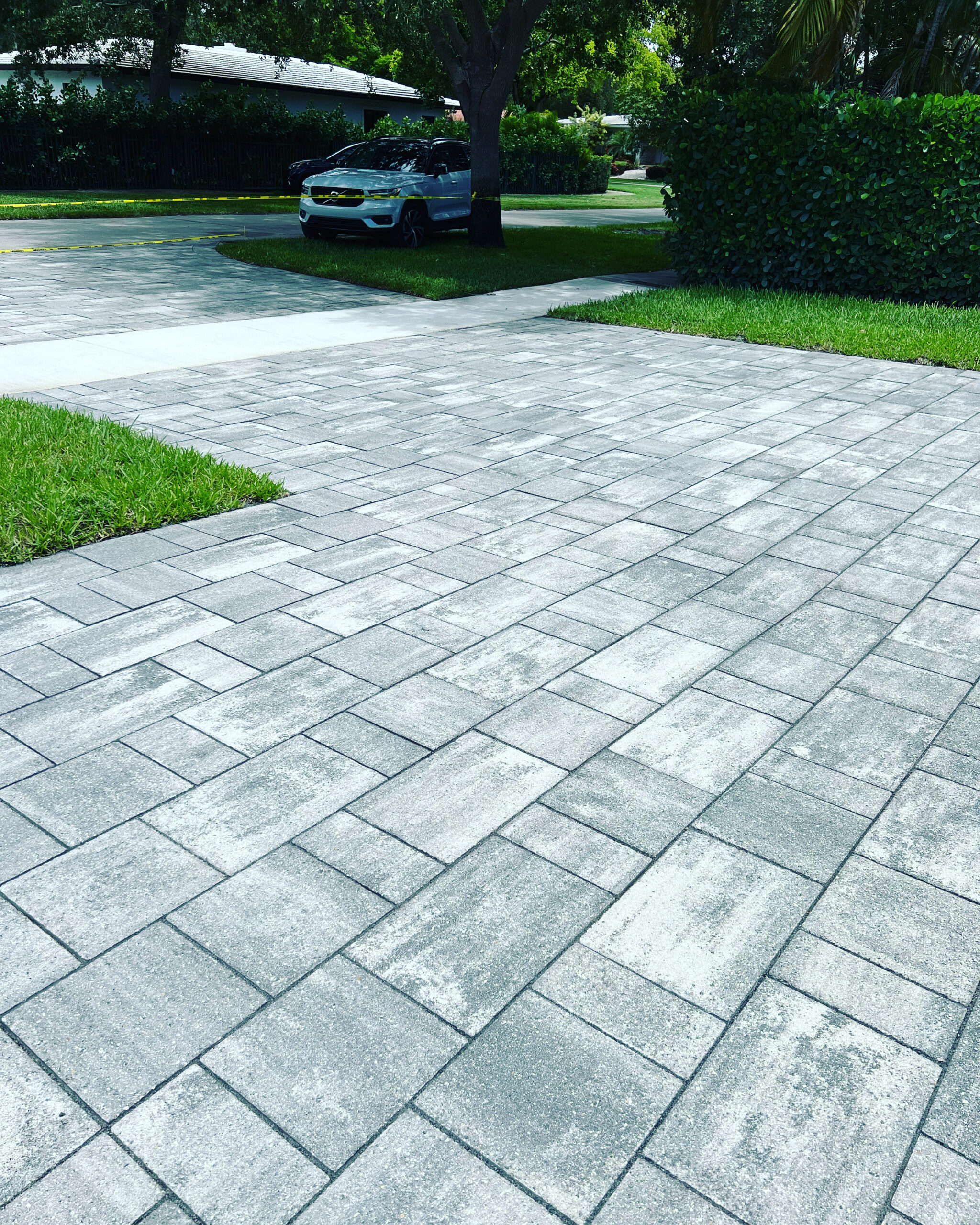
A wet-look sealer forms a thin film on the surface of the paver. That film is what gives you the deep, saturated color and the glossy sheen that makes a driveway look freshly rained-on even in dry weather. It’s the finish most people picture when they think “sealed pavers,” and it genuinely does make faded or dull pavers look dramatically better, sometimes better than they looked when new.
The tradeoff is that a film-forming sealer traps whatever’s underneath it. In South Florida’s humidity, that means any moisture already in the paver when it’s sealed can get trapped, leading to a hazy or cloudy look called blushing. It also means the film itself is what takes UV and foot-traffic wear, not the paver, so a wet-look finish typically needs resealing sooner than a penetrating one, especially in direct sun.
A penetrating sealer soaks into the paver’s pores instead of sitting on top. It doesn’t add shine or noticeably darken the color, what you get is closer to the paver’s natural, dry appearance, just protected against water absorption, staining, and UV fading. Because it’s absorbed rather than sitting as a film, there’s nothing on the surface to peel, and it doesn’t trap moisture the way a film-forming product can.
The tradeoff is mostly cosmetic: if you were hoping for that deep, glossy “just sealed” look, a penetrating sealer won’t give you that. It protects the paver without transforming its appearance.
This is the tradeoff that actually matters most for safety, and it’s the one a lot of online reviews and forum threads gloss over. A high-gloss, film-forming sealer can noticeably reduce traction when wet, which is a real problem on pool decks, entry steps, and any walkway that gets rained on. We don’t recommend a high-gloss wet-look finish on pool decks at all. If you want the wet-look color enhancement in that kind of area, ask about a low-sheen or satin wet-look option with slip-resistant additives mixed in, it’s a middle ground that exists specifically for this reason.
The most common regret we see echoed in online paver and landscaping discussions isn’t “I chose the wrong finish,” it’s “I didn’t know how different it would look until it was already dry.” A wet-look sealer on certain paver colors, especially older, sun-faded brick pavers, can come out much darker and more saturated than homeowners expected from a photo. The advice that actually holds up: always ask for a small test patch in an inconspicuous area before committing the whole driveway, and look at it dry, not while it’s still wet from application, since wet-look sealers can look deceptively glossy for the first hour or two before settling into their true finish.
If you’re in an HOA community, check your architectural guidelines before picking a finish. Some HOAs restrict high-gloss finishes on street-facing driveways, and others have the opposite preference. It’s worth a five-minute check before you fall in love with a specific look, since redoing a finish because it violated a guideline is money spent twice.
If your priority is maximum color enhancement and you’re sealing a driveway or a walkway that doesn’t get standing water often, a satin or low-sheen wet-look finish gives you most of the visual upgrade without the full slip risk of a high-gloss product. If your priority is a pool deck, a heavily shaded walkway, or you simply want the most durable, lowest-maintenance option, a penetrating matte sealer is usually the better long-term choice in South Florida’s climate. Neither one is objectively “better,” the right choice depends on where it’s going and what you actually want it to do.
Not sure which finish fits your specific pavers and how they’re used? See our paver sealing service page or pool deck sealing page for more on how we match sealer type to the surface, and request a free estimate and we’ll walk you through the options for your specific project.
| Factor | Wet Look (Film-Forming) | Matte (Penetrating) |
|---|---|---|
| Appearance | Glossy, darkened, saturated color | Close to natural, dry appearance |
| Wet traction | Reduced, avoid high-gloss near pools | Unaffected, safer for pool decks |
| Moisture handling | Can trap moisture, risk of blushing/haze | Breathable, lets vapor escape |
| Typical lifespan in FL sun | 1.5-2.5 years on sun-exposed surfaces | 2-3+ years, less UV wear on the film |
| Best for | Driveways, walkways, faded pavers needing a refresh | Pool decks, shaded/humid areas, low-maintenance priority |
| Reapplication difficulty | Usually needs full strip if switching finishes | Easier to switch to wet-look later if desired |
Sealer finishes actually fall on a spectrum, not just two categories. Manufacturers typically rate sheen level, from full matte (0-10 gloss units), to satin or low-sheen (10-30 gloss units), to high-gloss wet-look (60+ gloss units). This matters because the “middle ground” we mention above, a satin or low-sheen wet-look, is a real, specific product category, not just a compromise you’re inventing yourself. When you’re getting quotes, ask specifically for the gloss unit range or the manufacturer’s sheen name rather than just “shiny” or “not shiny,” since two contractors’ idea of “satin” can differ noticeably.
In South Florida specifically, humidity and intense UV are the two biggest factors working against any film-forming sealer. High-gloss finishes on unshaded, south-facing driveways see the fastest wear because UV breaks down the film’s clarity over time, causing a gradual yellowing or dulling that’s often mistaken for dirt. This is a normal aging process for film-forming sealers, not a sign of a bad product, and it’s one more reason penetrating sealers tend to need less frequent attention in our climate specifically.
Material cost between wet-look and matte penetrating sealers is generally comparable, the price difference on a quote usually comes down to the brand and grade of product used, not the finish type itself. Where cost differences actually show up is over time: if a wet-look finish needs resealing every 18-24 months on a sun-exposed surface versus 2-3 years for a penetrating sealer in the same spot, that’s roughly one extra resealing cycle every 4-5 years. For a typical driveway, that difference is worth factoring into your decision if you’re thinking long-term rather than just about the initial job.
A high-gloss wet-look finish can noticeably reduce traction when wet, which is why we don’t recommend it for pool decks. A satin or low-sheen wet-look option with slip-resistant additives gives some of the color enhancement without the same slip risk.
Often yes, and sometimes more dramatic than expected. Wet-look sealers darken and saturate color significantly, which is great for faded pavers but can look surprisingly dark on certain colors. We recommend a small test patch first.
Yes. A penetrating matte sealer protects against water absorption, staining, and UV fading just as effectively as a wet-look sealer, it just doesn’t change the paver’s appearance the way a film-forming sealer does.
It varies by product and exposure, but generally penetrating matte sealers last a bit longer under direct sun since there’s no surface film to wear down. Wet-look sealers may need resealing sooner in heavily sun-exposed areas.
In most cases yes, though switching from a wet-look film-forming sealer to a matte penetrating one may require extra stripping first to make sure the new sealer can properly absorb into the paver.
Some do. A number of HOAs have architectural guidelines that restrict high-gloss finishes on street-facing driveways. It’s worth a quick check before committing to a specific look.
Short, practical articles to help you keep your driveway, patio, and pool deck looking freshly sealed between professional visits.
South Florida homeowners trust us to clean, sand, and seal their pavers the right way the first time, here’s what they’re saying after seeing their driveways, patios, and pool decks transformed.
Broward County, Miami-Dade County, & Monroe County