
An honest guide to pool deck pavers in Miami: travertine, concrete and porcelain, slip resistance, heat, permits, installation and sealing.
Tell us about your project and we’ll follow up with a clear, no‑pressure quote and timeline.
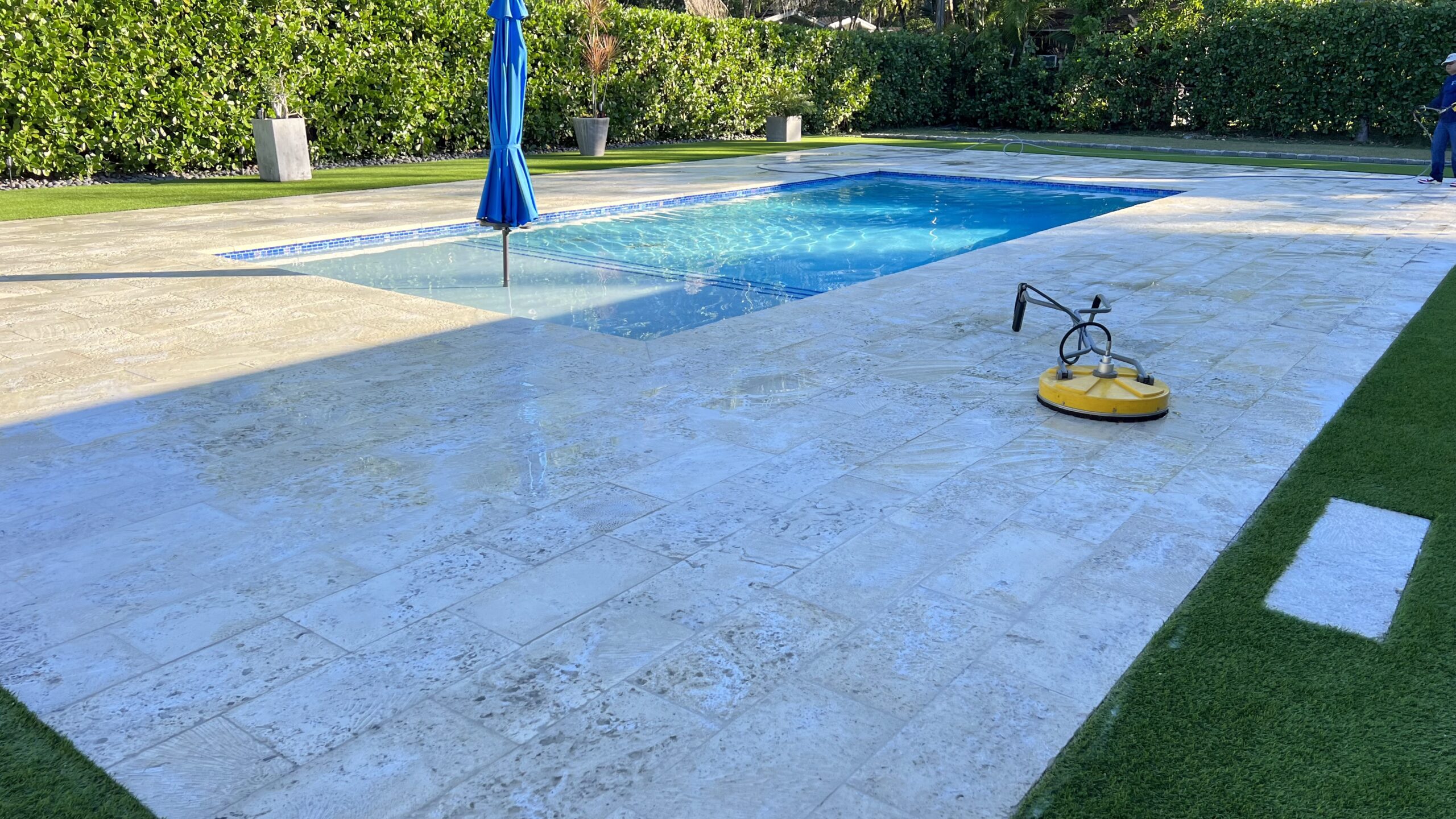
A pool deck is the hardest-working paver surface in a South Florida yard. It gets sun, rain, chlorine or salt, bare feet and constant moisture. Choosing the right material and caring for it correctly matters more here than on a driveway. This guide covers the choices homeowners ask about most: travertine, concrete pavers and porcelain, how slippery and how hot each can be, what to expect for permits, and how sealing fits in. We install and seal pool decks in Miami-Dade, and we tell you plainly where the facts are limited.
Planning a deck? Request a free estimate and tell us the material, the size and whether the pool uses salt or chlorine.
There is no single best answer, because the trade-offs are real. Published installed prices for pool deck pavers in Florida run roughly $12 to $32 per square foot depending on the material. Contractor pages put travertine around the high teens to high twenties and concrete pavers lower, but these come from blogs, so treat them as market ranges, not a quote.
| Material | Strengths | Watch-outs |
|---|---|---|
| Travertine | Natural look, usually comfortable underfoot in many finishes, a classic pool deck choice. | Porous, needs a penetrating sealer, can show white salt residue, honed or filled finishes get slick when wet. |
| Concrete pavers | Lower price, many colors and shapes, strong and easy to repair a piece at a time. | Color fades over time, joints need polymeric sand, dark colors can run hot in the sun. |
| Porcelain pavers | Low absorption, stain resistant, a popular modern look. | We could not find reliable Florida pricing, and each product has its own slip rating, so ask for the data sheet. |
For travertine specifics, see our travertine sealing page and the travertine pool deck guide. For installation costs by material, read the paver installation cost guide.
Tile and stone makers measure slip resistance with a number called the dynamic coefficient of friction, or DCOF. A tile distributor summarizing the ANSI A326.3 classification lists pool decks as an exterior wet area and says a wet DCOF of 0.55 or higher is generally accepted for that class. That wording is not the standard itself, so ask the product maker for the rating of the exact paver and finish and check current requirements with your builder or the county. We could not confirm a specific Florida Building Code rule for residential pool decks.
What is clear from experience is the pattern: honed and filled travertine is the finish owners most often call slippery, and tumbled or textured finishes grip better (a single consumer source, so hedge). A sealer should never make the deck glossier. We use non-slip, breathable finishes on pool decks and never high-gloss. Our wet look versus matte guide explains why.
Color, material and finish all change how hot a surface gets, and we could not find independent temperature tests by material. The practical advice is the same one pool builders give: lighter colors usually stay cooler than dark ones, and the only reliable test is a sample left in afternoon sun. Put the sample on the actual spot, step on it barefoot at 2 p.m., and then decide.
The concrete masonry industry association says salt on concrete pavers is mostly a cosmetic issue, and that acidic cleaners are the bigger risk to the surface. Unilock says white efflorescence powder is harmless, should be removed before sealing, and may appear for two to three months on new work as the paver cures. The white deposits on travertine around saltwater pools are a different problem, because the stone is porous and salt can crystallize inside it. Our efflorescence guide explains how we treat both. Never scrub a pool deck with vinegar, lemon or acid cleaners: the Natural Stone Institute warns that acids etch calcareous stone like travertine.
Most deck failures start under the surface. A pool deck needs a properly compacted base (our rule of thumb is about four inches for a patio), a slope that sends water away from the house and pool, and edges that hold the pavers in place. Tile industry guidance from 2013 puts exterior movement joints roughly every 8 to 12 feet and 3/8 to 1/2 inch wide for large rigid surfaces (older summary, so check current guidance). If your deck has sunken sections, rocking pavers or water ponding, we handle repair and re-leveling before any sealer.
Miami-Dade County’s permit exemptions page says open patios, walkways and pavers do not need a building permit when the aggregate work is $5,000 or less in a 12-month period. It does not name pool deck replacement, and pool barriers and other rules can apply, so confirm with your city or the county before you start. If you live in an association, Florida section 720.3035 limits review to what your documents say. Our guide to HOA paver sealing requirements shows how that works, and this is not legal advice.
A good installer answers these in plain words. We answer them for your deck in the estimate, with the material, size and pool type. If you are comparing quotes, line the answers up side by side, because two prices can hide very different bases and finishes.
We are based in Homestead and work across Miami-Dade, including Miami, Kendall, Cutler Bay, Palmetto Bay, Hialeah and Miami Gardens, and in Broward and Palm Beach counties on request. Tell us your address and send a few photos of the deck and the pool area when you ask for your estimate, so we can see the material, the slope and the condition before we say anything about price.
A pool deck that looks dull, stained or green usually needs a proper clean, new joint sand and a breathable, non-slip sealer, not a replacement. See pool deck sealing, paver restoration and paver installation for new decks. Published market prices for professional sealing in Florida run roughly $1.25 to $3.50 per square foot, and installation about $12 to $32 per square foot by material. These are not our quote, and the best paver sealer guide explains product types. We serve Miami and nearby homes, and you can read about paver sealing in Miami. Ready for a price? Request a free estimate.
We also provide paver sealing, restoration, and repair for homeowners in Homestead, Miami, Hialeah, Miami Gardens, and Pompano Beach, along with the rest of Miami-Dade, Broward and Monroe County.
It depends on budget, look and slip resistance. Travertine is a classic natural stone choice, concrete pavers cost less and are easy to repair, and porcelain resists stains. Ask for the slip rating and a sample you can test in the sun before you choose.
Published installed prices run roughly $12 to $32 per square foot depending on the material, with travertine at the higher end. These are market ranges from contractor pages, not our quote. Request a free estimate for your deck.
Some finishes are. Honed and filled travertine is the finish owners most often call slick when wet, and textured or tumbled finishes grip better. A sealer should never add gloss. We use non-slip, breathable finishes on pool decks.
Dark and some dense materials can get very hot in direct sun, and lighter colors usually stay cooler. We found no independent temperature tests, so put a sample in the sun and test it barefoot in the afternoon.
Travertine and other porous stone usually benefit from a breathable penetrating sealer, and concrete pavers are often sealed to protect color and joint sand. Porcelain usually does not need sealing. The right choice depends on the product and its maker’s advice.
That is usually efflorescence, salt carried to the surface by moisture. On new concrete pavers it is harmless and can appear for a few months. On travertine around a saltwater pool it needs treatment before sealing. Do not use acidic cleaners on stone.
Miami-Dade’s exemptions list says open patios, walkways and pavers need no building permit when the aggregate work is $5,000 or less in 12 months, but it does not name pool decks. Confirm with your city or the county, and check your HOA documents.
Often yes. We lift the pavers, rebuild the base, reset them and re-sand the joints, then clean and seal. If the deck drains toward the house or the base is washed out, we explain that in the estimate before any work.
South Florida homeowners trust us to clean, sand, and seal their pavers the right way the first time, here’s what they’re saying after seeing their driveways, patios, and pool decks transformed.
Miami-Dade County, Broward County, Palm Beach County & Monroe County