
Tell us about your project and we’ll follow up with a clear, no‑pressure quote and timeline.
The short version
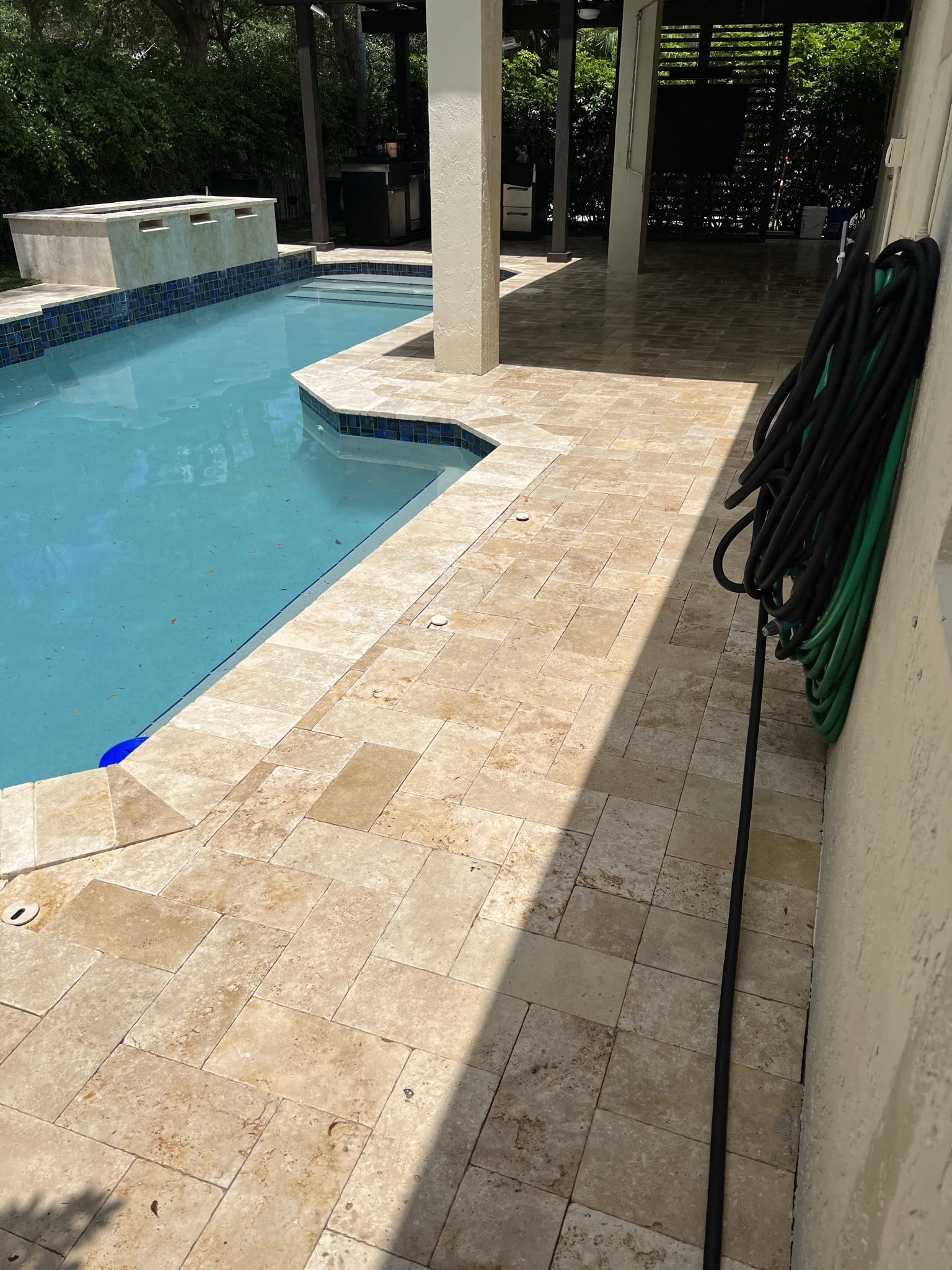
Travertine is a natural stone, not manufactured concrete, and it behaves completely differently around a pool. It’s naturally porous, often full of small holes and pits formed as the stone developed, and it stays noticeably cooler underfoot than concrete or pavers in direct sun, which is exactly why it’s so popular for pool decks in South Florida. That same porosity is also why sealing travertine correctly matters more than it does for a standard concrete paver: get it wrong, and the stone absorbs pool chemicals, water, and staining directly into itself.
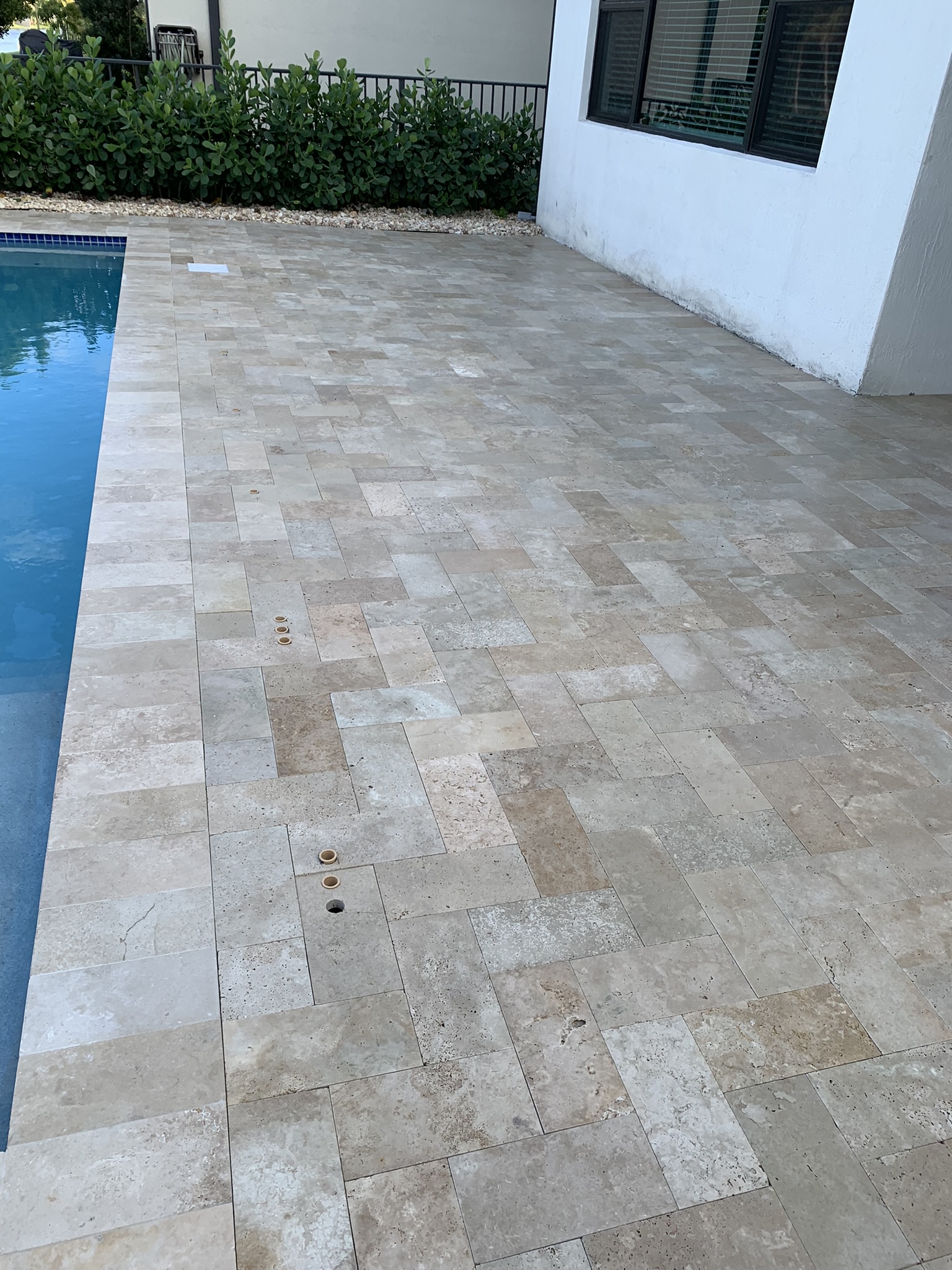
Travertine comes in two main types: filled, where the natural holes are filled at the factory with a resin or grout-like material for a smoother surface, and unfilled (often called “tumbled”), which keeps the natural pitted texture. Unfilled travertine needs those holes properly grouted or filled before sealing, sealing directly over open holes just traps dirt and moisture inside them instead of protecting the surface. This is one of the most commonly skipped steps in a rushed travertine job, and it shows up later as dark spots that won’t clean out.
This is the one rule that matters most for pool deck safety: use a penetrating, breathable sealer on travertine pool decks, never a topical, high-gloss wet-look film. A film-forming sealer sits on the surface and becomes noticeably slippery when wet, which is the last thing you want on a deck surrounding standing water. A penetrating sealer soaks into the stone, protects against water and stain absorption, and doesn’t change the surface’s natural slip resistance the way a film does.
Saltwater pools are harder on travertine than chlorine pools. As splashed water evaporates off the deck, it leaves behind salt crystals that gradually abrade both the stone and the sealer, especially right at the coping edge where splash-out is heaviest. If you have a saltwater system, expect coping and the areas closest to the water to need attention on a shorter cycle than the rest of the deck. Chlorine pools are gentler but still require a sealer resistant to chemical exposure, not just water.
Most guides recommend resealing every 2 to 3 years, but pool decks specifically, with constant moisture, pool chemicals, and daily sun exposure, often need it closer to 18 to 24 months. Applying in two thin coats on a clean, fully dry deck gives better, more even absorption than one thick coat. If you notice water no longer beading on the surface, that’s the clearest sign it’s due.
Slip resistance on travertine is measured by static coefficient of friction (SCOF), but it’s worth knowing this measurement isn’t perfectly consistent, the same tile can test differently depending on the method used. In practice, this means don’t rely on a single number from a spec sheet alone. A tumbled, textured travertine finish combined with a proper penetrating sealer is the safer bet for a pool deck than a smooth, polished finish regardless of what a SCOF number claims.
The most common issues: sealing over unfilled holes, using a wet-look sealer meant for driveways on a pool deck, and skipping efflorescence treatment before sealing, which is especially common on newer travertine installations. Each of these traps a problem under the sealer instead of solving it.
Have a travertine pool deck that needs attention? See our travertine sealing page or pool deck sealing page, or request a free estimate and we’ll assess what your specific deck needs.
| Filled Travertine | Unfilled (Tumbled) Travertine | |
|---|---|---|
| Surface texture | Smoother, holes filled at the factory | Natural pits and holes visible |
| Slip resistance | Lower if polished, better if honed | Naturally higher, textured surface |
| Prep before sealing | Standard clean and treat | May need holes grouted/filled first |
| Best for pool decks? | Yes, if honed/textured finish | Yes, naturally slip-resistant |
| Saltwater Pool | Chlorine Pool | |
|---|---|---|
| Main threat to travertine | Salt crystallization abrades stone and sealer | Chemical exposure, milder overall |
| Highest-wear zone | Coping edge (heaviest splash-out) | Similar, but less severe |
| Typical resealing frequency | 18-24 months, sooner at coping | 2-3 years |
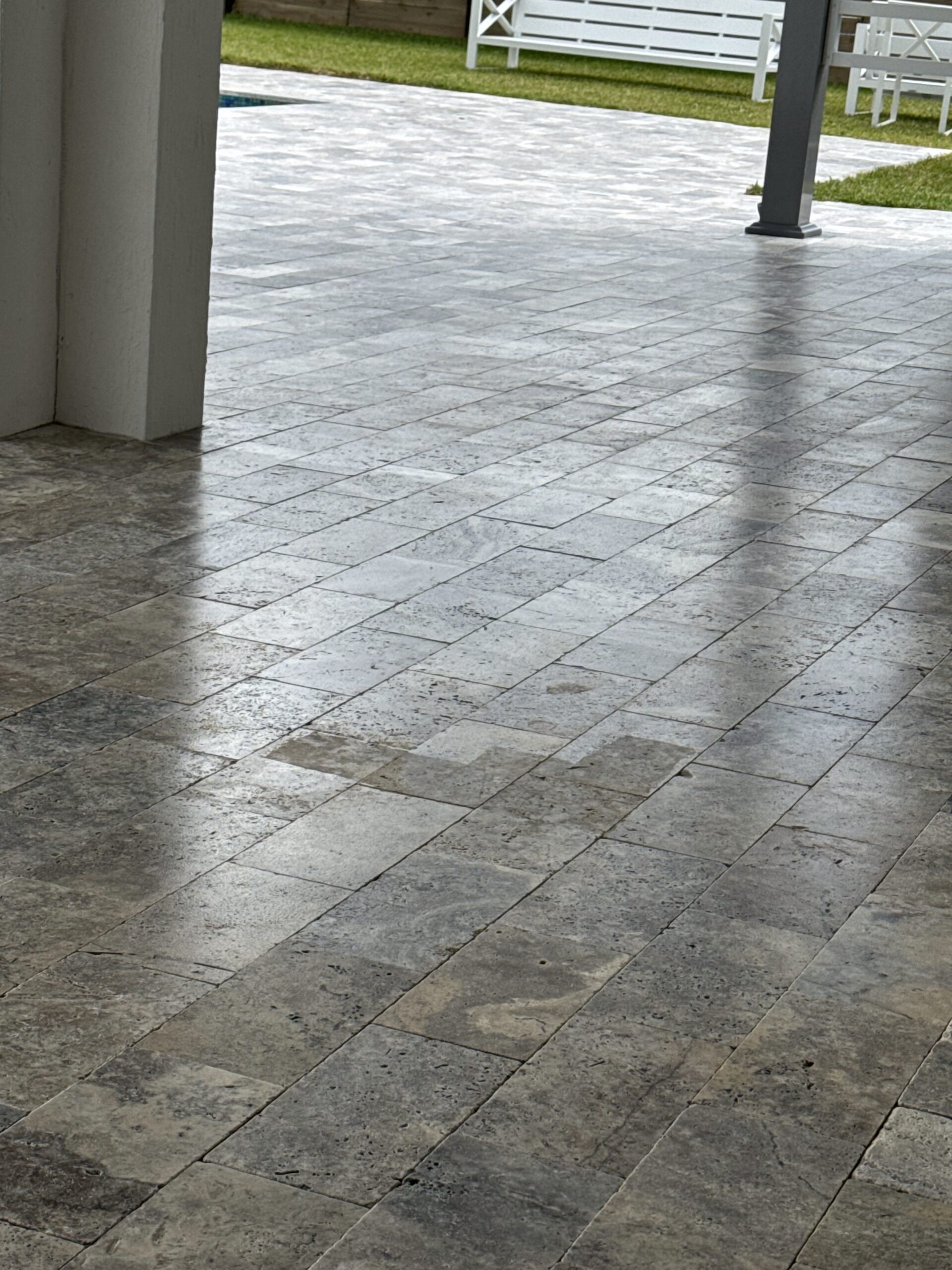
Travertine comes finished three main ways. Polished travertine has a smooth, reflective surface, beautiful for interior floors, but a poor choice for a pool deck since it’s the least slip-resistant option when wet. Honed travertine has a flat, matte surface with the shine removed, a reasonable middle-ground option. Tumbled travertine has a rougher, more textured, worn-looking surface created by literally tumbling the stone pieces together, and it’s the most naturally slip-resistant of the three, which is exactly why it’s the most common choice for pool decks in South Florida. If you’re choosing new travertine for a deck specifically, tumbled is almost always the right call regardless of what sealer you plan to use afterward.
Travertine is a natural sedimentary stone formed around mineral springs, which means it often carries more natural mineral content than manufactured concrete pavers. Combined with constant pool-deck moisture, this makes efflorescence, the white chalky mineral residue we cover in detail in our efflorescence guide, more common on travertine pool decks specifically than on a typical concrete driveway. Treating it before sealing is even more important here, since travertine’s porosity means trapped moisture and minerals have more surface area to affect.
We don’t recommend it. A high-gloss, film-forming wet-look sealer becomes noticeably slippery when wet, which is a real safety issue right around a pool. A penetrating sealer protects without adding that slip risk.
If you have unfilled (tumbled) travertine, yes. Sealing directly over open holes traps dirt and moisture inside them, which shows up later as dark spots that won’t clean out. They should be grouted or filled first.
Yes. Salt crystals left behind as splashed water evaporates gradually abrade both the stone and the sealer, especially at the coping edge. Saltwater pool decks often need resealing on a shorter cycle than chlorine pools.
Most guides suggest every 2 to 3 years, but pool decks specifically, with constant moisture and chemical exposure, often need it closer to 18 to 24 months.
A smooth, polished finish is generally less slip-resistant than a tumbled, textured finish, even with the same sealer. For pool decks, we typically recommend a tumbled finish with a proper penetrating sealer.
Yes. See our travertine sealing page, we address holes, staining, and efflorescence as part of the prep before any sealer goes down.
Short, practical articles to help you keep your driveway, patio, and pool deck looking freshly sealed between professional visits.


South Florida homeowners trust us to clean, sand, and seal their pavers the right way the first time, here’s what they’re saying after seeing their driveways, patios, and pool decks transformed.
Broward County, Miami-Dade County, & Monroe County