
Paver and travertine sealing for Boca Raton, Delray Beach, Palm Beach and West Palm Beach homes, with honest notes on salt air, HOA review and historic districts.
Tell us about your project and we’ll follow up with a clear, no‑pressure quote and timeline.
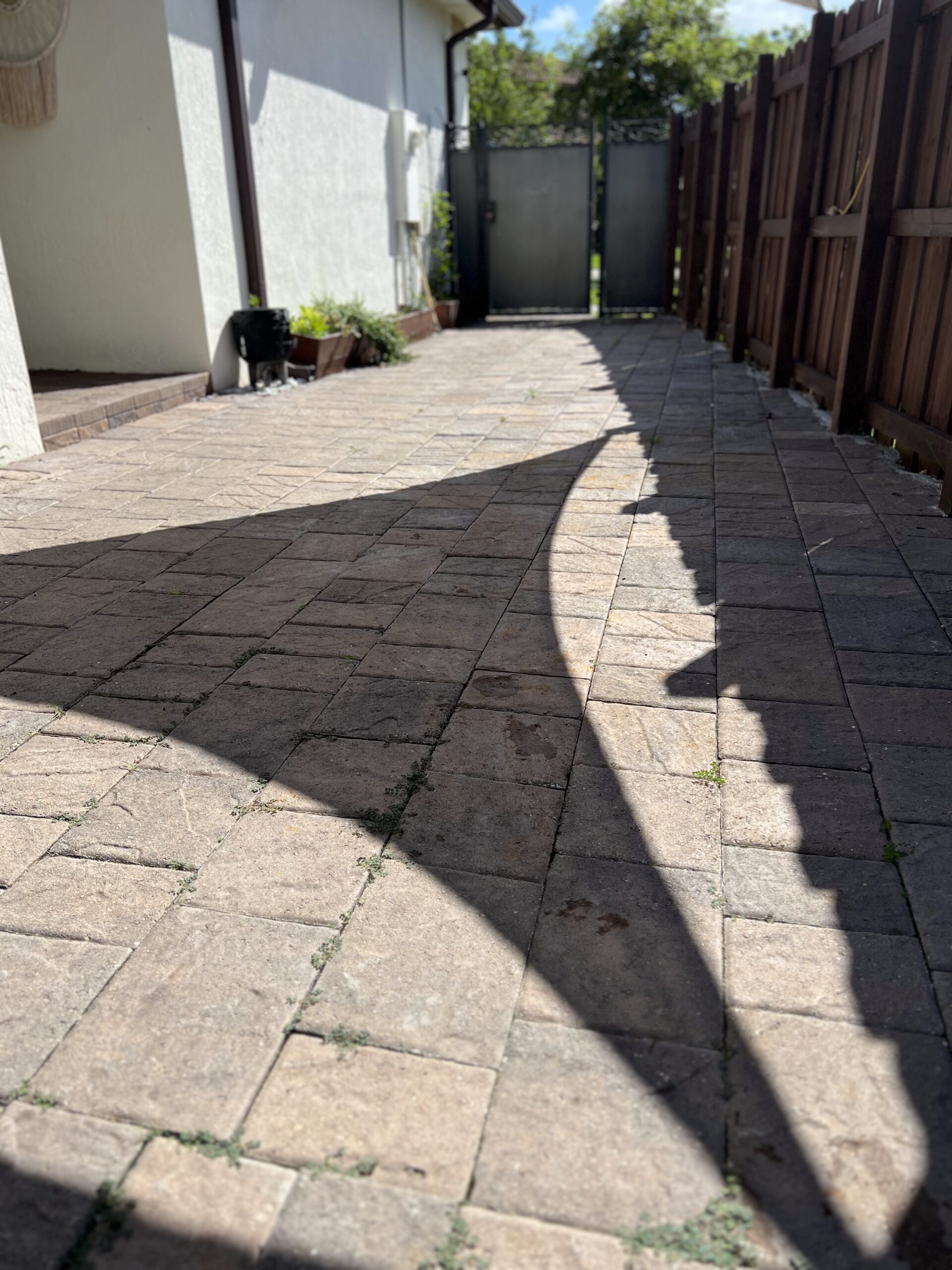
Yes, we seal pavers and travertine in Boca Raton, Delray Beach, Palm Beach and West Palm Beach, along with Boynton Beach, Jupiter, Wellington and the rest of Palm Beach County. Our shop is in Homestead, so Palm Beach County jobs are planned ahead and grouped by area. The drive from Homestead is roughly 75 miles to Boca Raton and about 97 miles to West Palm Beach, which is about an hour and a half and two hours by road (approximate, traffic changes it). That is why we ask for your address and a few photos first. You get an honest answer before anyone drives anywhere.
Ready to start? Request a free estimate and tell us your city, the surface and the rough size.
The same three things wear out pavers everywhere in South Florida: sun, rain and humidity. In Palm Beach County two more matter. The first is salt. Homes near the ocean and the Intracoastal get salt in the air and in the water, and contractors in the region commonly report that salt moving through porous stone and concrete leaves white residue and speeds up wear. We could not find university research on this for Palm Beach County, so treat it as the experience of local crews, not a measured rule. The second is the calendar. The National Weather Service in Miami treats May 15 to October 15 as the wet season, when most of the year’s rain falls, and the Atlantic hurricane season runs June 1 to November 30.
What this means for a homeowner is practical. Sealer needs clean, dry pavers and a dry forecast. Contractor sources commonly ask for 24 to 48 dry hours before and after, though the product label always wins. The drier months, roughly November through April, are easier to schedule. A professional paver sealing job that starts with a proper clean, re-sanded joints and a breathable sealer matched to the paver holds up better than a quick coat over dirt.
Plan around dry weather, not a date. The wet season runs from about mid-May to mid-October, so summer jobs are possible but depend on a clear stretch of days. November through April is the easiest window, and holiday and season-opening calendars fill early, so ask for a date a few weeks ahead. If your pavers look dull, water soaks in instead of beading, or weeds keep coming back in the joints, the sealer is probably worn. A quick test is to sprinkle water on the surface. If it darkens and soaks in within a minute or two, it is time to talk about sealing. Tell us what you see when you request your estimate.
Check first, because the answer depends on your documents. In Florida, section 720.3035 limits what a homeowners’ association or its architectural committee can review to what the declaration or published guidelines say. Standards must be applied evenly, and a denial has to be in writing and name the specific rule. A 2026 law, HB 803, took effect July 1, 2026 and says an association cannot require a government building permit before it reviews your project (read from legal summaries, so check the statute text). Sealing can change color and sheen, which is why many communities want to see the product and finish first. Our guide to HOA paver sealing requirements in Florida lists what to send, and we can provide product information for your submission.
Historic districts add another layer in some places. West Palm Beach lists 17 locally designated historic districts, including El Cid and Flamingo Park, and a Certificate of Appropriateness is required for work that changes a building’s exterior appearance. The city’s guidance mentions patios, but we could not find anything that says cleaning or sealing pavers needs approval. In the Town of Palm Beach, the Architectural Commission reviews changes visible from public streets. Delray Beach has historic districts too, including Old School Square, Nassau Park and Marina. We found no rule that requires approval to seal pavers in any of these places, but we also could not confirm the opposite. A short call to your association, city planning office or historic board settles it.
Travertine is porous natural stone, so it soaks up water, salt and stains. Pool decks around saltwater or chlorinated pools usually call for a penetrating sealer that lets the stone breathe, plus a non-slip finish, and never a high-gloss film on a surface people walk on barefoot. Filled and unfilled travertine behave differently, and white efflorescence on older decks must be treated before any sealer goes on. Owners do disagree online about whether saltwater pool travertine should be sealed at all, so we inspect the stone and tell you what it needs. Our pages on travertine sealing, pool deck sealing and the travertine pool deck guide go deeper, and efflorescence on pavers explains the white haze.
Boca Raton has many gated golf and country club communities, with names such as Broken Sound, Woodfield Country Club and Boca Woods appearing in local real estate listings. Communities like these usually have an association, so expect an architectural review step. Delray Beach and West Palm Beach mix newer neighborhoods with older historic ones, where the stone and pavers on walkways and patios can be decades old and need more than a coat of sealer. On the island of Palm Beach and along the Intracoastal, salt and shade-driven algae are the two things to ask about. We have not worked out a one-size answer for any city, because the surface in front of us decides. If you have a community in mind, name it in your request.
For managed communities, see our commercial and HOA paver sealing.
Published market ranges for professional paver sealing in Florida run roughly $1.25 to $3.50 per square foot, depending on condition, size, sealer type and how much cleaning and re-sanding is needed. Small jobs cost more per square foot, and many companies set a minimum charge. These are market figures, not a quote. Our price comes after we see your photos or the surface, and distance is part of that conversation. Our paver sealing cost guide explains what moves the number, and the best paver sealer for Florida compares sealer types.
Want a number for your property? Request a free estimate.
We also provide paver sealing, restoration, and repair for homeowners in Deerfield Beach, Coral Springs, Fort Lauderdale, Pompano Beach, and Miami, along with the rest of Miami-Dade, Broward and Monroe County.
Yes. We serve Boca Raton, Delray Beach, Palm Beach, West Palm Beach and nearby cities, working from our shop in Homestead. Send your address and a few photos and we will confirm that we can take the job and tell you what the surface needs.
Distance is part of how we plan and price a Palm Beach County job, so we give you the number after we see your address and photos. Published market ranges for sealing run roughly $1.25 to $3.50 per square foot, and that is not a quote.
It depends on your declaration and guidelines. Florida section 720.3035 limits an association to what its documents say, requires evenly applied standards and written denials that name the rule. Check your documents, ask the board, and we can supply product details for a submission.
Some exterior changes in historic districts need review. We found no rule that says cleaning or sealing pavers needs approval, but we could not confirm the opposite either. Call your city planning office or historic board before you book if your home is in a designated district.
Contractor sources in South Florida commonly say every two to three years, and sooner close to salt water. The better signal is the surface: if water soaks in instead of beading, or the color looks flat, the sealer is wearing thin.
Usually yes with a breathable penetrating sealer and a non-slip finish, and any white efflorescence must be treated first. Owners disagree online about sealing saltwater pool travertine, so we inspect the stone before recommending anything. We do not promise results we cannot see.
November through April is easiest because the weather is drier. The National Weather Service in Miami treats about May 15 to October 15 as the wet season, and sealing needs dry surfaces and a dry forecast, so summer jobs depend on clear days.
Published Florida market ranges are roughly $1.25 to $3.50 per square foot for professional sealing, with higher rates for small jobs and common minimum charges. Your price depends on condition, size, sealer and cleaning needed. Request a free estimate for a real number.
South Florida homeowners trust us to clean, sand, and seal their pavers the right way the first time, here’s what they’re saying after seeing their driveways, patios, and pool decks transformed.
Miami-Dade County, Broward County, Palm Beach County & Monroe County