
Tell us about your project and we’ll follow up with a clear, no‑pressure quote and timeline.
The short answer
If you’re searching for the best paver sealer for Florida, you’ve probably noticed that everyone online tells you something different. The truth is that the “best” sealer depends on what your pavers are made of, how much sun and water they see, and how well the surface is prepped before the sealer ever touches it.
Below is what actually matters here in Miami-Dade and the rest of South Florida: which sealers hold up, what they cost, how long they last, and where homeowners get burned.
A sealer that lasts five years in Ohio can look tired in two here. Four things are working against your pavers at once:
| Sealer type | Look | Breathability | Best for |
|---|---|---|---|
| Water-based acrylic or urethane (film-forming) | Natural, satin, up to wet look | Good to high | Concrete and brick pavers, driveways, patios |
| Solvent-based acrylic (film-forming) | Deepest, glossiest wet look | Low | Dry, well-prepared surfaces only; riskier in Florida |
| Penetrating (silane or siloxane) | Invisible, natural | Highest | Travertine, natural stone, pool decks |
| Color-enhancing penetrating | Deepens color, no film | High | Faded stone that needs richer tone |
These form a thin protective layer on top of the paver and, in good products, still let moisture vapor pass through. They resist yellowing, they are lower in odor, and they can also lock joint sand in place. Most professionals working in Florida have moved to this category for concrete and brick pavers.
Solvent-based sealers can give a beautiful, deep wet look, and on a perfectly dry surface they perform well. The problem is Florida’s moisture. If vapor is trapped under a non-breathable film, it comes out as a milky white haze called blushing, or it bubbles and peels. Fixing it means chemically stripping the old sealer before you can start again.
These soak into the stone and leave no film on the surface, so nothing can peel, and the texture stays natural and slip-resistant. They repel water, pool chemicals and stains from within. That is exactly what porous stone like travertine needs, and you can read more in our guide to travertine sealing. The trade-off is that they don’t add shine or a wet look.
Here is the practical difference. Solvent-based sealers need pavers that are completely, deeply dry, which in the wet season can take days after washing, and pavers can look dry on top while still holding moisture underneath. Water-based sealers are more forgiving, and because they breathe, small amounts of trapped moisture can escape instead of turning the sealer cloudy.
Does that mean solvent-based sealer is never the right call? No. A skilled applicator on a dry day, with a moisture check first, can get a great result. But when we compare the two for a typical Miami driveway, breathable water-based sealer is the lower-risk choice, and the low-risk choice is what you want when a failed job means paying for stripping and starting over.
| Your surface | Usually the best fit | Why |
|---|---|---|
| Concrete paver driveway | Breathable water-based film-former, satin or wet look, with joint stabilization | Stain and oil resistance, color protection, holds joint sand |
| Brick pavers | Water-based film-former | Brings back faded color and protects joints |
| Patio or walkway | Water-based, satin or natural | Protection with a softer, less slippery look |
| Pool deck, concrete pavers | Natural or matte finish, non-slip | Wet feet and glossy surfaces don’t mix |
| Travertine pool deck or patio | Penetrating impregnating sealer | Keeps the stone natural and non-slip, no film to peel |
This is partly taste, but it changes how the surface behaves day to day.
If you live in an HOA community, it’s worth checking whether there are rules on paver color or finish before you decide.
| Situation | What to expect |
|---|---|
| Quality film-forming sealer, well-applied, normal exposure | About 2 to 3 years |
| Full sun, coastal, or pool-adjacent surfaces | Closer to 18 to 24 months |
| Penetrating sealer on natural stone | Manufacturers commonly quote 5 to 7 years; expect the lower end in strong sun |
| Rushed or DIY application | Sometimes only 6 to 12 months before flaking, fading or peeling |
Reseal while the old coat is still mostly intact. It is quicker and cheaper than waiting until the sealer has failed and needs to be removed.
Local contractors commonly quote roughly $1.50 to $3.50 per square foot for cleaning and sealing pavers in South Florida, with smaller jobs at the higher end and large, easy driveways at the lower end. On an 800 sq. ft. driveway, that puts a typical job somewhere between about $1,200 and $2,800.
What moves your price up or down:
The cheapest quote is often the one that skips steps. Ask what is included: cleaning, drying time, joint sand, number of coats and a written warranty. If you want a real number for your property, request a free estimate and we’ll price it after seeing the surface.
Most failed sealer jobs use a perfectly good product. They fail because the surface wasn’t ready. A proper job follows this order:
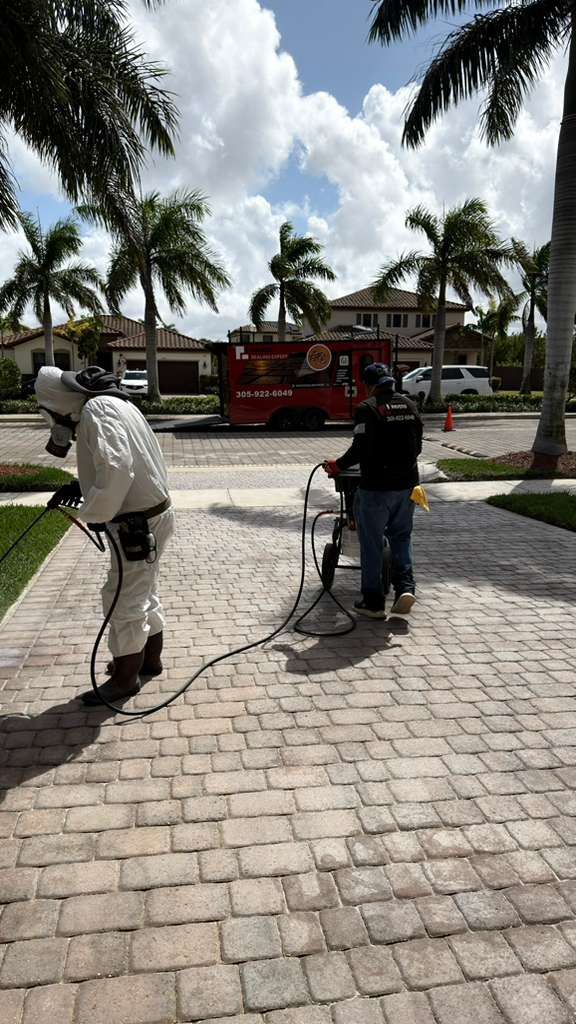
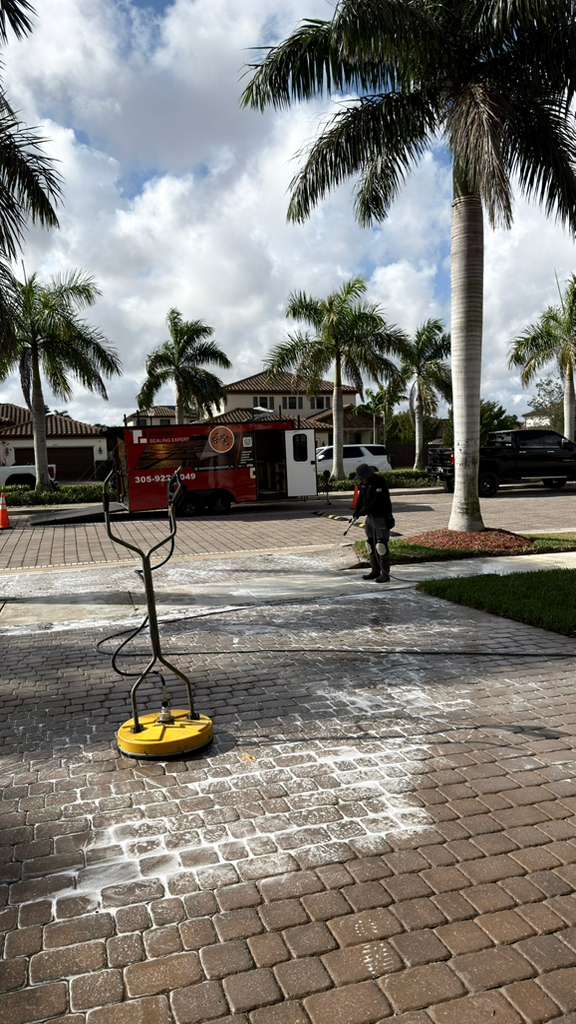
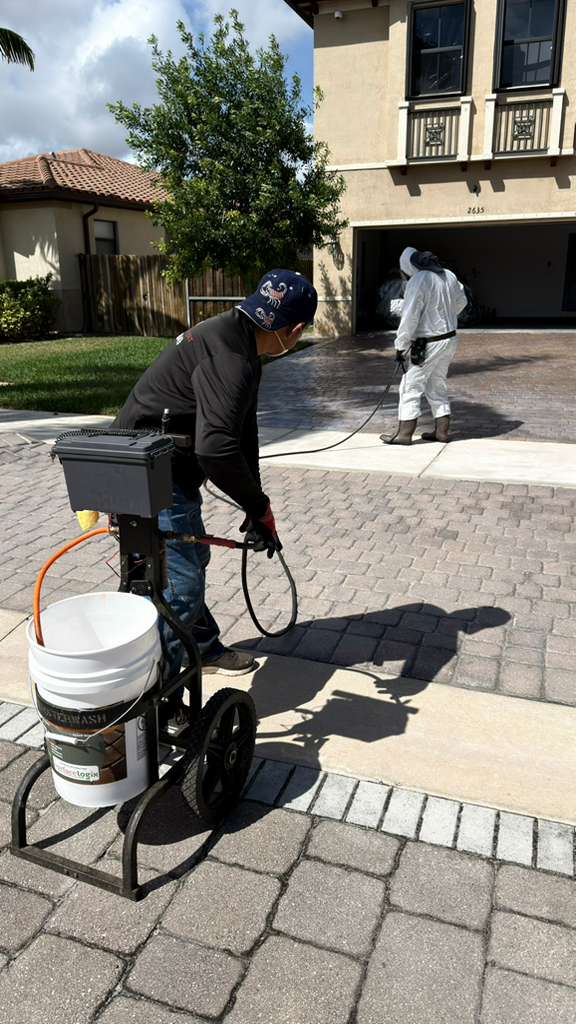
If your pavers are already badly stained, faded or sunken, start with paver restoration, because sealing over damage only locks the damage in.
You may have heard that polymeric sand doesn’t work well here. It isn’t that simple. Polymeric sand can work, but it needs a genuinely dry window to cure, and it fails when Florida rain or humidity hits it early or when a hazy residue is left on the pavers. That’s why many local pros use a joint-stabilizing sealer, or a sand made for wet climates, instead.
If polymeric sand is used, it should be fully cured and the surface swept completely clean before sealing. For the full process, see our guide on brooming joints before sealing.
The dry season, roughly November through April, is the easiest window. There is less rain, less humidity and more reliable drying time. You can still seal in the summer, but you need a stretch of dry days and a moisture check first, and any pro who tells you to skip the moisture check is taking a gamble with your driveway.
The water test. Splash a little water on the paver. If it beads up, there’s still sealer working. If it soaks in and darkens the paver within a minute or so, the surface is unprotected.
The moisture check. Before any sealing, tape a clear piece of plastic, about two feet square, tightly to the surface and leave it for several hours or overnight. If condensation forms underneath, the pavers are still holding moisture and it’s too soon to seal.
DIY is realistic for a small, dry, well-cleaned patio if you choose a breathable product and apply it thin. It gets expensive when it goes wrong: a cloudy or blotchy finish, peeling, or the wrong sealer on natural stone. Correcting a failed job usually means chemical stripping and starting over, which costs more than doing it right the first time.
We seal driveways, patios, walkways and pool decks across Miami-Dade and Broward, including Miami and Homestead. Learn more about our paver sealing service, or contact us for a free estimate, and we’ll tell you honestly which sealer and finish fit your pavers.
Yes, in most cases. Sealing protects against UV fading, stains, algae and joint-sand washout, and it makes routine cleaning far easier. The exception is when the surface is damp or badly damaged, which needs to be dealt with first.
Most Florida professionals use breathable water-based sealers for concrete and brick pavers and penetrating impregnators for travertine and natural stone. They also use commercial-grade products with more solids than typical home-improvement store sealers.
Penetrating sealers on natural stone tend to last longest, with manufacturers often quoting 5 to 7 years. For concrete and brick pavers, a quality film-forming sealer typically lasts 2 to 3 years in South Florida.
A wrong or badly applied sealer is the downside: cloudy haze, peeling, or a slippery surface. A glossy sealer can be slick when wet, so pool decks should have a natural finish. Sealing also needs to be renewed every few years.
Both can work. Spraying gets sealer into the joints and covers evenly, and rolling or back-brushing then levels it to avoid puddles. The result depends more on technique and thin, even coats than on the tool.
Every 2 to 3 years for most patios, and closer to every 18 to 24 months for surfaces in full sun, near the coast or around a pool. Use the water test to tell when it’s time.
Yes, but with care. The wrong pressure or a zero-degree tip can etch the surface and blast out the joint sand. Professionals use a surface cleaner and controlled pressure, then re-sand the joints before sealing.
No. Pavers need to be completely dry, and in the wet season that can take a couple of days. Sealing over trapped moisture is the most common reason for a white, cloudy finish.
Short, practical articles to help you keep your driveway, patio, and pool deck looking freshly sealed between professional visits.
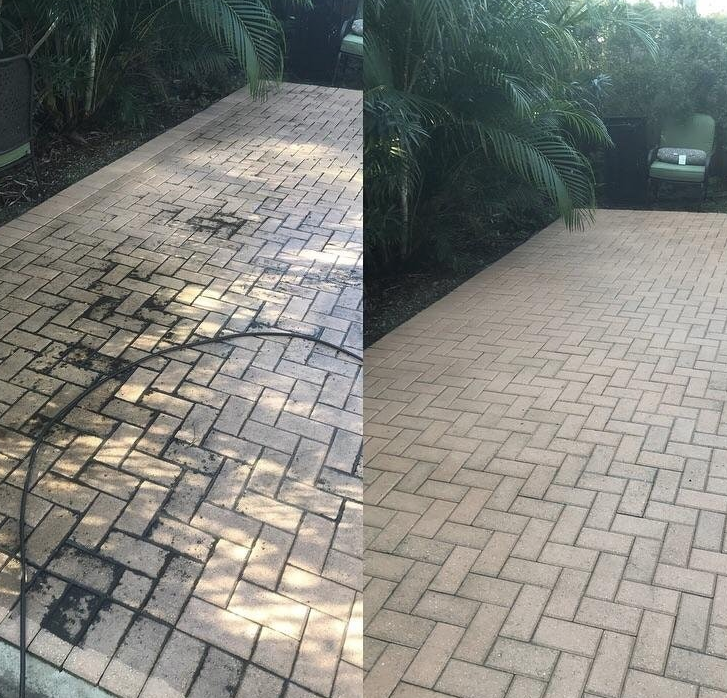
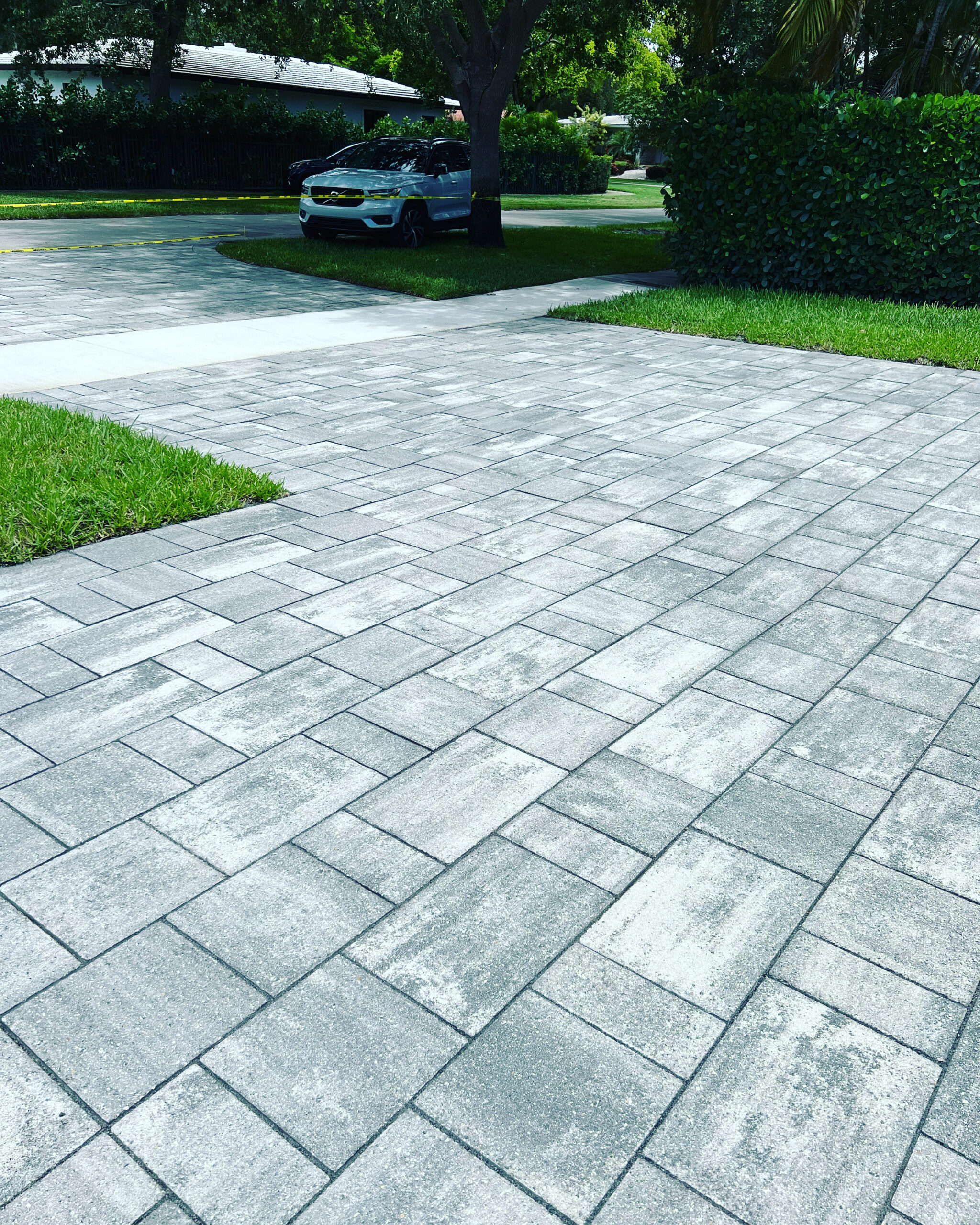
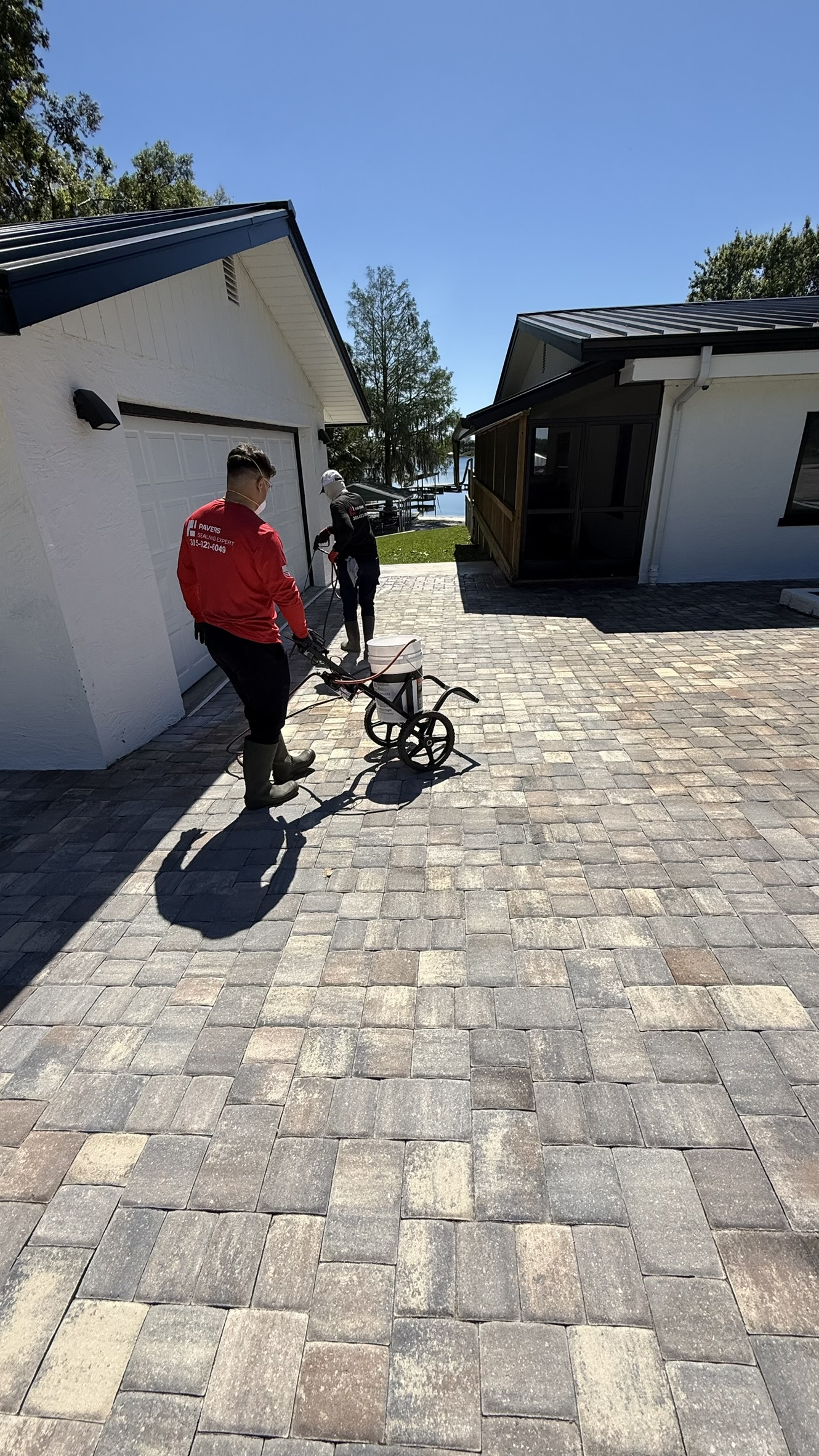
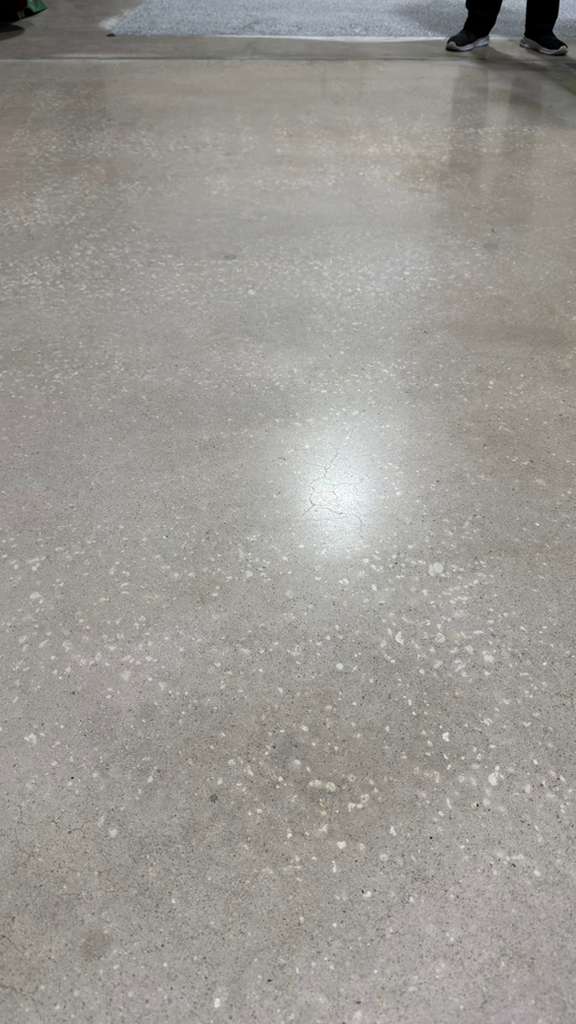
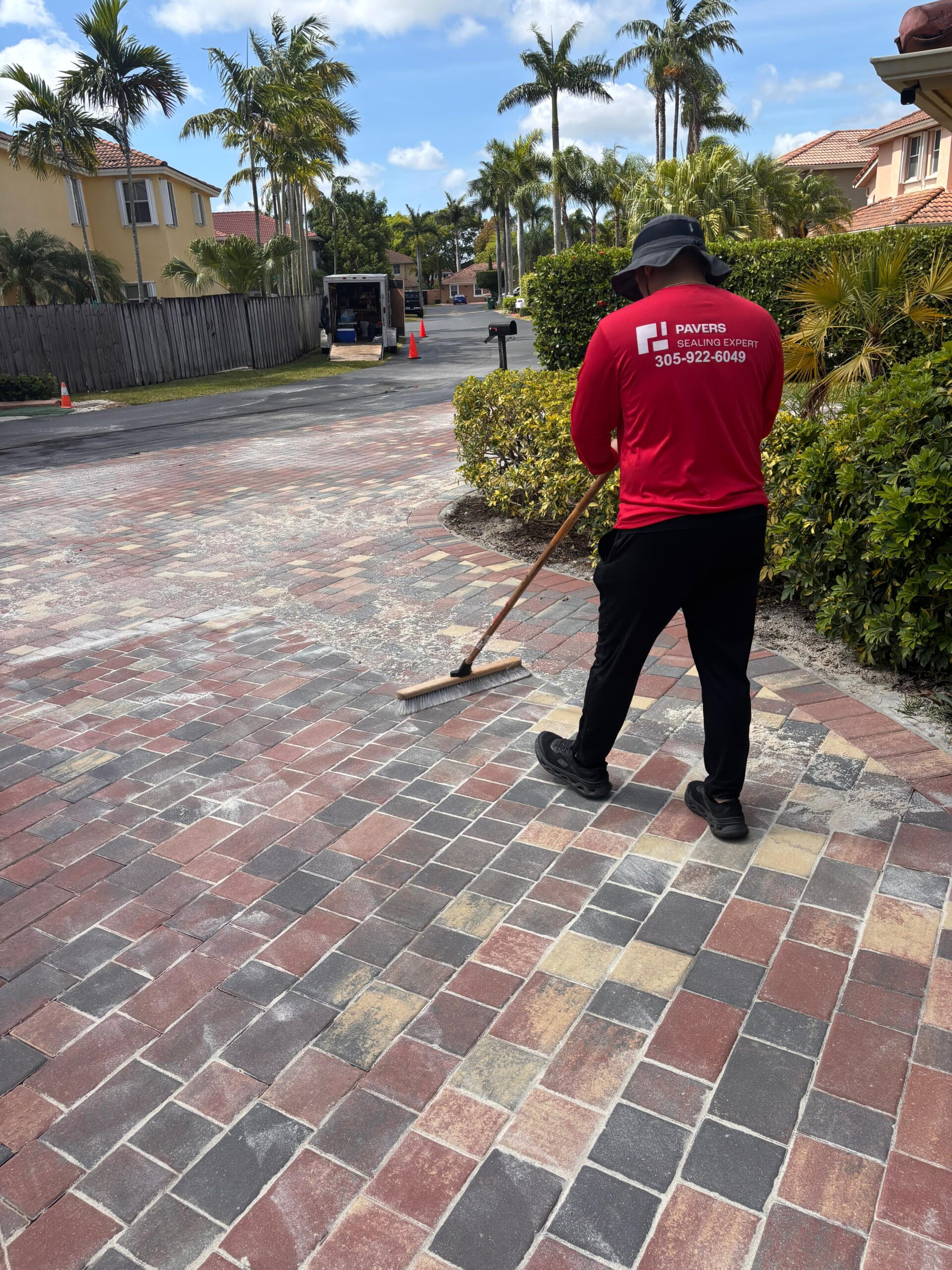
South Florida homeowners trust us to clean, sand, and seal their pavers the right way the first time, here’s what they’re saying after seeing their driveways, patios, and pool decks transformed.
Broward County, Miami-Dade County, & Monroe County