
Low-pressure soft wash house washing for stucco and painted walls in Homestead and Miami-Dade, with clear steps and honest limits before any work starts.
Tell us about your project and we’ll follow up with a clear, no‑pressure quote and timeline.
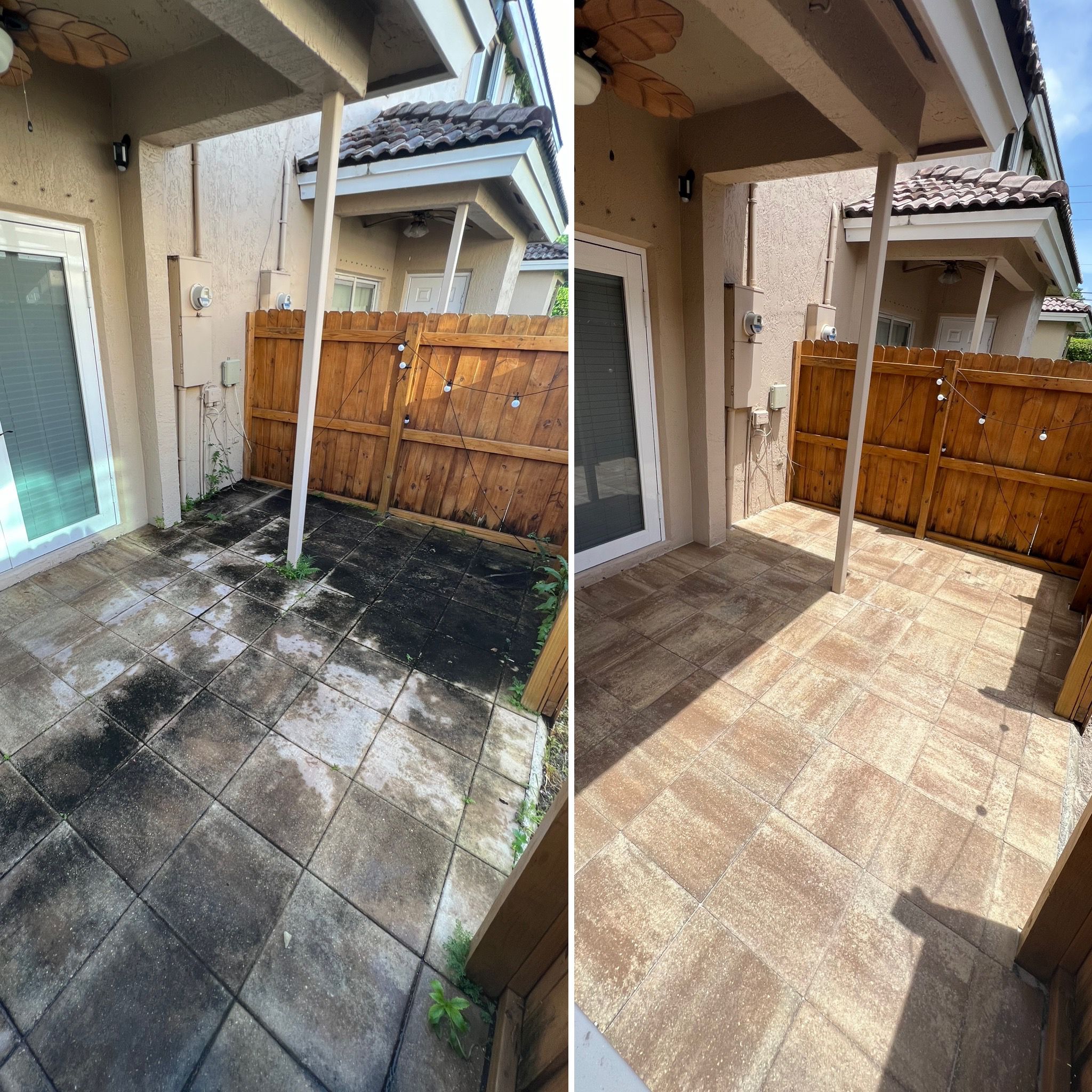
We wash house exteriors in Homestead and across Miami-Dade with a soft wash: low pressure, a cleaning solution that treats the mold and mildew instead of blasting it, and a careful rinse. Stucco and painted block collect green, black and gray growth quickly in our humidity, and the wrong washing method can push water into walls or damage paint. So we look first, explain what we will and will not do, and then wash.
Want a plan for your house? Request a free estimate and send a few photos of the walls from the ground.
Sherwin-Williams explains that mildew grows on damp surfaces with little sun, and that the paint itself does not cause it. In South Florida that means shaded north and east walls, areas under overhangs, spots next to irrigation spray and walls behind landscaping. Building Science Corporation notes that Florida stucco over block absorbs and releases water, which is one reason the surface stays damp long enough for growth. Dirt film, rust from sprinklers and pollen then add to the look.
Manufacturers are clear that force is not the goal. Sto, which makes stucco-style foam wall systems, allows 500 psi at most on its system and says not to use high pressure. James Hardie says a pressure washer can damage its fiber cement siding and recommends a hose and a soft brush. Building science sources also say leaks at windows and other openings drive water intrusion in Florida walls, so spraying hard into seals, frames and vents is a bad idea. Our method follows that: low pressure, solution applied to the wall, time to work, and a rinse that never aims water up into openings.
| Exterior | What to know before washing |
|---|---|
| Stucco over block | Absorbs water. Washing should not drive water into cracks, windows or vents. |
| Stucco-look foam (EIFS) | The maker says 500 psi at most and no high pressure. |
| Fiber cement siding | The maker warns that pressure washers can damage it and suggests a hose and soft brush. |
| Painted block or trim | Peeling or chalking paint can come off, which is a paint problem, not a washing problem. |
Usually yes. Sherwin-Williams and Benjamin Moore both tell painters to clean mildew off a wall, rinse it and let it dry before painting, because paint over growth fails sooner. Cleaning has limits, though. It will not fix peeling paint, cracked stucco or white salt deposits on the wall. Efflorescence, the white powder you sometimes see, comes from moisture moving through the wall, and washing does not remove the moisture source. Our efflorescence guide explains the same effect on pavers. If you are painting, talk to your painter and wash first so the surface is ready.
You can, but be careful. NIOSH counted 113 worker deaths in ladder falls and about 34,000 emergency-room visits in 2011 (older data, and the risk remains). The CDC warns never to mix bleach with ammonia, because the mix makes toxic gas, and Sherwin-Williams says not to add ammonia or detergent to its bleach solution. Pressure on stucco and seals is the other risk. If you do the work yourself, use a hose and soft brush, keep plants wet, and stay off ladders when walls are wet.
There is no honest single number. Manufacturer guidance, such as James Hardie’s advice to clean fiber cement siding once or twice a year, is a starting point, and shaded or damp walls need it more. The best signal is what you see: green on the north wall, dark streaks under eaves or a dingy film. Sto also notes that algae and mildew will come back on walls when a mildew-killing treatment is not used. We tell you what to expect after we see the house.
Washing a wall does not change its color, but painting does. Florida section 720.3035 limits an association’s review to what its documents say or imply, and it does not mention house washing. If you are also changing color, check your documents and read our guide to HOA paver sealing requirements in Florida, which shows how the review works.
Growth spreads from the roof down. The right order is roof first with our roof cleaning, then walls, then the ground, so runoff does not dirty clean surfaces. Pavers need their own care: see surface cleaning, paver sealing, pool deck sealing and paver restoration. The algae, weeds and ants guide shows what the same growth does to joints. We work from Homestead, and you can read our local pages for Homestead and Miami.
We are based in Homestead and serve Miami-Dade, including Florida City, Cutler Bay, Palmetto Bay, Kendall, Miami, Hialeah and Miami Gardens. Tell us your address when you ask for your estimate. Photos of each side of the house, plus the shaded walls, help us see the material and the growth before we say anything about price. Send them with your request and we will tell you if a wash is the right first step or if the wall needs repair or paint first.
Price depends on the size of the house, number of stories, wall material, how much growth there is and how easy it is to reach the walls. We do not publish a range here, because the figures we found online were not reliable enough to quote. You get a price in writing after we see photos or the house. Request a free estimate and tell us the address and the size of the house.
We also provide paver sealing, restoration, and repair for homeowners in Homestead, Miami, Hialeah, and Miami Gardens, along with the rest of Miami-Dade, Broward and Monroe County.
It can. Manufacturers warn against high pressure on stucco-style wall systems and siding, and water forced into cracks, windows and vents can get behind the wall. We use a low-pressure soft wash and control where the rinse water goes.
A soft wash uses low pressure and a cleaning solution that treats mold and mildew, then a gentle rinse. A pressure wash relies on force. For stucco, painted block and siding, force is usually the wrong tool.
We protect and wet plants first and rinse them afterward, and we look at the paint before washing. Paint that is already peeling or chalking can come off, which is an existing paint problem, so we point it out before we start.
There is no single number. Some manufacturers suggest once or twice a year for siding, and shaded or damp walls need it more. Look for green on north walls, dark streaks under eaves or a dingy film, and we will tell you what to expect for your house.
Yes. Paint makers such as Sherwin-Williams and Benjamin Moore tell painters to clean mildew, rinse and let the wall dry before painting. Washing will not fix peeling paint, cracks or white salt deposits caused by moisture.
Mildew grows on damp surfaces with little sun, so shaded or wet areas regrow. Fixing sprinkler spray, trimming plants away from walls and repairing leaks can slow it. Cleaning does not remove the cause of the moisture.
Yes. We plan roof first, then walls, then driveway, walkways and pool deck, so runoff never dirties clean surfaces. Ask for a combined plan when you request your estimate.
It depends on house size, stories, wall material, how much growth there is and access. The published prices we found were not reliable enough to quote, so we give you a written price after we see photos or the house.
South Florida homeowners trust us to clean, sand, and seal their pavers the right way the first time, here’s what they’re saying after seeing their driveways, patios, and pool decks transformed.
Miami-Dade County, Broward County, Palm Beach County & Monroe County