
Marine-grade paver sealing for the full island chain, from Key Largo to Key West, built for constant salt exposure most sealers were never tested for.
Tell us about your project and we’ll follow up with a clear, no‑pressure quote and timeline.
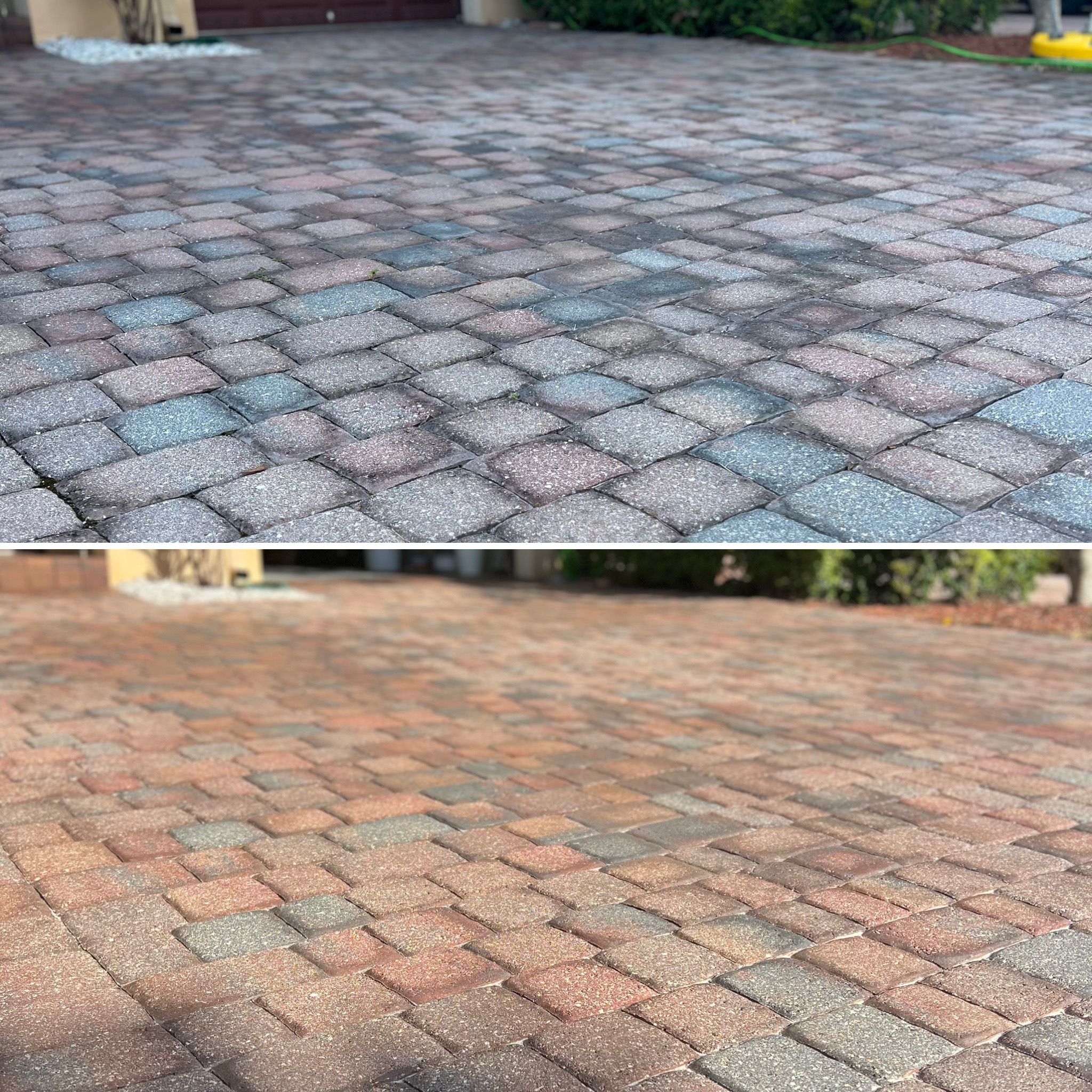
The Florida Keys are a different world for pavers than the mainland. Every property here, from Key Largo down through Islamorada, Marathon, and all the way to Key West, sits surrounded by ocean on both sides, not just near a canal or a few blocks from the coast like most of Broward and Miami-Dade. That means constant, direct salt exposure, higher humidity, and near-constant sun with almost no shade relief on open lots. Add in the coral and limestone base rock the Keys sit on, which leaches its own minerals into unsealed pavers, and you get a combination that ages pavers faster here than almost anywhere else in South Florida.
We travel the Overseas Highway to serve the full island chain, and professional paver sealing matters more here than almost anywhere else we work, not just for appearance, but to protect the investment against conditions most sealers were never tested for.
Three things compound here that don’t all happen together anywhere else in our service area. First, direct saltwater spray comes from both directions, the Atlantic on one side and Florida Bay on the other, so there’s no “inland” property that escapes it the way there is in Broward or Miami-Dade. Second, the Keys’ coral and limestone bedrock means many properties deal with mineral-rich groundwater close to the surface, which drives efflorescence and staining even on newer installations. Third, open, low-shade lots common on the islands mean pavers take direct UV exposure most of the day, with none of the tree-canopy relief you’d find on an inland Broward lot.
A sealer that holds up fine in Homestead or Miami can fail within a year on a Key Largo pool deck facing these three conditions at once. We choose products rated for heavy marine exposure specifically for Keys jobs, not the same default we’d use closer to the mainland.
These are the issues we see most often across the island chain:
Step 1: Deep Clean the Surface
Rotary surface cleaners strip salt crystallization, mineral residue, and old sealer evenly across the whole surface.
Step 2: Treat Salt and Mineral Staining
Heavier salt and efflorescence buildup gets treated before sealing, since simply rinsing it doesn’t remove what’s already crystallized into the paver surface.
Step 3: Re-Sand the Joints
Fresh polymeric sand locks pavers together and resists washing out under repeated salt spray and rain.
Step 4: Apply a Marine-Grade Sealer
We use sealers rated for heavy coastal and marine exposure on Keys jobs, chosen specifically for constant salt air and minimal shade, not a standard mainland product.
We serve the full island chain along the Overseas Highway:
Coming from our Homestead base, we regularly serve Homestead and the surrounding area before continuing down US-1 into the Keys, so scheduling a Keys job alongside a mainland stop is often possible.
From vacation rental pool decks to waterfront patios, we cover the full range of paver work Keys properties need.
See the before-and-after difference for yourself in our paver sealing projects gallery, featuring driveways, pool decks, and patios across South Florida.
Most paver companies don’t make the drive down US-1 for a single job, and the ones that do often use the same sealer they’d use in Miami. We use products specifically rated for heavy marine exposure on every Keys job, because the mainland default simply doesn’t hold up out here.
Take a few photos of your driveway, patio, or pool deck, top-down shots of the joints and any stained spots work best, and send them to us through our free estimate page. We’ll give you a clear price before we ever step on your property.
Yes. We’re based in Homestead and regularly serve Key Largo, Islamorada, Marathon, and points further down US-1. We often combine a mainland Homestead-area job with a Keys trip, so ask about scheduling if you’re flexible on timing.
Standard sealers are typically tested for inland or mild coastal exposure, not the constant, direct salt spray a Keys property gets from both the Atlantic and Florida Bay. A standard product can fail within a year under those conditions, so we use sealers rated for heavy marine exposure instead.
More often than the mainland in most cases, typically every 18 months to 2 years given the constant salt exposure and near-constant direct sun. We’ll give you a realistic timeline based on your specific property and how exposed it is.
It can. Many Keys properties have mineral-rich groundwater close to the surface, which drives efflorescence, the white chalky mineral buildup, even on relatively new paver installations. We treat this differently than typical algae or dirt staining.
Yes, see our Commercial & HOA Paver Sealing service for vacation rental pool decks, resort common areas, and condo association properties.
We serve the full island chain along the Overseas Highway, including Key Largo, Islamorada, Marathon, Big Pine Key, and Key West.
Yes, with the right approach. See our travertine sealing page, we choose penetrating sealers suited to natural stone’s porosity and the Keys’ heavier salt and mineral exposure.
Yes. Send us a few photos of your driveway, patio, or pool deck through our free estimate page and we’ll give you a clear price before scheduling a visit.
South Florida homeowners trust us to clean, sand, and seal their pavers the right way the first time, here’s what they’re saying after seeing their driveways, patios, and pool decks transformed.
Broward County, Miami-Dade County, & Monroe County