
Paver sealing built for Plantation’s golf course communities, protecting driveways, patios, and pool decks from fertilizer overspray, humidity, and Florida sun.
Tell us about your project and we’ll follow up with a clear, no‑pressure quote and timeline.
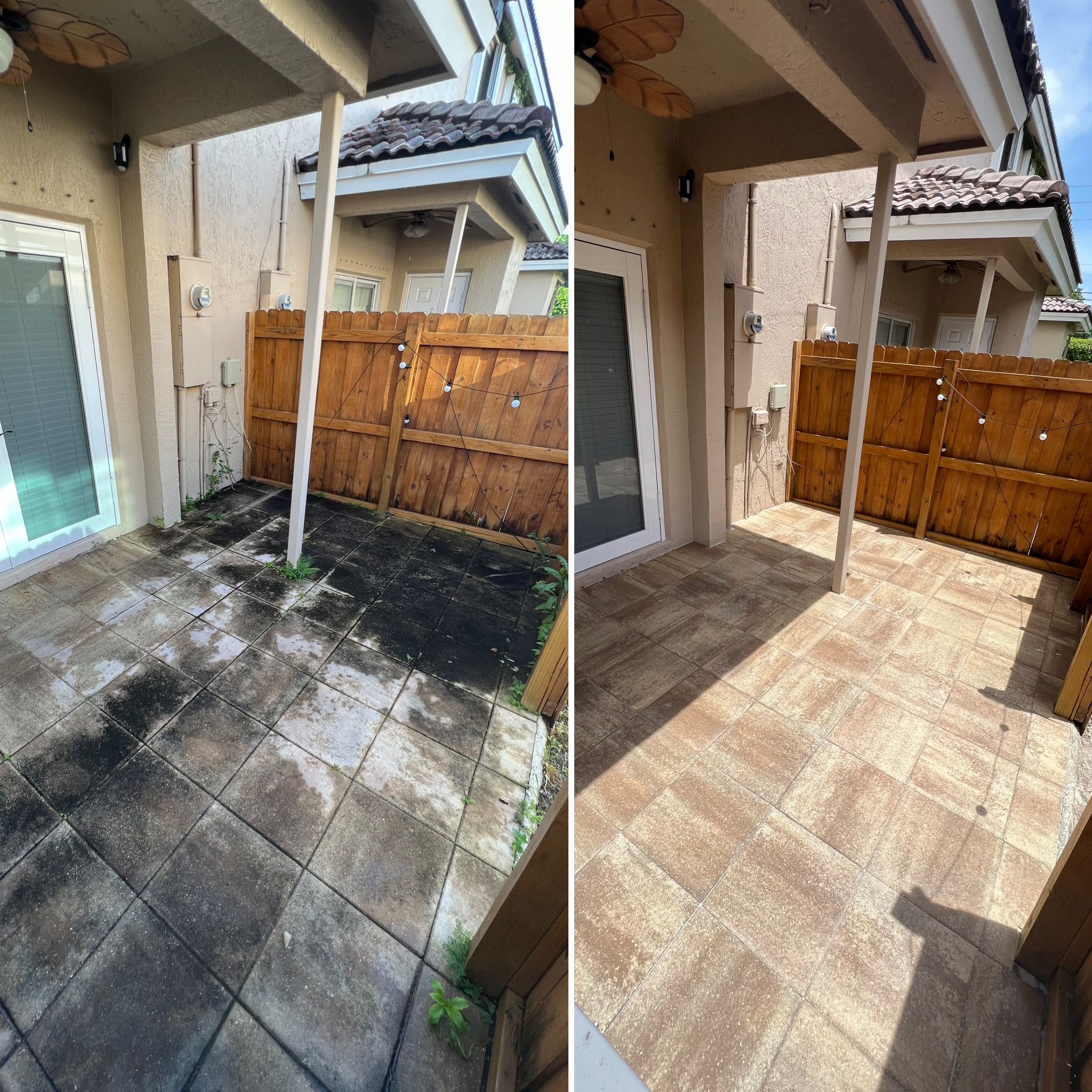
Plantation has one of the highest concentrations of golf courses in Broward County, Plantation Preserve, Jacaranda Golf Club, Lago Mar Country Club, and Fort Lauderdale Country Club all sit inside the city. A lot of homes back up directly to a fairway, which means paver patios and pool decks here deal with something most South Florida properties don’t: regular fertilizer and irrigation overspray from the course, on top of the usual sun fade and algae growth. That overspray settles into unsealed pavers and shows up as blotchy staining that’s much harder to remove once it sets.
Plantation is also home to Central Park’s 77 acres of recreation and larger-lot neighborhoods like Plantation Acres, where wider driveways and long paver walkways are common. Whatever your property looks like, professional paver sealing protects it from the specific conditions around it.
Golf course fertilizer is heavy on nitrogen and iron, and both stain unsealed concrete and paving stone in ways that look nothing like a normal dirt or algae stain. Iron-based fertilizer leaves a rust-orange blotch that homeowners often mistake for actual rust from patio furniture, while nitrogen-heavy runoff feeds algae growth faster than rainfall alone would. Sprinkler heads along the course’s edge also throw a fine mist further than most people expect, so a patio 20 to 30 feet back from the fairway can still take regular overspray without an obvious puddle to point to. Once that residue soaks into bare pavers, pressure washing alone won’t fully lift it, the stain has to be chemically treated before sealing, not just rinsed.
This is also why we don’t recommend the same generic sealer for every Plantation property. A patio facing Jacaranda or Plantation Preserve gets a different treatment plan than a driveway on the street side of a Plantation Acres lot with no fairway exposure at all.
These are the issues we see most often across Plantation’s golf course communities and residential neighborhoods:
Step 1: Deep Clean the Surface
Rotary surface cleaners strip algae, fertilizer residue, and old sealer evenly across the whole surface.
Step 2: Treat Stains and Overspray Residue
Fairway-facing patios get spot-treated for fertilizer and organic staining before sealing so it doesn’t get locked in under the new coat.
Step 3: Re-Sand the Joints
Fresh polymeric sand locks pavers together and closes off the gaps weeds and ants use to get in.
Step 4: Apply a Breathable Sealer Matched to Your Exposure
Golf-course-facing patios and pool decks get a sealer chosen for resistance to fertilizer and irrigation exposure, not just a standard finish.
From fairway-facing patios to Plantation Acres driveways, we cover the full range of paver work Plantation homes need.
See the before-and-after difference for yourself in our paver sealing projects gallery, featuring driveways, pool decks, and patios across South Florida.
Most paver companies serving Plantation quote a flat rate and never ask whether your property backs up to a golf course. We factor in fairway exposure, irrigation patterns, and shade from mature landscaping when choosing how to treat and seal your pavers.
Take a few photos of your driveway, patio, or pool deck, top-down shots of the joints and any stained spots work best, and send them to us through our free estimate page. We’ll give you a clear price before we ever step on your property.
We also provide paver sealing, restoration, and repair for homeowners in Coral Springs, Davie, Sunrise, and Deerfield Beach, along with the rest of Broward and Miami-Dade County.
We spot-treat iron and nitrogen-based fertilizer staining with a chemical treatment before sealing. Pressure washing alone doesn’t fully lift it since it soaks into unsealed pavers, so this step happens before any sand or sealer goes down.
Often yes. Sprinkler mist along a golf course’s edge can reach 20 to 30 feet past the property line without an obvious puddle to point to. If you’re near Jacaranda, Plantation Preserve, Lago Mar, or Fort Lauderdale Country Club, it’s worth having it checked.
Most driveways and patios need resealing every 2 to 3 years. Fairway-facing patios with regular fertilizer or irrigation exposure often need it closer to every 2 years.
Yes, we serve all of Plantation, including Plantation Acres, Plantation Gardens, and the areas around Central Park and the city’s golf course communities.
Yes. We offer natural, satin, and wet-look finishes and can work from your community’s guidelines if you have them.
Most residential driveways and patios are done in a single day, cleaning, joint re-sanding, and sealing included. Larger golf-course-facing properties may take longer, and we’ll give you a clear timeline upfront.
Yes, see our Commercial & HOA Paver Sealing service for community entrances, amenity decks, and shared walkways on a scheduled maintenance plan.
Yes. Send us a few photos of your driveway, patio, or pool deck through our free estimate page and we’ll give you a clear price before ever stepping on your property.
South Florida homeowners trust us to clean, sand, and seal their pavers the right way the first time, here’s what they’re saying after seeing their driveways, patios, and pool decks transformed.
Broward County, Miami-Dade County, & Monroe County