
Professional paver sealing for Fort Lauderdale’s driveways, pool decks and canal-front patios, built to handle salt air, sun, and South Florida rain.
Tell us about your project and we’ll follow up with a clear, no‑pressure quote and timeline.
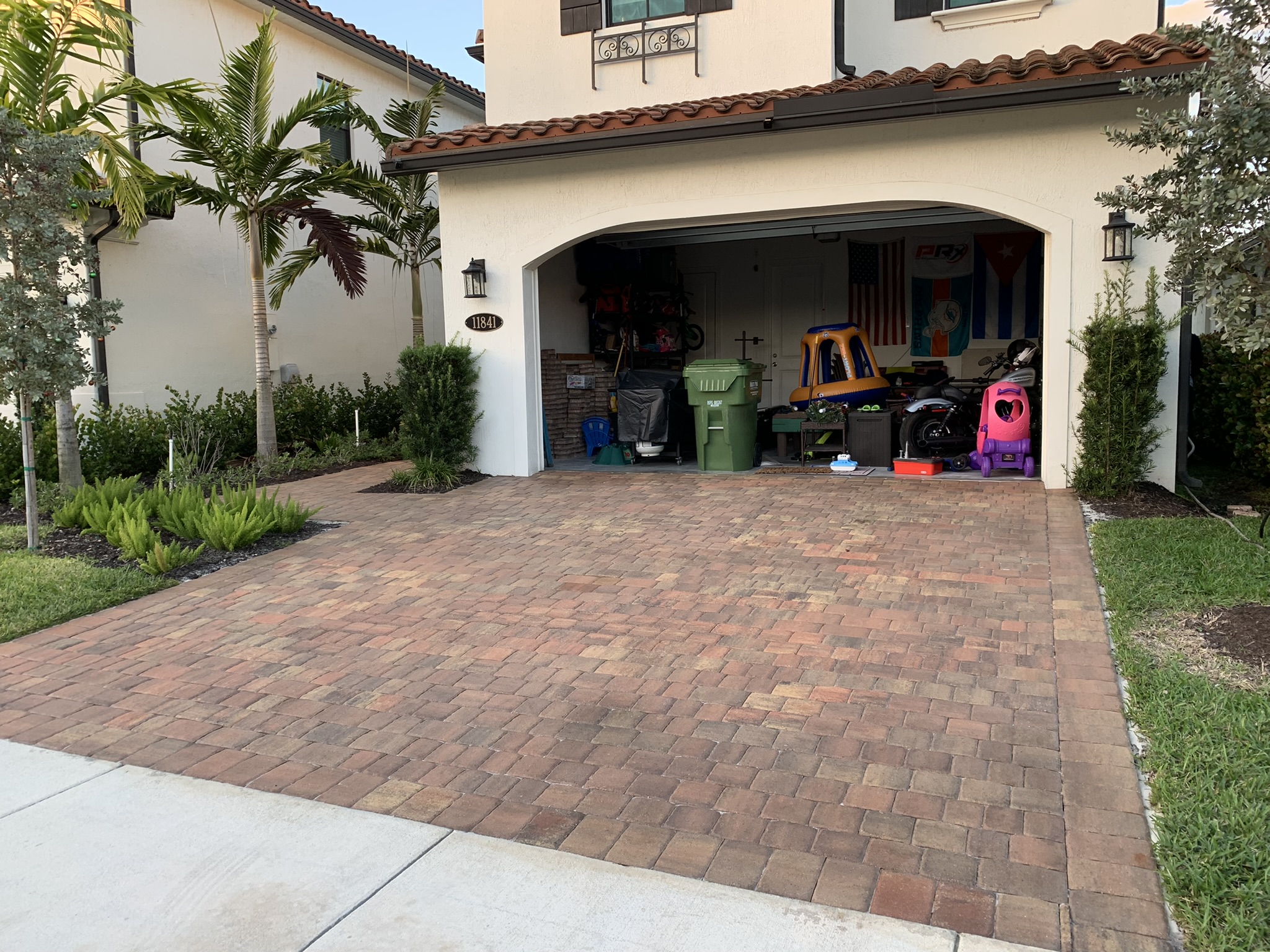
Fort Lauderdale earned the nickname “Venice of America” for a reason: over 165 miles of navigable waterways run through the city, and a huge share of homes in Las Olas Isles, Rio Vista, Coral Ridge, and Harbor Beach sit directly on a canal or the Intracoastal. That’s beautiful to live with and hard on pavers. Saltwater splash and salt-laden air off the water accelerate staining and break down cheap sealers far faster than they’d fail inland, and it’s especially rough on the coping stone right at the water’s edge. Add in the intense South Florida sun bleaching color out of brick, travertine, and concrete, plus a summer rain season that never lets up on joint sand, and pavers here age faster than almost anywhere else in Broward County.
Once joint sand starts washing out, the rest follows fast: weeds push up through the gaps after every storm, ants tunnel in and leave sandy piles behind, and the pavers themselves start to shift underfoot near the pool or dock. That’s exactly why professional paver sealing matters more here than in most of South Florida, and why the sealer choice matters even more if your property backs up to a canal.
You don’t need to be an expert to spot the warning signs. Here’s what we hear most from homeowners in Fort Lauderdale’s older, established neighborhoods like Victoria Park and Rio Vista, right before they call us:
This is what a real professional clean-and-seal looks like from start to finish:
Step 1: Deep Clean the Surface
We use professional rotary surface cleaners to remove algae, salt residue, stains, and old sealer evenly across the whole surface, not a quick rinse with a wand.
Step 2: Treat Stains and Efflorescence
Before any sand or sealer goes down, we spot-treat white haze, rust, and organic staining, the mineral buildup that’s especially common on surfaces near canal water and pools.
Step 3: Re-Sand the Joints
We refill joints with fresh sand and stabilize it, locking pavers together and cutting down on weeds and ant activity.
Step 4: Apply a Breathable, Salt-Resistant Sealer
We match the sealer to your paver material and how close you are to the water. Travertine, the natural stone on many of Fort Lauderdale’s canal-front pool decks, gets a penetrating sealer instead of a film-forming one, so it stays natural and non-slip.
We handle everything your outdoor hardscape needs, from new installations to full restorations on surfaces that look completely done.
The before-and-after difference speaks louder than anything we can say. Browse our paver sealing projects gallery to see driveways, pool decks, and patios across South Florida that looked a lot like yours before we arrived.
Fort Lauderdale has no shortage of pressure washing companies that also do sealing. We’re not one of them. Paver sealing is what we do, and we take the extra step of accounting for salt exposure on waterfront properties, something most general pressure washing outfits skip.
Take a few photos of your driveway, patio, or pool deck, top-down shots of the joints and any stained spots work best, and send them to us through our free estimate page. We’ll give you a clear price before we ever step on your property.
We also provide paver sealing, restoration, and repair for homeowners in Davie, Coral Springs, Pembroke Pines, and Deerfield Beach, along with the rest of Broward and Miami-Dade County.
Yes, especially on properties in Las Olas Isles, Rio Vista, Coral Ridge and other canal-front neighborhoods. Salt-laden air and splash breaks down cheap sealers faster than inland areas ever see, which is why we match the sealer to how close a property sits to the water.
Yes. Coping takes the most direct splash and salt exposure of any part of a pool or dock area, and it’s often overlooked. We treat it as part of the job, not an afterthought.
Wet-look gives the richest, deepest color but shows wear sooner and can be slicker when wet. A natural finish protects without changing the look much and is the safer choice around pools and docks. We’ll help you pick based on where the surface is.
Most driveways and patios are finished in a single day. You don’t need to be home, but we do need clear access to the work area and a way to reach you if we have questions.
It’s a different process. Travertine is porous natural stone common on Fort Lauderdale pool decks, and it needs a penetrating sealer rather than the film-forming sealer we’d use on concrete or brick. See our travertine sealing page for details.
New pavers generally need a settling period, often 60 to 90 days, before sealing so the joint sand and base have time to compact naturally. We can advise on timing when we look at your project.
Many communities along the Intracoastal and in Harbor Beach put common-area paver sealing on a set schedule as part of their maintenance plan. We work directly with property managers and provide the documentation boards typically require.
Chlorine and salt pool systems both add wear beyond what rain alone would cause. We factor that into the sealer choice and expect pool decks generally need resealing sooner than a driveway further from the water.
South Florida homeowners trust us to clean, sand, and seal their pavers the right way the first time, here’s what they’re saying after seeing their driveways, patios, and pool decks transformed.
Broward County, Miami-Dade County, & Monroe County