
- Home
- Travertine Sealing
Travertine Sealing
Travertine is stunning and extremely porous. Without professional sealing, South Florida’s UV, humidity, and pool water turn it into a stain magnet fast.
Our Services
Get in touch
Tell us about your project and we’ll follow up with a clear, no‑pressure quote and timeline.
Why Travertine Behaves Differently Than Other Pavers
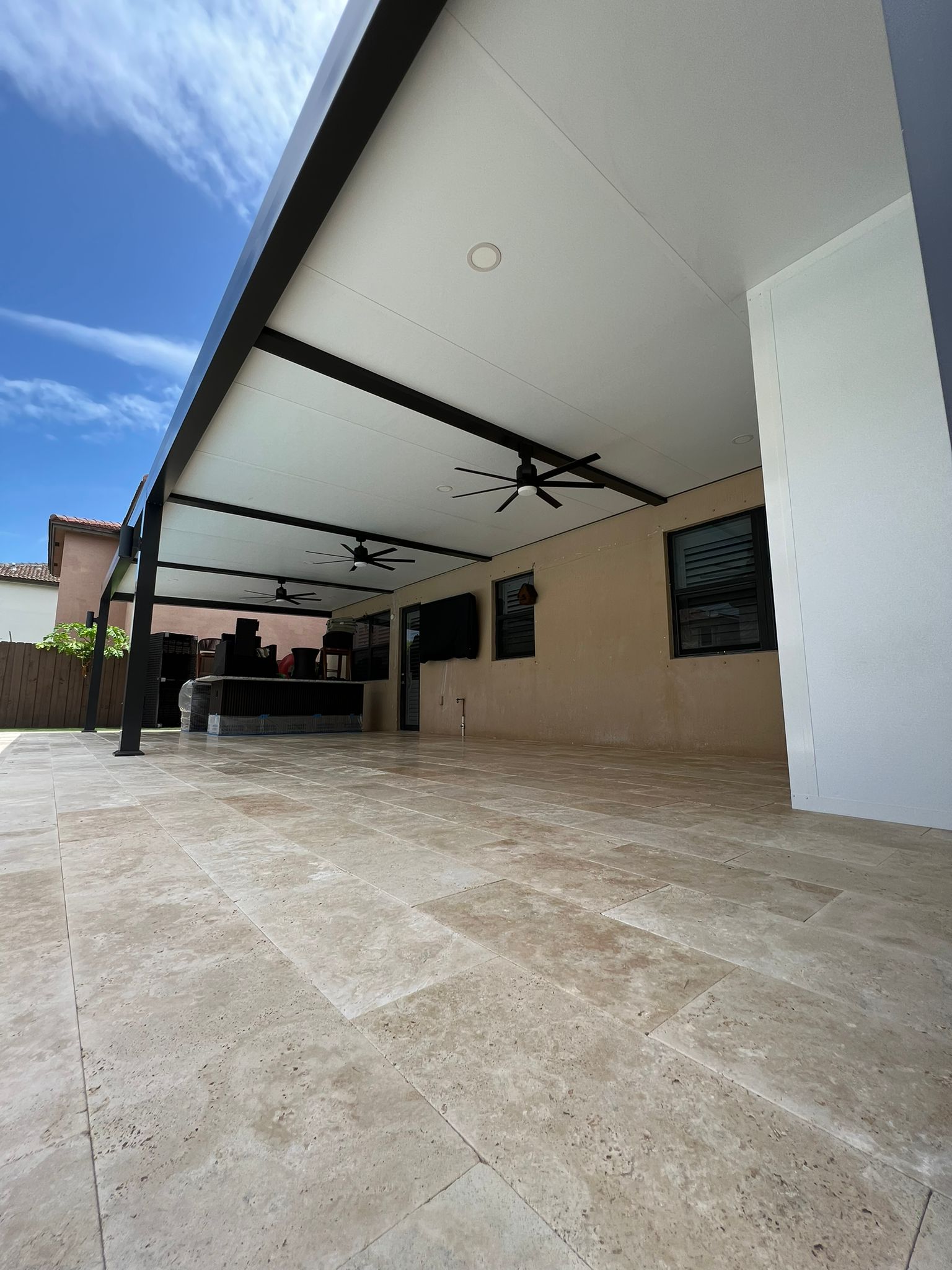
If you have ever wondered why your travertine looks worse faster than your neighbor’s concrete pavers, it comes down to the stone itself. Travertine is a natural limestone formed around hot springs, which means it comes out of the ground full of tiny holes and voids. That texture is part of what makes it look so good, but it also means it drinks in anything that lands on it: pool water, rain, sunscreen, cooking grease, and mineral deposits.
Standard concrete pavers are dense and uniform. Travertine is not. That is why the cleaning process, the sealer type, and the application method all have to be dialed in specifically for this material. Our approach to professional paver sealing is always matched to the surface we are working on, and travertine gets its own protocol from start to finish.
What Happens When Travertine Goes Unsealed in South Florida
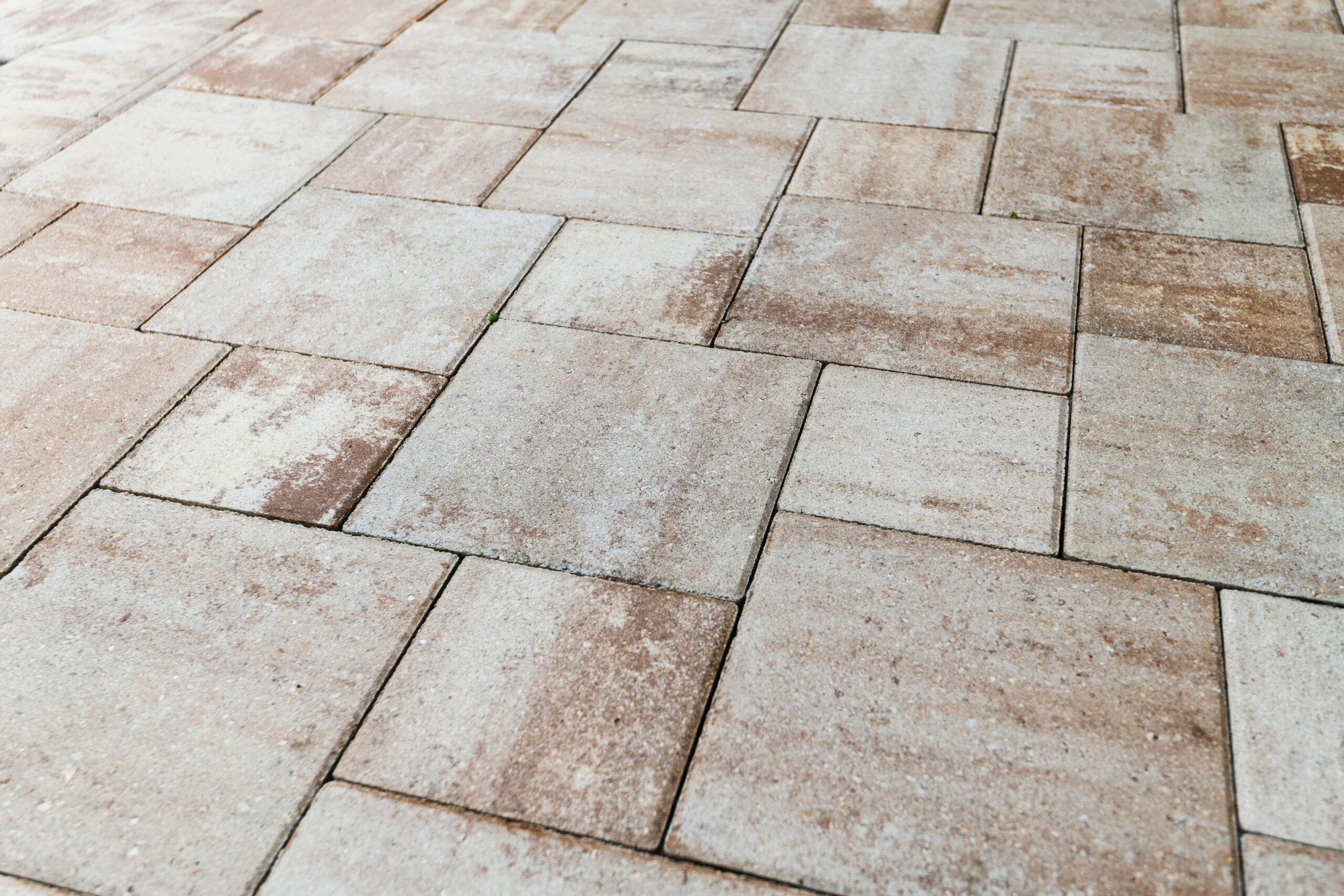
The issues we see most often on unsealed or under-sealed travertine in Miami-Dade and Broward County:
White powder and haze on the surface, which is efflorescence, a calcium deposit that forms when water moves through the stone and leaves mineral residue behind as it evaporates
Dark staining in the natural voids and pits of the travertine from pool water, algae, and organic material
Surface erosion where the stone softens and pits start to enlarge, especially on pool decks where water sits after every swim
Fading and bleaching from direct UV exposure, which strips the warm honey and ivory tones that made you fall in love with the material in the first place
Slippery algae growth on shaded sections near the pool edge that makes wet travertine genuinely dangerous underfoot
Most of these problems are preventable. When they are already present, many of them are reversible with the right prep before sealing.
How We Seal Travertine the Right Way
Step 1: Surface Assessment
Before anything touches the stone, we look at the finish type (tumbled, honed, or brushed), the condition of the voids, the presence of efflorescence or staining, and whether any old sealer is still on the surface. What we find here determines every product choice that follows.
Step 2: Deep Cleaning
We use professional rotary cleaning equipment with pressure and temperature calibrated for natural stone. Travertine is softer than concrete and aggressive pressure strips the surface. This step removes algae, calcium buildup, organic staining, and old sealer residue without damaging the stone.
Step 3: Efflorescence Treatment
If white haze is present, we treat it before the sealer goes down. Sealing over efflorescence traps it and makes it worse. Treating it first and letting the surface fully dry is not optional, it is the difference between a result that lasts and one that looks cloudy within six months.
Step 4: Joint Preparation
For travertine tile installations around pool decks and patios, we inspect and address the grout joints and sand-filled gaps. Our guide on why joint preparation makes or breaks a sealing job walks through exactly what happens when this step gets skipped.
Step 5: Penetrating Sealer Application
For travertine, we use a penetrating impregnating sealer rather than a topical film-building product. A penetrating sealer soaks into the stone and protects from within, letting the travertine breathe naturally while blocking water, oil, and stains at the pore level. This preserves the natural texture and slip resistance of the stone, which matters especially around pools. You choose the finish: a clean matte that looks completely natural, or a light-enhancing sheen that brings out the warm tones in the stone.
Pool Decks vs. Driveways: Not the Same Job
Travertine around a pool and travertine on a driveway have different enemies and different needs.
Pool decks deal with constant moisture, chlorine or salt water splash, bare feet, and shaded areas where algae grows fast. The sealer here needs to be penetrating, breathable, and non-slip. You can see the results of this type of work in our travertine pool deck and patio sealing project in Miami and in the travertine pool deck and modern gray driveway restoration we completed for a Miami homeowner with two different surface types on the same property.
Driveways deal with UV, vehicle fluids, rubber transfer from tires, and the daily weight of traffic. Travertine driveways are less common but absolutely stunning when sealed properly, and they need a product that handles that load while still protecting against South Florida’s summer rain season.
When Sealing Is Not Enough: Travertine Restoration
Sometimes we get to a travertine surface, and the damage goes deeper than what sealing alone can fix. Deep staining that has penetrated the full thickness of the stone, severely enlarged voids, cracked or sunken sections, and failed old sealer that has turned white and cloudy all require restoration work before any new sealer can bond correctly.
Our paver restoration service covers the full process: stripping failed coatings, treating deep staining, repairing damaged sections, and bringing the surface back to a condition where a proper seal will last. If your travertine is at that stage, we will tell you upfront during the assessment rather than sealing over a problem that will come back in six months.
Where We Seal Travertine Across South Florida
We seal travertine pool decks, driveways, patios, and walkways throughout Miami-Dade, Broward, and Monroe Counties. Our paver sealing services in Miami, FL cover the full Miami area, and we regularly work in Homestead, Hialeah, Miami Gardens, Pompano Beach, Fort Lauderdale, Key West, Naples, and West Palm Beach.
Browse our completed paver sealing projects gallery for before-and-after results from real South Florida homes, including several travertine jobs that show the full transformation from stained and faded to sealed and restored.
Frequently Asked Questions
How often does travertine need to be sealed in South Florida?
Most travertine in our area needs professional resealing every one to two years for pool decks and every two to three years for driveways and patios. The UV intensity here is more aggressive than in most of the country, and pool decks get constant moisture and chemical exposure on top of that. A simple water test tells you where you stand: pour a small amount of water on the surface. If it absorbs instead of beading up, the sealer is gone.
Can you seal travertine that has white spots or haze on it?
Yes, but the efflorescence has to be treated and fully removed before the sealer goes down. Sealing over it locks the mineral deposits in place and creates a cloudy, uneven finish that cannot be fixed without stripping everything and starting over. We treat it as part of the prep process on every travertine job where it is present.
What type of sealer do you use on travertine?
We use penetrating impregnating sealers for travertine, not topical film-forming products. A topical sealer sits on top of the stone, can peel, and traps moisture in a material that naturally needs to breathe. A penetrating sealer soaks into the pores, protects from within, and lets the stone perform the way it was designed to without changing the texture or traction of the surface.
My travertine pool deck is slippery. Will sealing help or make it worse?
A penetrating sealer will not reduce traction and in most cases improves it by filling the surface pores that algae and mildew colonize. For pool decks where extra grip is needed, we can also add a non-slip additive to the sealer mix. What creates slipperiness on travertine is almost always algae and mildew growth, not the stone itself.
Do you fill the natural holes in travertine before sealing?
It depends on the look you want and the condition of the stone. Travertine’s natural voids are part of its character, and most homeowners prefer to keep them. In cases where the voids have become deep enough to collect debris or pool water, we can discuss filling options before the sealer goes down. We always walk through what the finished surface will look like before any work starts.
Can you seal travertine on the same day as cleaning it?
No. The stone needs to be completely dry before any sealer is applied, and travertine’s porosity means that drying time has to be respected. Rushing this step traps moisture under the sealer, which causes cloudiness, adhesion failure, and early breakdown. We schedule accordingly so the surface is genuinely ready when the sealer goes on.
Get a Free Travertine Sealing Estimate
Take a photo of your travertine surface, including a close-up of any stained or white-hazed areas, and send it to us through our free estimate page. We will tell you exactly what your surface needs, what it will cost, and how long it will take.
- Testimonials
Our Clients Testimonials
South Florida homeowners trust us to clean, sand, and seal their pavers the right way the first time, here’s what they’re saying after seeing their driveways, patios, and pool decks transformed.
- Areas We Serve
Proudly Serving Homeowners Across South Florida
Broward County, Miami-Dade County, & Monroe County