
Your Pompano Beach driveway, patio, or pool deck takes a beating every single day, blazing UV rays, coastal humidity, salt air off the Atlantic, and heavy summer downpours that wash the joint sand right out from between your pavers.
Tell us about your project and we’ll follow up with a clear, no‑pressure quote and timeline.
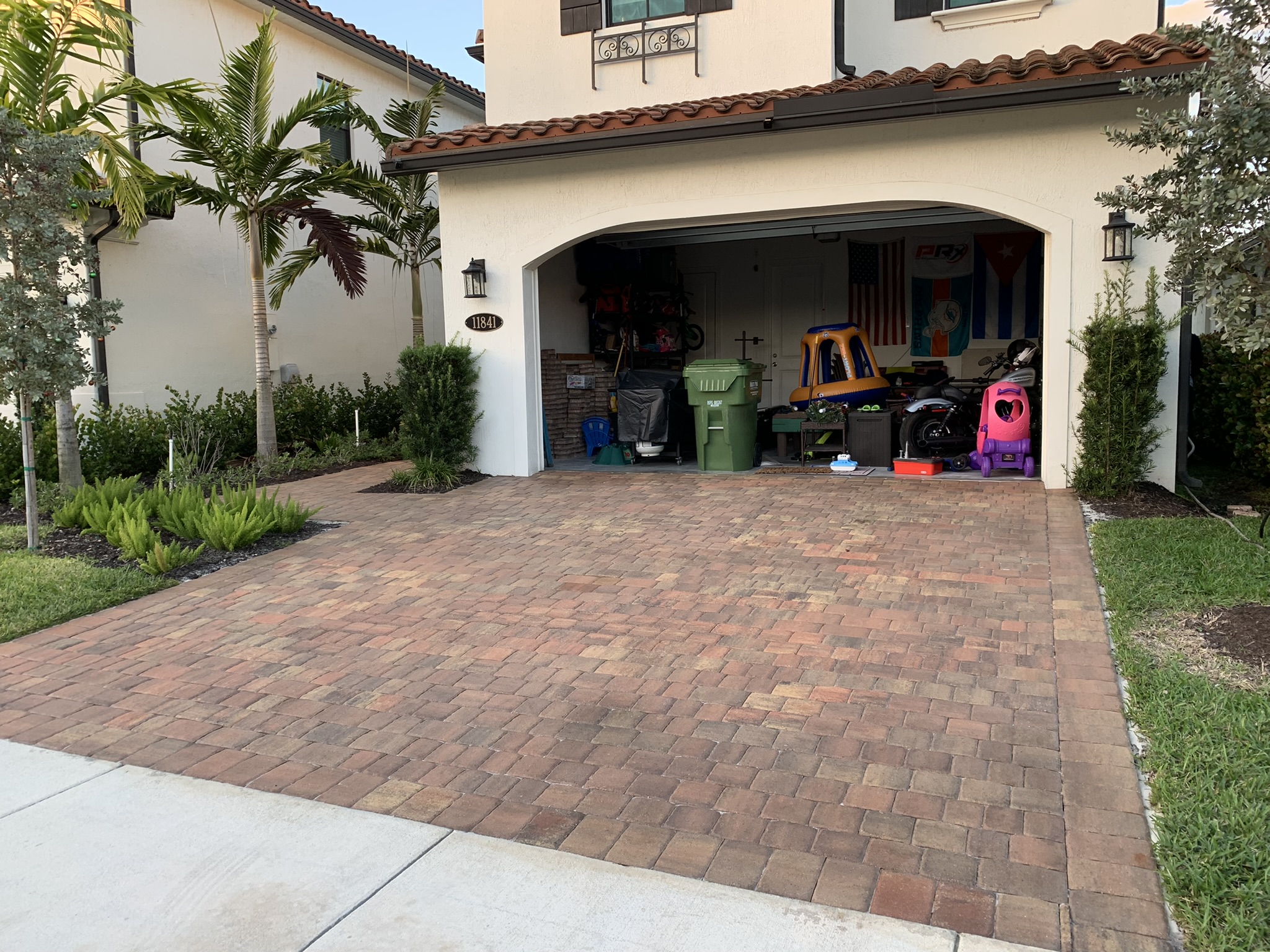
Living on the coast in Broward County is beautiful, but it’s one of the toughest environments for outdoor pavers anywhere in Florida. The Atlantic salt air speeds up staining and surface breakdown, the intense South Florida sun bleaches the color out of brick, travertine, and concrete pavers faster than you’d expect, and the summer rain season is relentless on joint sand.
Once that sand washes out of the gaps, things go downhill quickly. Weeds push up through the open joints after every storm, ants tunnel in and leave sandy piles on the surface, and the pavers themselves start to shift and wobble under foot traffic and car tires. That’s exactly why brooming fresh sand into every joint before sealing is one of the most important steps we take on every single job; it’s what separates a result that lasts from one that looks good for a month and then falls apart.
You don’t need to be an expert to spot the warning signs. Here’s what Pompano Beach homeowners usually notice right before they call us:
Faded, washed-out color: pavers that used to look rich and warm now look pale and dull
Weeds or grass between the joints: the joint sand is gone and plants have moved in
Green algae or dark mildew on the surface: especially in shaded spots or near sprinklers
White powdery haze on the pavers: this is called efflorescence, which means mineral deposits rising through the surface; it needs to be treated before any sealer goes down
Loose or wobbly pavers: the support sand underneath is shifting or missing
Water soaks straight in instead of beading: your old sealer is gone, and the paver is completely unprotected
If you’re seeing two or more of these, your pavers are already telling you what they need. Our full guide on paver walkway cleaning and sealing shows exactly how this kind of deterioration happens, and how quickly it reverses with the right process.
This is what a real professional clean-and-seal looks like from start to finish:
Step 1: Deep Clean the Surface
We use professional rotary surface cleaners and the right cleaning solutions to remove algae, mildew, stains, and old sealer residue evenly and safely. This is not a quick rinse with a wand; we clean the whole surface so the sealer bonds properly and looks even.
Step 2: Treat Stains and Efflorescence
Before any sand or sealer goes down, we spot-treat white haze, rust, organic stains, and any residue left from previous sealer products. Skipping this step causes bleed-through under the fresh sealer.
Step 3: Re-Sand Every Joint
This is the step most budget operators rush, and most DIYers skip entirely. We broom fresh joint-stabilizing sand into every gap, filling from the bottom up, not just dusting the top. Once it’s done right, your pavers are locked tight and stable before a single drop of sealer is applied. You can see exactly how this step transforms a surface in our brick paver patio re-sand and sealing prep project.
Step 4: Apply Professional-Grade Sealer
We apply premium sealer using the right tools for even, controlled coverage. You choose your finish: a natural look that keeps the surface subtle and understated, or a color-enhanced wet look that brings out the full warmth and richness the pavers had when they were first installed.
Step 5: Final Walkthrough and Cure
Most Pompano Beach projects are done in a single day. We walk the surface with you before we leave, make sure every section looks right, and give you simple tips to keep your pavers looking fresh between professional visits.
We handle everything your outdoor hardscape needs, from brand-new installations to full restorations on surfaces that look completely done.
Paver Sealing: professional cleaning, joint re-sanding, and premium sealing for maximum color and protection
Paver Installation: custom driveways, patios, pool decks, and walkways built correctly from day one
Paver Restoration: strip old or failed sealer, repair damage, treat efflorescence, and bring faded pavers back to life with a like-new finish
Surface Cleaning: deep professional cleaning for concrete, pavers, and pool decks without streaking, scarring, or damage to your landscaping
The before-and-after difference speaks louder than anything we can say. Browse our paver sealing projects gallery to see what we’ve done on driveways, pool decks, and patios across South Florida, surfaces that looked a lot like yours before we arrived.
A few projects worth looking at:
Travertine pool deck and modern gray driveway sealing in Miami, FL: same coastal climate, same sun damage, stunning color recovery on travertine
Multicolor driveway and pool paver sealing in Miami, FL: a great example of how color-enhanced sealing makes a driveway look brand new
Brick paver patio re-sand and sealing prep: see what a properly broomed and filled joint looks like even before the sealer goes down
We’re not a pressure washing company that added sealing to its list of services. This is all we do, and we’ve built everything around doing it right.
Multi-certified applicators: Sherwin-Williams High Performance Flooring, SurfaceLogix, Armus Nanotechnology, and Trident Advanced Training certified
Professional-grade products only; no big-box store sealers; we match the product to your paver type and your South Florida conditions
Led by founder Joan Efres, a trained and certified specialist who personally oversees every project, learn more about our team and story
Same-day completion: on most driveways, pool decks, and patios
No surprise pricing: we quote it, we stick to it, every time
5.0 stars on Google: from real South Florida homeowners who’ve seen the difference
Take a few photos of your driveway, patio, or pool deck, top-down shots of the joints, any stained spots, and a wide shot of the whole area, and request your free estimate here. We’ll tell you exactly what your pavers need, how long it will take, and what it will cost. No pressure, no obligation, just a straight answer from a team that knows South Florida pavers inside and out.
We also provide paver sealing, restoration, and repair for homeowners in Fort Lauderdale, Weston, Pembroke Pines, and Deerfield Beach, along with the rest of Broward and Miami-Dade County.
It does make a noticeable difference, especially if your property is within a mile or two of the Atlantic. Salt air is corrosive; it accelerates surface oxidation on pavers, speeds up color fading, and promotes the kind of dark, biological staining you see on driveways and pool decks near the coast. It also breaks down unsealed joint sand faster. That’s why Pompano Beach homeowners often find they need professional maintenance slightly sooner than someone living inland. A good penetrating sealer creates a barrier that slows all of that down significantly.
A wet-look sealer (sometimes called a gloss or color-enhancing sealer) deepens the natural tones of your pavers and gives the surface a rich, slightly shiny appearance — similar to how pavers look right after a rainstorm. A natural finish sealer protects just as well but leaves the surface looking dry and matte, close to its original unsealed appearance. Neither is better than the other; it comes down to your personal preference and your home’s style. We’ll show you examples of both before any product goes down so you know exactly what to expect.
Most residential driveways and pool decks in Pompano Beach are completed in a single day. Larger properties with multiple surfaces, say a full driveway, patio, and pool deck together, may run two days. You don’t need to be home the entire time, but we do ask that someone is available at the start so we can walk the surface together, confirm the finish you want, and make sure your vehicles are moved before we begin. We’ll also do a final walkthrough with you before we leave.
Travertine is one of the most common paver materials in Broward County, and yes, we seal it regularly. The key difference is that travertine is naturally porous and has small surface holes (called pits) that need to be considered when choosing the right sealer and application method. We use a penetrating, breathable sealer on travertine rather than a heavy topical coat, which keeps the natural look intact while protecting the stone from moisture, salt, and staining underneath the surface. You can see an example of travertine sealing results in our travertine pool deck and modern gray driveway sealing project.
If your pavers were recently installed, you’ll want to wait at least 60 to 90 days before sealing them. New pavers need time to settle, and they naturally release efflorescence, those white mineral deposits, in the first few weeks. Sealing too early can trap that residue underneath and create a hazy, uneven finish that’s difficult to fix. Once that initial curing period is done and the surface has been cleaned properly, fresh pavers are actually ideal candidates for sealing because the pores are open and the color is at its best. If you’re not sure whether your pavers are ready, send us a few photos and we’ll give you an honest answer before you book anything.
South Florida homeowners trust us to clean, sand, and seal their pavers the right way the first time, here’s what they’re saying after seeing their driveways, patios, and pool decks transformed.
Broward County, Miami-Dade County, & Monroe County